§ The census
How many are left?
How many individuals are left of every species I have portrayed, ordered from the scarcest to the most abundant. Every figure is the one its source publishes, with the link to go and check it.
23 with a published count13 without a published count
How to read this list
- 01The list runs in bands, not by the figure: fewer than 100, fewer than 1,000, fewer than 10,000… Within its band each species shows what its source publishes, and if the source gives a range the whole range is shown. A species is placed by the low end of that range, so it can reach above its own band.
- 02The figures are not comparable with each other: some count mature individuals, some breeding pairs, some the total population; some are worldwide and some cover one region. Every row says which, because a ranking that mixes them without saying so is lying.
- 03Few individuals does not mean more threatened. An abundant species falling fast can be worse off than a rare, stable one. This page counts how many there are; it says nothing about anyone’s conservation status.
§ With a published count
The ones that have been counted
From fewest to most. The band leads; the figure is the source’s.
| Species | How many | What it counts · where | Source |
|---|---|---|---|
| fewer than 1,0006 | |||
 Black caimanYara Black caimanYara | 123 | total populationregional | news.mongabay.com |
 Amur leopardJeong Amur leopardJeong | 128–130 | total populationworldwide | en.wikipedia.org |
 Great white sharkLowanna Great white sharkLowanna | 219 | one subpopulationregional | pmc.ncbi.nlm.nih.gov |
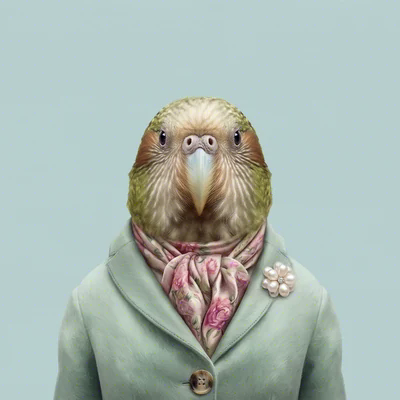 KakapoKiri KakapoKiri | 235 | total populationworldwide | doc.govt.nz |
 Arctic foxOtto Arctic foxOtto | 400–600 | mature individualsregional | polarjournal.net |
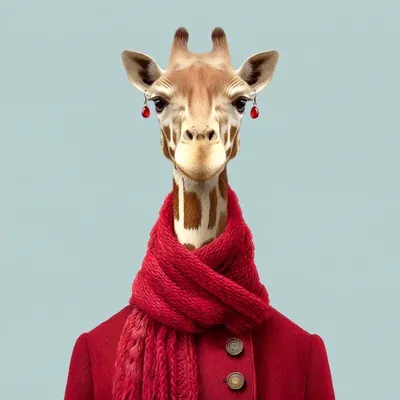 West African giraffeAyana West African giraffeAyana | ≥ 600 | total populationworldwide | giraffeconservation.org |
| fewer than 10,0003 | |||
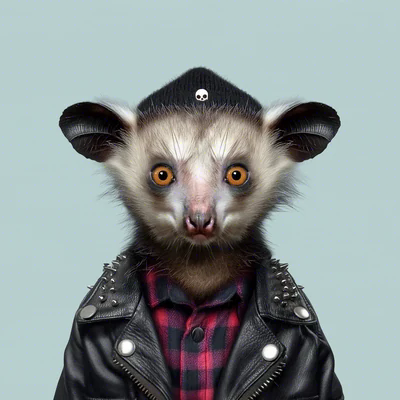 Aye-ayeStan Aye-ayeStan | 1,000–10,000 | total populationworldwide | neprimateconservancy.org |
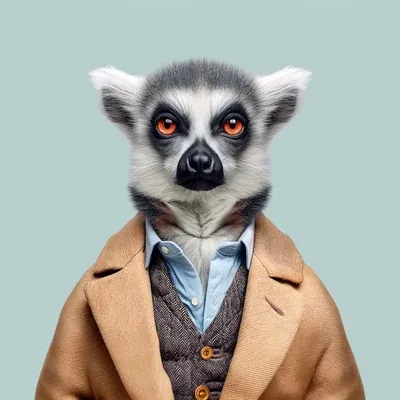 Ring-tailed lemurWesley Ring-tailed lemurWesley | 2,000 | total populationworldwide | en.wikipedia.org |
 CheetahNayna CheetahNayna | 7,100 | total populationworldwide | ielc.libguides.com |
| fewer than 100,0003 | |||
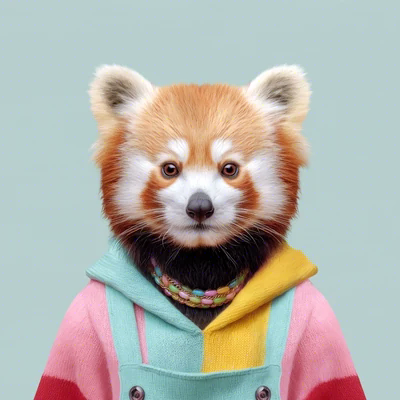 Red pandaDolma Red pandaDolma | 10,000 | total populationworldwide | en.wikipedia.org |
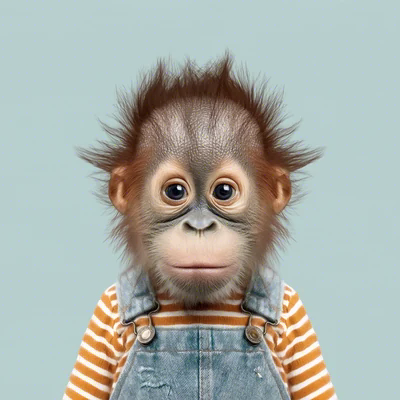 Sumatran orangutanTogar Sumatran orangutanTogar | 13,846 | total populationworldwide | en.wikipedia.org |
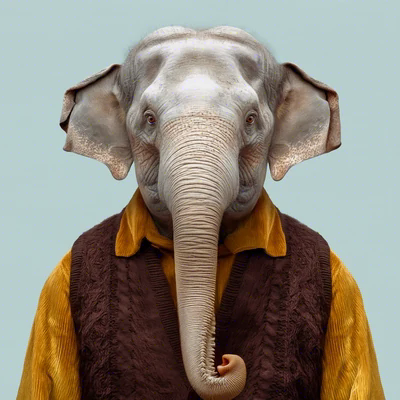 Asian elephantBagus Asian elephantBagus | 48,323–51,680 | total populationworldwide | en.wikipedia.org |
| fewer than a million8 | |||
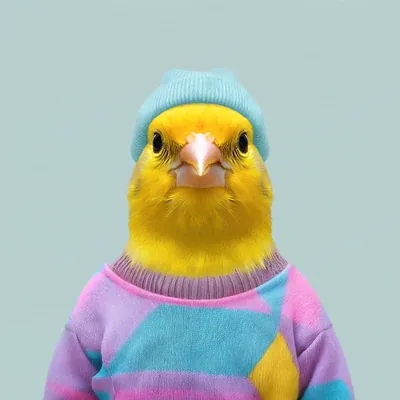 Atlantic canaryYeray Atlantic canaryYeray | 114,000–155,000 | breeding pairsworldwide | en.wikipedia.org |
 HippopotamusLimbani HippopotamusLimbani | 115,000–130,000 | total populationworldwide | en.wikipedia.org |
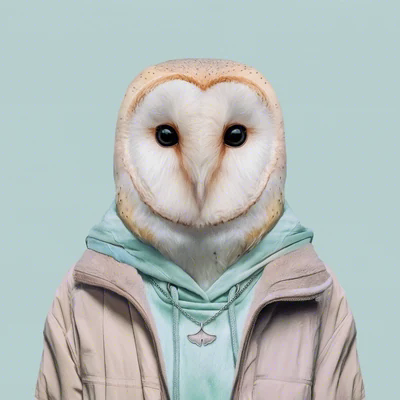 Barn OwlIsabella Barn OwlIsabella | 150,000 | breeding pairsregional | en.wikipedia.org |
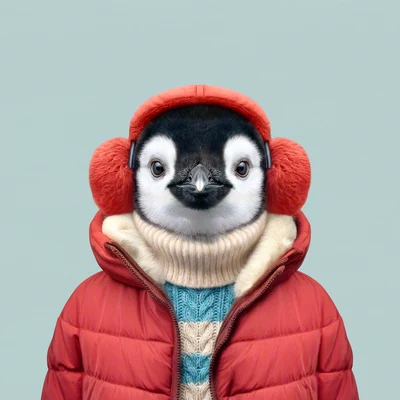 Emperor penguinBirdie Emperor penguinBirdie | 238,000 | breeding pairsworldwide | journals.plos.org |
 Bald eagleJohn Bald eagleJohn | 316,700 | total populationregional | doi.gov |
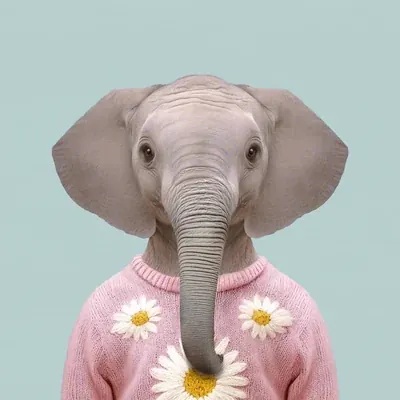 African bush elephantMansa African bush elephantMansa | 415,428 | total populationworldwide | en.wikipedia.org |
 KoalaCooper KoalaCooper | 729,000–918,000 | total populationworldwide | nkmp.org.au |
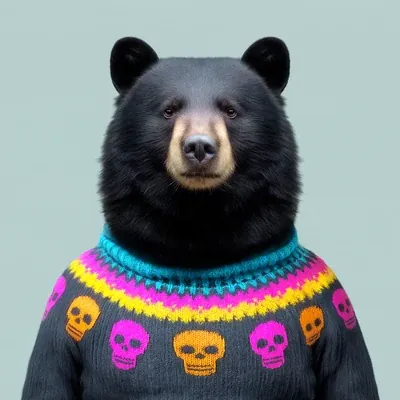 American black bearLiam American black bearLiam | 850,000–950,000 | total populationworldwide | defenders.org |
| millions1 | |||
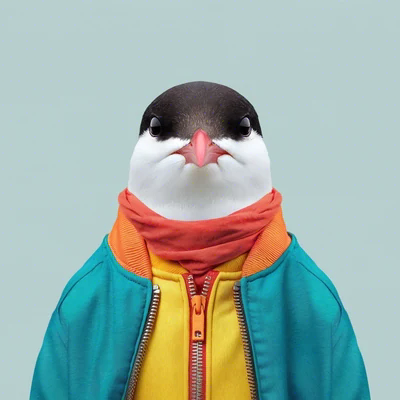 Arctic ternHakon Arctic ternHakon | ≥ 2,000,000 | total populationworldwide | en.wikipedia.org |
| tens of millions or more2 | |||
 Atlantic puffinAlek Atlantic puffinAlek | 12,000,000–14,000,000 | mature individualsworldwide | en.wikipedia.org |
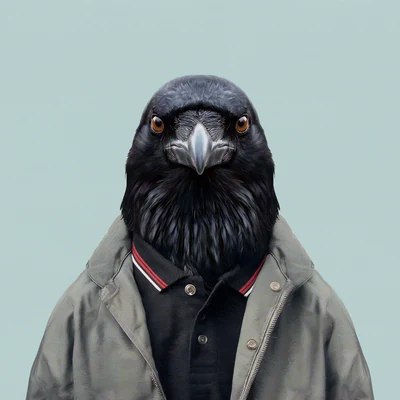 Common ravenHrafn Common ravenHrafn | 29,000,000 | mature individualsworldwide | allaboutbirds.org |
§ Without a published count
The ones nobody has counted
They have no published count, so there is no figure to show. They sit in their own block, behind, ordered among themselves by an estimate of relative abundance made with Damuth’s allometry (population density falls as body mass rises: that is why there are vastly more ants than hawks). That estimate places the row and does nothing else: measured against the counted species above, it is off by more than an order of magnitude on median, so no number is published. onlinelibrary.wiley.com
| Species | How many |
|---|---|
 Iberian bullFernando Iberian bullFernando | not estimable |
 Arctic wolfBenjamin Arctic wolfBenjamin | not estimable |
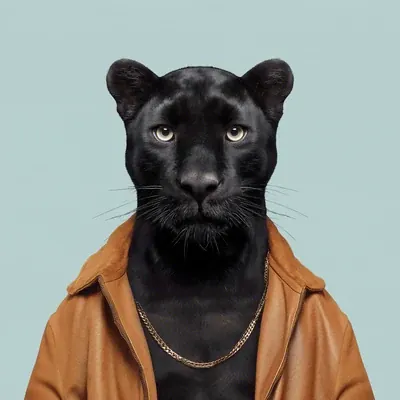 Black pantherCesar Black pantherCesar | not estimable |
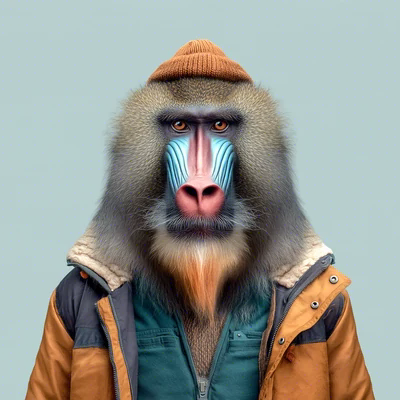 MandrillNdong MandrillNdong | not estimable |
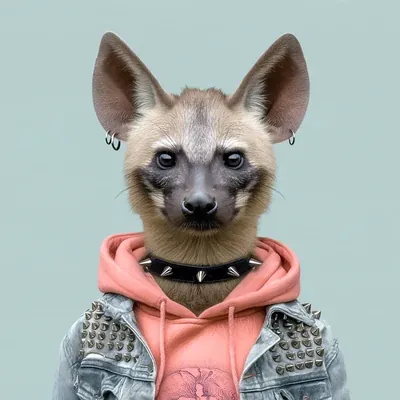 AardwolfNala AardwolfNala | not estimable |
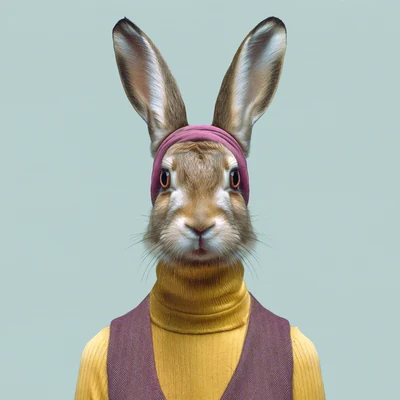 European hareOlwen European hareOlwen | not estimable |
 Malayan pangolinNur Malayan pangolinNur | not estimable |
 Arabian red foxFaiz Arabian red foxFaiz | not estimable |
 Sand catTiziri Sand catTiziri | not estimable |
 AxolotlIkal AxolotlIkal | not estimable |
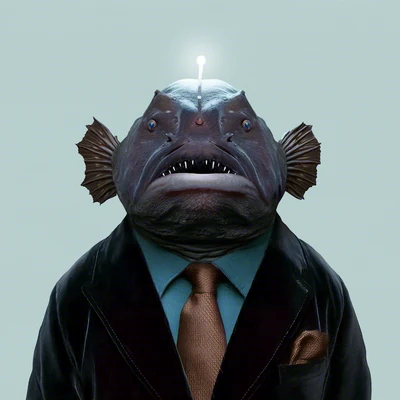 Black seadevilNaoko Black seadevilNaoko | not estimable |
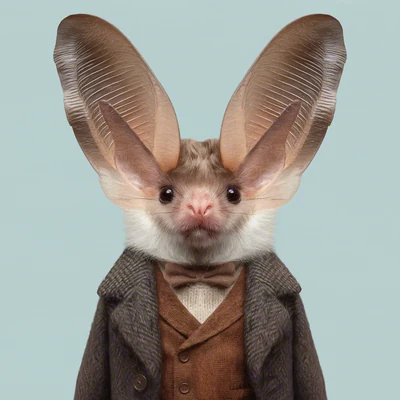 Sardinian long-eared batGavino Sardinian long-eared batGavino | not estimable |
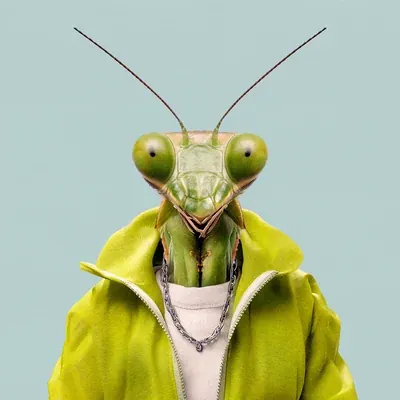 Praying mantisBruno Praying mantisBruno | not estimable |
The census grows with the work: every new species I portray enters here with its figure and its source, or with its gap declared if nobody has counted it.
§ How it is built
Published figures, bands, and declared gaps
- 01Every figure is the one its source publishes, with the link in its own row. If there is no traceable count for a species, none is given: no figure without a source.
- 02The list runs in bands — fewer than 100, fewer than 1,000, fewer than 10,000… — and within its band each species shows the exact figure, or the whole range if that is what the source gives. Never a midpoint invented to make ordering possible.
- 03Species nobody has counted sit in a separate block, behind and with no figure at all. What there is, is said: not estimable.
§ The vocabulary
What each figure counts
Population figures do not all measure the same thing, and that is the trap that sinks any ranking that quietly merges them. Every row of the census states which of these units its source uses, and where the source does not say, the row says so.
| Unit | What it includes |
|---|---|
| Mature individuals | Animals old enough to breed. Young and juveniles are left out. |
| Breeding pairs | Pairs are counted, not animals. A number of pairs is not comparable with a number of individuals. |
| Total population | Every individual, young included. |
| One subpopulation | One particular, separate group — not the whole species. |
| Worldwide or regional | Some assessments cover the entire species and others one country or region. The row says which, next to the figure. |
§ Questions
What people usually ask
Why is it not ordered by the exact number?
Because many ranges are enormous, and ordering by the minimum, the maximum or the mean gives three different lists. The band says what is known without faking a precision that does not exist.
Why do some species have no figure at all?
Because nobody has published a count for them. Sometimes they are hard to count, and sometimes the conservation assessment itself rests on distribution rather than on a count. There is no number to show, and putting one there would mean inventing it.
Can the order of magnitude at least be estimated?
It was tried, with the ecological relationship linking abundance to body mass (Damuth’s allometry). Checked against the counted species in the cast, it is off by more than an order of magnitude on median, and in one case by four. It serves to order the block and nothing else, so no number is published.
Are the scarcest ones the most threatened?
No. An abundant species falling fast can be worse off than a rare, stable one. This census counts how many there are; it says nothing about anyone’s conservation status.
Which species are included?
Only those of the Animal Kinhood world: it is this cast’s census, not a catalogue of the planet. It grows when I portray a new species.