Animal Kinhood Wild animals Endangered
12 min read 12 chapters
Jeong · Amur leopard AK · 09 Jeong PHOTO ©YP · 2025
Animal Kinhood · Wild animals No. 09 / 19 Episode · Jeong
Panthera pardus orientalis

Jeong.

Amur leopard

One hundred and thirty in twenty twenty-three. Thirty in the seventies. The camera trap doesn't lie.
Add it to your Kinhood.Already part of your Kinhood.
Biography · Block 01 of 03 Amur leopard
Chapters · I–II–III–IV

The story.

I
CH · 01 / 12

The hum before dawn

Jeong, Amur leopard, takes the drone out of its case at quarter to six in the morning. Minus twenty-four. The battery has spent the night inside the sleeping bag because below five degrees it won't start. He checks the charge three times in a row, even though he was the one who put it on charge last night. He always does. He'll do it tomorrow too.

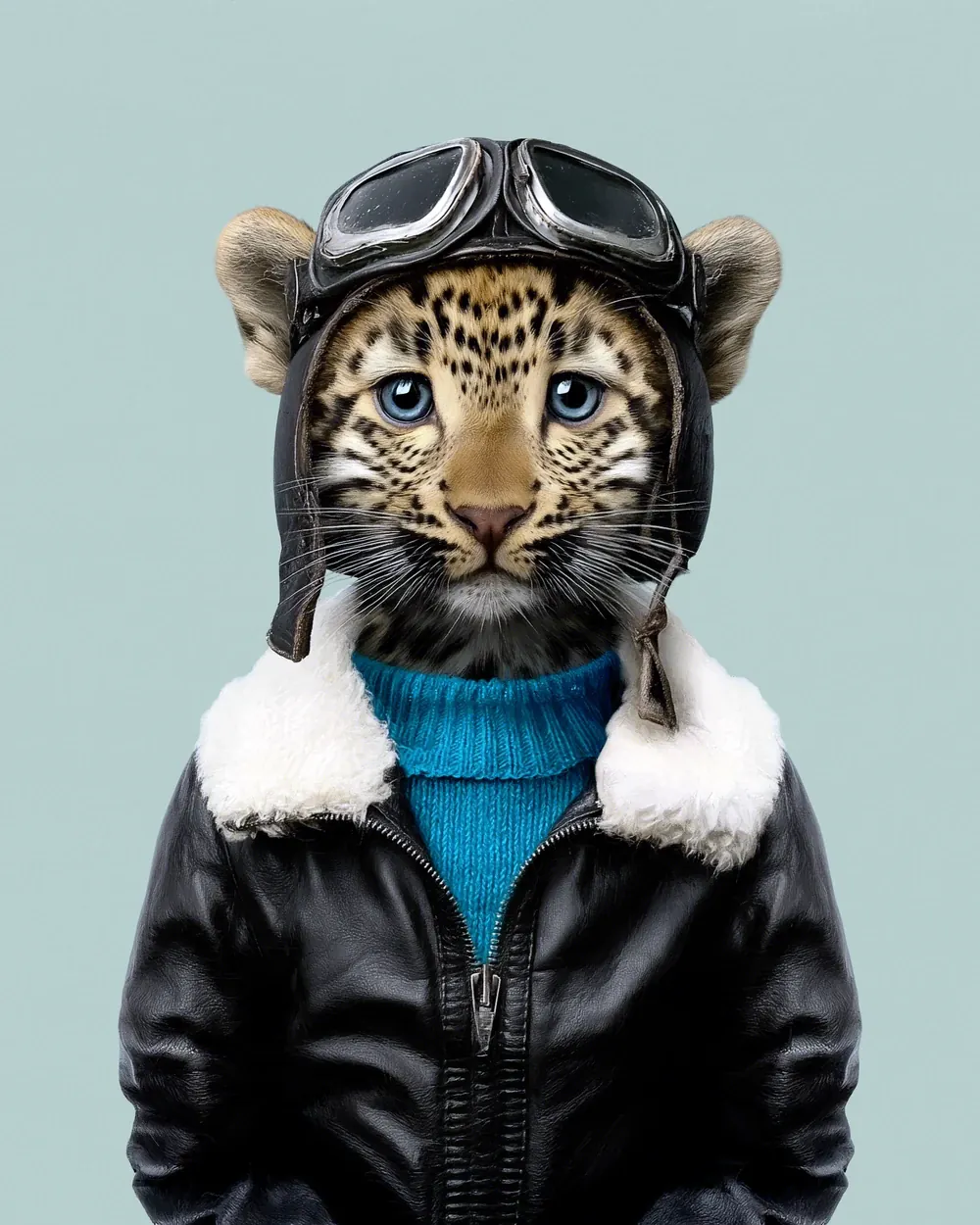
The drone takes off from a clearing on the forest track, four kilometres from Barabash, and Jeong stands there with the controller and the screen, the thermos of coffee between his feet, the aviator helmet strapped tight and the fleece lining of his jacket pulled up over his ears. The air smells of cedar resin and snow that hasn't moved for days. The trees don't make noise. Neither does he.

On the thermal screen, three sika deer cross a frozen stream seven hundred metres to the southeast. A fox is moving along the north slope. Jeong notes the coordinates in the notebook with a pencil he has to warm between his fingers every two minutes so the tip doesn't break. He doesn't use the laptop in the field. Paper maps give him a reading the screen doesn't — the distance between two points passes through the fingers and stays there.

He's been doing this for three years. Since he was eighteen.

II
CH · 02 / 12

What was left in a cardboard box

Halmoni Soo-yeon kept the grandfather's things in the hallway cupboard of the house in Barabash. The aviator helmet, the goggles, three photographs and a Soviet agricultural-flight certificate with humidity-burned edges. The grandfather died before Jeong was born. He flew light aircraft to dust crops in the Russian Far East. He didn't go to the war. He went to a wheat field at two hundred metres altitude and didn't come back.

Jeong inherited the helmet at sixteen, when his grandmother died. Also the Korean handwritten recipe notebook with notes in Russian, and a jar of kimchi that had already turned. He threw it out. But the smell still follows him every time he opens a new jar on the kitchen window in October.

The helmet took longer. At first he didn't wear it. He left it on top of the bedroom shelf as a piece from another world. One very cold day he took the aviator jacket he'd bought with his first pay and, without thinking much, grabbed his grandfather's helmet. His colleagues at the park laughed a little at first. Then they stopped seeing it as a costume.

Now it's him.

III
CH · 03 / 12

The lady at the shop and grandfather's tiger

Halmoni Soo-yeon was koryo-saram. The ethnic Korean community of the Russian Far East, descendants of those deported by Stalin in 1937. She didn't talk about it often, but when she cooked she spoke in Korean. She taught Jeong to make kimchi before she taught him to read Cyrillic. She taught him to walk in the forest without making noise, to cut wood without waste, to smell the wind before choosing a path.

One summer afternoon, when Jeong was seven, they were walking in the forest near Barabash and the grandmother stopped. Fresh tracks in the snow. Leopard. Large, deep, with the edges still sharp. Halmoni made him crouch, smell the mark, follow the trail with his eyes to where it disappeared among the birches. "He knows we're here," she said. "We don't know where he is. That's respect."

They didn't see the animal. But Jeong hasn't forgotten the feeling of knowing something enormous, silent and more intelligent than you is fifteen metres away watching you.

In Barabash there's a shop run by a lady who lets him have coffee on credit when he's out of cash. She calls him "the boy with the helmet". She doesn't ask him about his life. He doesn't ask about hers. Three thousand inhabitants, a petrol station, the national park headquarters, and a main street where everyone knows who you are. Jeong finds that at once reassuring and suffocating (more the second, even if he won't admit it).

IV
CH · 04 / 12

Vladivostok, apartment block, channel 4

He was born in Vladivostok, Vtoraya Rechka neighbourhood, third floor of a Soviet block where the walls smell of damp even in summer. His mother, Yuna, was a nurse on rotating shifts at the municipal hospital. His father, Dimitri, drove timber trucks between Khabarovsk and the Chinese border. They separated when Jeong was four. Dimitri turned up every few months with a cheap toy and a new excuse. He didn't disappear entirely. But he wasn't there either.

Jeong got used to the silence of the empty flat. He cooked rice with whatever was there. He did his homework without anyone asking. At secondary school he was brilliant in science and geography, invisible in everything else. He didn't have a group. He had Kolya, who lived two floors up and shared his interest in the cheap drones starting to appear in the city's Chinese market.

At fourteen, Kolya and he went up to the block's rooftop with a bag of loose parts and a YouTube tutorial on a cracked screen. The drone flew for eight minutes before crashing into an antenna. Jeong cut his hand picking up the debris. The scar is still there, between thumb and index on his right hand. Eight minutes. Enough to know he wanted to fly things.

Voiceline · the character’s canonical quote Jeong · Amur leopard
Hover to pause
One hundred and thirty in twenty twenty-three. Thirty in the seventies. The camera trap doesn't lie. AK · 09 · Jeong One hundred and thirty in twenty twenty-three. Thirty in the seventies. The camera trap doesn't lie. Voiceline · Panthera pardus orientalis One hundred and thirty in twenty twenty-three. Thirty in the seventies. The camera trap doesn't lie. AK · 09 · Jeong One hundred and thirty in twenty twenty-three. Thirty in the seventies. The camera trap doesn't lie. AK · 09 · Jeong One hundred and thirty in twenty twenty-three. Thirty in the seventies. The camera trap doesn't lie. Voiceline · Panthera pardus orientalis One hundred and thirty in twenty twenty-three. Thirty in the seventies. The camera trap doesn't lie. AK · 09 · Jeong
§ 04 · Objects Open editions · everyday
10 pieces · Print on demand

Take Jeong home.

Biography · Block 02 of 03 Roots
Chapters · V–VI–VII–VIII

The roots.

V
CH · 05 / 12

The Friday run

At fifteen, his grandmother fell ill. Yuna couldn't get to Barabash during the week because of her shifts. Jeong started taking the bus on his own on Friday afternoons. Three hours on the road, seat by the window, rucksack with medicines and food. He arrived at night. He cooked. He fixed whatever was broken. The grandmother spoke to him in Korean from the bed. On Saturdays they walked together if she was able. On Sundays, bus back to Vladivostok, homework on the way, silence in the flat.

That run lasted a year and a half. A hundred and four Fridays, give or take.

Halmoni died when Jeong was sixteen. The funeral was small, in Slavyanka. Jeong held her hand when she went. He didn't cry in front of anyone. He came back with the recipe notebook, the grandfather's helmet and a form of grief he hasn't finished processing yet — and he knows it, even if he doesn't say so.

VI
CH · 06 / 12

Ghost

That's what the veteran rangers of the Land of the Leopard National Park call him. Ghost. Because he appears and disappears without warning. Because he walks without making noise. Because people are startled when they turn and realise he has been sitting at the next table for five minutes.

It's not a nickname he chose.

The Udege and Nanai peoples called the Amur leopard "ghost of the forest". They didn't fear it for being aggressive — there are no documented attacks on humans. They feared it for being invisible.

Jeong moves the same way. In meetings with the WCS Russia team, he can stay twenty minutes silent while everyone has their say. Then he points to a spot on the map no one had considered. He's right. Almost always.

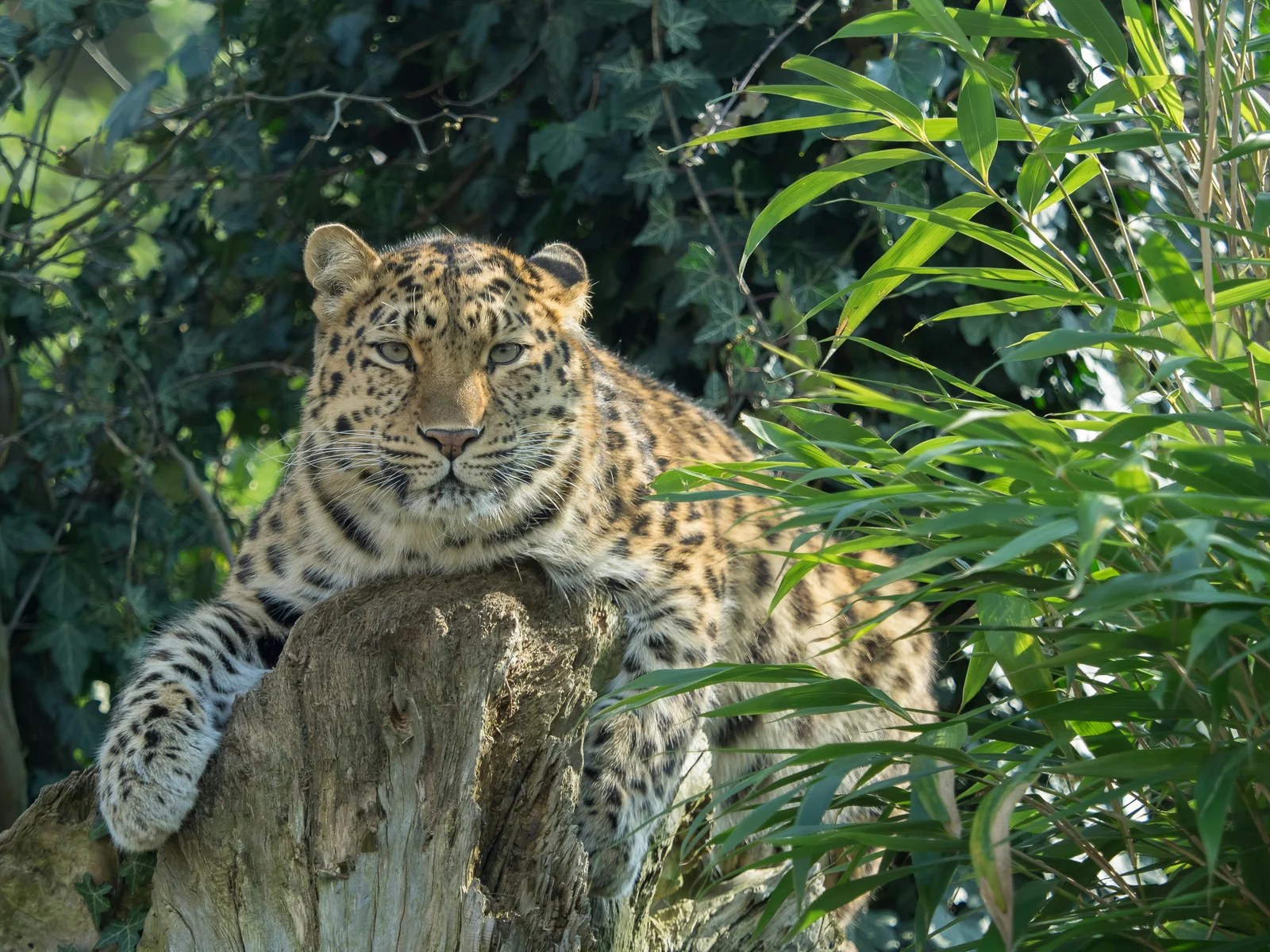
Researchers with PhDs use recognition software to identify leopards by their rosettes. Jeong uses his eyes and a notebook where he draws the patterns by hand. Each leopard has a unique pattern of markings, like fingerprints. He gives them internal names he doesn't share with anyone: Leo-17, Leo-23, Leo-41. When a new researcher confuses one individual with another, Jeong doesn't say anything.

The disappointment shows anyway.

VII
CH · 07 / 12

The trap

His first winter of work. Nineteen years old. Northern zone of the park, routine field patrol, second month on the job. A steel snare hidden on an animal trail, set by poachers crossing from the Chinese side of the border. Fresh blood on the metal.

Jeong dismantled the trap by hand. They were shaking, but not from cold. He documented with photos and GPS coordinates. Reported to the team. Took part in the surveillance operation afterwards. They didn't catch the poachers that time.

The anger stayed. He didn't shout, didn't break anything, didn't tell anyone. But from that day on he began to design drone flight routes specifically to cover the zones most vulnerable to poaching. The WCS team adopted his routes as standard protocol. Nobody gave him official credit. The veteran rangers knew whose they were.

VIII
CH · 08 / 12

One hundred and thirty

That's the number. One hundred and thirty Amur leopards in the wild, according to the latest 2024 census. Seventeen years ago there were nineteen. On the entire planet. Nineteen animals of a species that has been in these forests for hundreds of thousands of years.

The Land of the Leopard National Park was created in 2012 and protects seventy-two percent of the species' viable habitat in Russian territory. Jeong has worked for the WCS Russia monitoring programme since he was eighteen. He flies thermal and photographic drones to track wildlife, detect traps and map ecological corridors. The Amur leopard has the longest coat of any leopard — up to seven centimetres in winter — and can leap six horizontal metres. But its real weapon is patience. It can wait hours motionless before hunting.

Jeong has photos of old censuses pinned to the wall of his room. Nineteen leopards. They remind him why he's here.

Biography · Block 03 of 03 Craft
Chapters · IX–X–XI–XII

The present.

IX
CH · 09 / 12

Leo-17

In spring last year, a camera trap captured a young male Jeong didn't have on record. Rosettes on the left shoulder and flank: new pattern. A disperser — a juvenile leopard establishing his own territory for the first time.

Jeong called him Leo-17. Cross-referenced data with previous censuses. Tracked his movements for months through the drone and the cameras. Leo-17 settled in an area that wasn't covered by the monitoring network. Jeong proposed extending coverage. It was approved.

Identifying an animal individually changes something. It's no longer "a leopard". It's someone. It has a pattern you recognise, a route you predict, habits you learn to read. Abstract conservation — saving the species, protecting the ecosystem, maintaining biodiversity — becomes concrete responsibility. That animal, that stream, that slope where he sleeps at dusk.

X
CH · 10 / 12

The open window

The flat in Barabash has two bedrooms, kitchen, bathroom and central heating that works when it feels like it. Jeong shares it with Andrei, a park technician, thirty-five, ex-military, quiet. They coexist in functional silence. They take turns cooking. They're not friends — they're two people who respect each other and don't get in each other's way.

Jeong sleeps with the window open even in winter. Thick blackout curtains, complete gloom, the sound of the wind and the wood stove. In the kitchen there are jars of kimchi fermenting on the window. On the work table, a dismantled drone, a soldering iron, a multimeter and topographic maps taped to the wall. The grandfather's helmet hangs on the coat hook by the door. The goggles inside it, always.

He rarely has music on. Sometimes, in the early hours, he turns on an old radio that picks up two Russian stations and one Korean that comes in badly. He eats pelmeni, rice with preserves, solyanka from the park canteen, black bread. And coffee. Black coffee in quantities that would scare you. The thermos goes everywhere with him in the rucksack. First sip of the day: half past five in the morning, standing by the open window, looking at the dark.

He functions better in the cold. In summer — July in Barabash, twenty-five degrees and forest humidity — he slows down, sleeps badly, needs cold water on his wrists to think clearly. The heat exhausts him. He is the leopard carrying a coat designed for minus thirty.

XI
CH · 11 / 12

What he doesn't say

He doesn't say the loneliness is starting to weigh in a way he didn't expect. He doesn't want a partner right now, it isn't that. But he misses a presence that doesn't ask anything in return. What the grandmother was.

He doesn't say he's afraid of ending up like his father. Present in bits. Absent in what matters.

He doesn't say that every time he sees an institutional email about budget cuts, something trembles inside him. Because if the programme closes, the drones go back in their cases, the routes are lost and the leopards are alone again. And Jeong goes back to being a kid from Vladivostok with an old helmet and a hand that trembles.

He cares the way he learned to care: without words. He leaves the stove on for Andrei when he gets in late. Brings soup to the teammate who has a fever, leaves it at the door and goes. Keeps the team's birthdays noted in a notebook, even though he doesn't wish anyone happy birthday out loud — a bag of warm pirozhki simply appears on the birthday person's desk.

If anyone tries to care for him, he refuses the first offer. If they insist without pushing, he accepts.

XII
CH · 12 / 12

The corridor

His technical obsession is the cross-border ecological corridor. A strip of viable forest connecting the leopard population on the Russian side with the one on the Chinese side. The data he gathers from the drone every day contributes to that map. It's a project that will take years. Maybe decades.

Jeong isn't in a hurry.

On the ridge three kilometres northeast of Barabash, where he goes when he needs to think, he sits on a rock with the thermos and looks at the valley for an hour. He comes down calmer than he went up.

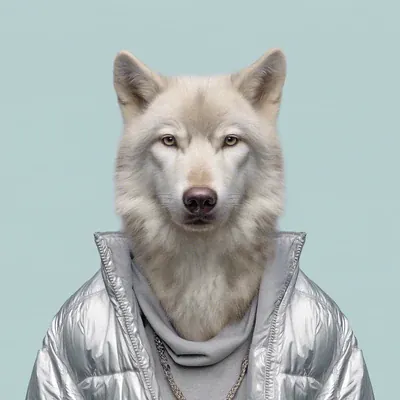
He has a long-distance friend. [Benjamin](/animal-kinhood/benjamin/), arctic wolf, weather-station technician in Iqaluit, Canada. They met on an environmental-monitoring forum. Ten thousand kilometres. Messages every two weeks. Weather data, field photos, complaints about budgets. They've never met in person. Benjamin sends long audios. Jeong replies in three sentences.

Sometimes, when the cold drops below minus thirty and the drone has held up all morning and the coffee is still hot in the thermos, Jeong thinks about what the grandmother said next to the tracks in the snow. "That's respect." He doesn't look to see the leopard. He looks to know it's still there.

Someday, maybe, he'll go to South Korea and see the places his great-grandparents came from. He thinks about it sometimes, before dawn, with the badly-tuned radio and the kimchi fermenting on the window. He doesn't say it out loud. Just in case.

> **Canonical quote:** My rosettes are as unique as a fingerprint. That's why they can count us without capturing us: every coat is a different name.

§ 06 · Connected souls 02 canonical bonds
Animal Kinhood

Connected souls.

§ 07 · Species file Panthera pardus orientalis
Felidae · Carnivora

About the amur leopard.

Habitat
Temperate deciduous and mixed forests of the Russian Far East (Primorsky Krai) and northeast China; the Land of the Leopard National Park holds the bulk of the wild population.
Diet
Hunts mainly sika deer and roe deer as primary prey, supplemented with wild boar, badger and hare; solitary nocturnal hunter.
Lifespan
10-15 years in the wild / up to 21 years in captivity.
Weight
Males between 32 and 48 kg and females between 25 and 43 kg; head-body length 107-136 cm.
Adaptation
Has winter fur up to 7.5 cm long — the longest of any leopard — which provides thermal insulation at temperatures down to -30 °C.
Record
Photographic analysis through camera traps in the Land of the Leopard National Park (Russia, 2023) identified up to 130 mature individuals, the highest figure since censuses began, compared with the fewer than 30 that survived in the 1970s.

Main threats

  1. Poaching for its coat and use in traditional medicine.
  2. Habitat loss and fragmentation from forest fires, logging and infrastructure.
  3. Prey decline due to excessive illegal hunting of deer and wild boar in buffer zones.
  4. Inbreeding and low genetic diversity resulting from small population size.
  5. Development of road and rail infrastructure that fragments dispersal corridors.
In 1972 the population was estimated at fewer than 30 individuals; the creation of the Land of the Leopard National Park in 2012650,000 acres — drove a sustained recovery that tripled the number of censused adults in just over a decade.

Did you know…?

01

It is the only leopard on the planet adapted to snow and ice: it lives in Siberia and withstands -30 °C thanks to a winter coat up to 7.5 cm long. From fewer than 30 individuals in the seventies, the population has climbed to around 130 today, the highest count in decades.

02

The rosette pattern of the coat is individual and unrepeatable: researchers identify each animal by its markings the same way police use fingerprints. This non-invasive method has made it possible to census the population without capturing or handling the animals.

03

Despite its body mass, the Amur leopard can reach 58 km/h over a short sprint, making it one of the fastest cats for its weight. It hunts at night and drags its prey uphill to keep it from wolves and scavenging wild boar.

04

The territory of an adult male can exceed 200 km² and overlap with those of several females, whose territory rarely exceeds 100 km². This overlap is tolerated between sexes but not between rival males.

05

The small wild population has been breeding for decades from a very reduced gene pool; molecular studies have documented levels of inbreeding comparable to island populations. Captive breeding programmes with more than 200 individuals in 88 institutions function as a genetic safety reserve.

06

The Amur leopard shares range with the Siberian tiger, with whom it competes for prey and territory. Telemetry studies show that, where they coexist, leopards shift their activity toward steeper areas the tigers prefer to avoid.

§ 08 · Conservation three programs · verified
Amur leopard

Help protect this species.

Every purchase helps, but a direct donation does more. Three NGOs with specific programs verified for this species.

No. 01 / 03

WWF.

World Wide Fund for Nature

Leading organisation in Amur leopard protection: funds anti-poaching patrols throughout the Russian habitat, drove the creation of the Land of the Leopard National Park in 2012.

Donate to WWF
No. 02 / 03

WCA.

WildCats Conservation Alliance

Alliance specialising in wild cats that directly funds monitoring projects, camera traps and training for local rangers in the Amur leopard area.

Donate to WCA
No. 03 / 03

IFAW.

International Fund for Animal Welfare

Works on Amur leopard protection through campaigns against illegal trafficking of feline skins and parts.

Donate to IFAW
Animal Kinhood · 19 characters

Nineteen names. Nineteen stories. Nineteen personalities. One same project.

Full catalogue · Drop 01 — Q3 2026 Explore Animal Kinhood