Forty seconds at six meters
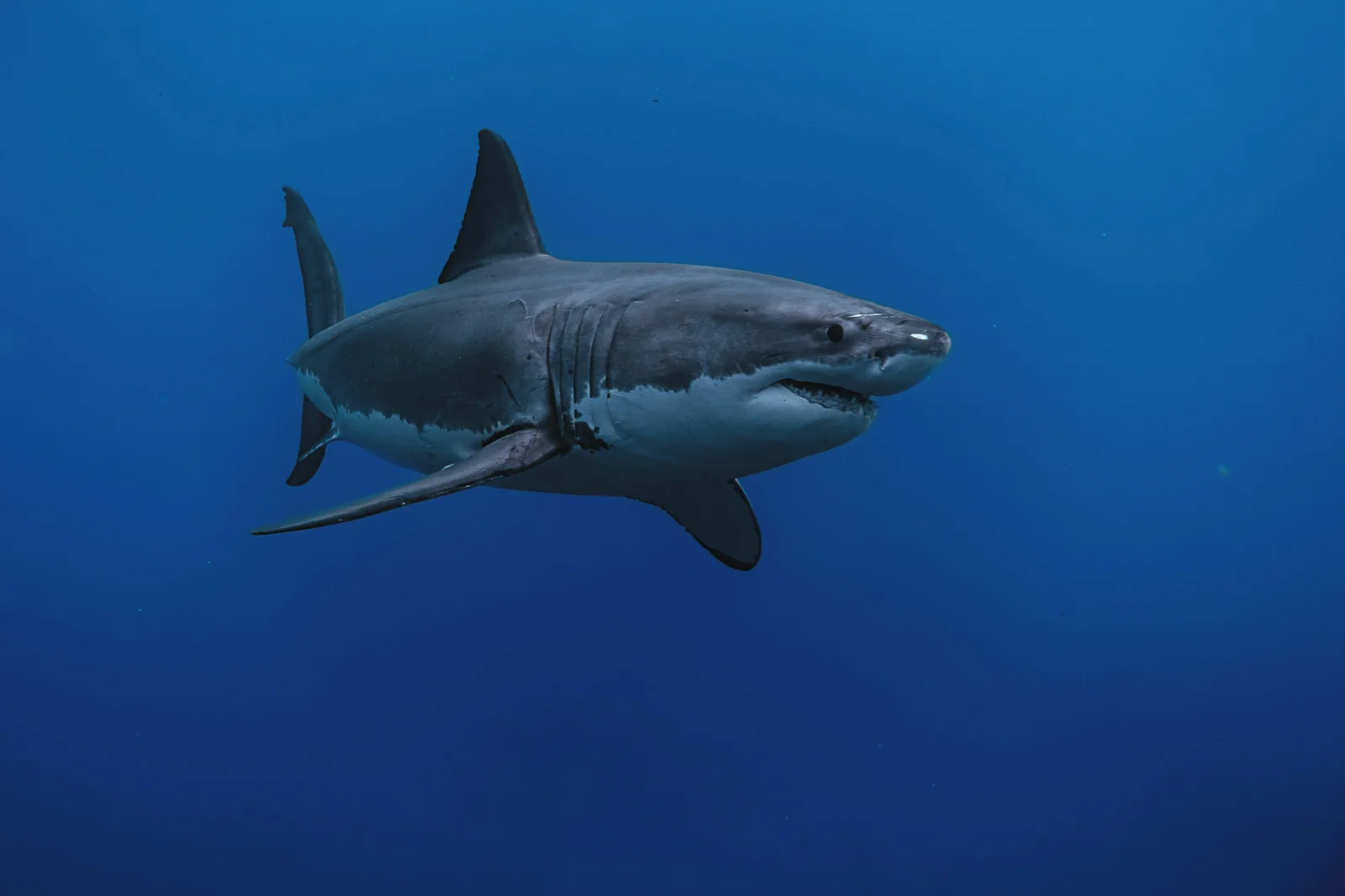
Forty seconds. That's how long it lasted, and it's what Lowanna has been wanting to repeat ever since. It was a field day with the Flinders biology team at the Neptune Islands, seventy kilometers south of Port Lincoln, a tagging operation. She was in the water with a snorkel, no cage, on surface watch. An adult white shark, four meters long, passed six meters from her, and neither of them moved.
He looked at her —white sharks hold your gaze, they look for the eyes— and carried on his way. Lowanna came out of the water with a calm the team couldn't quite read. She didn't say a word the whole way back. That night, alone in her studio on Liverpool Street, she sat on the floor and smiled for ten straight minutes.
It fit. For the first time, something fit completely. She wouldn't know how to explain it, and she doesn't try: it was cold water, silence, and one of her own kind recognizing her without judgment. She wants to do it again someday, for herself, not for work. Just once, with no team behind her, no report to fill out afterward. She holds onto it the way you hold onto a debt you owe yourself.