Animal Kinhood Wild animals Vulnerable
12 min read 9 chapters
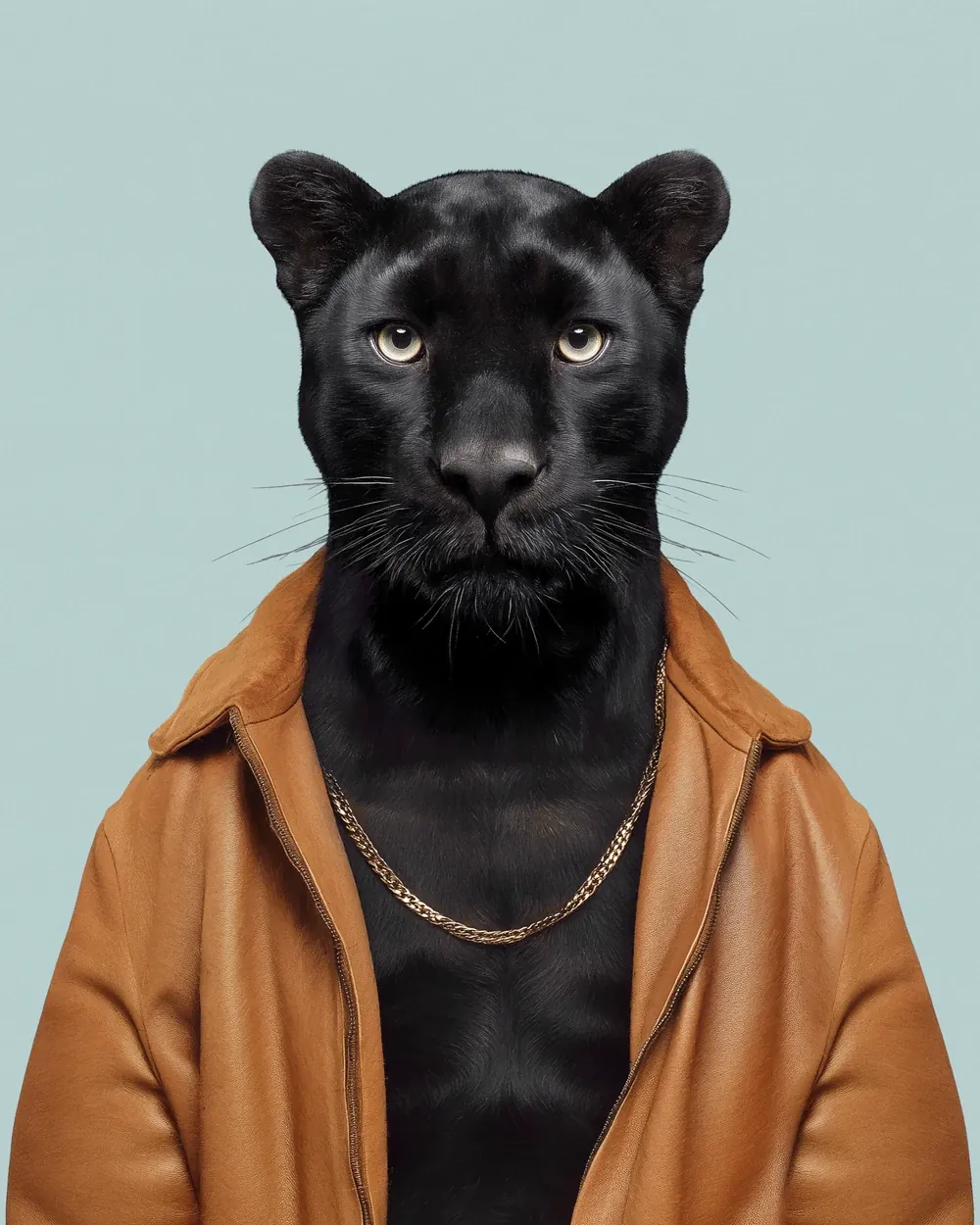
Cesar · Black panther AK · 01 Cesar PHOTO ©YP · 2025
Animal Kinhood · Wild animals No. 01 / 19 Episode · Cesar
Panthera pardus

Cesar.

Black panther

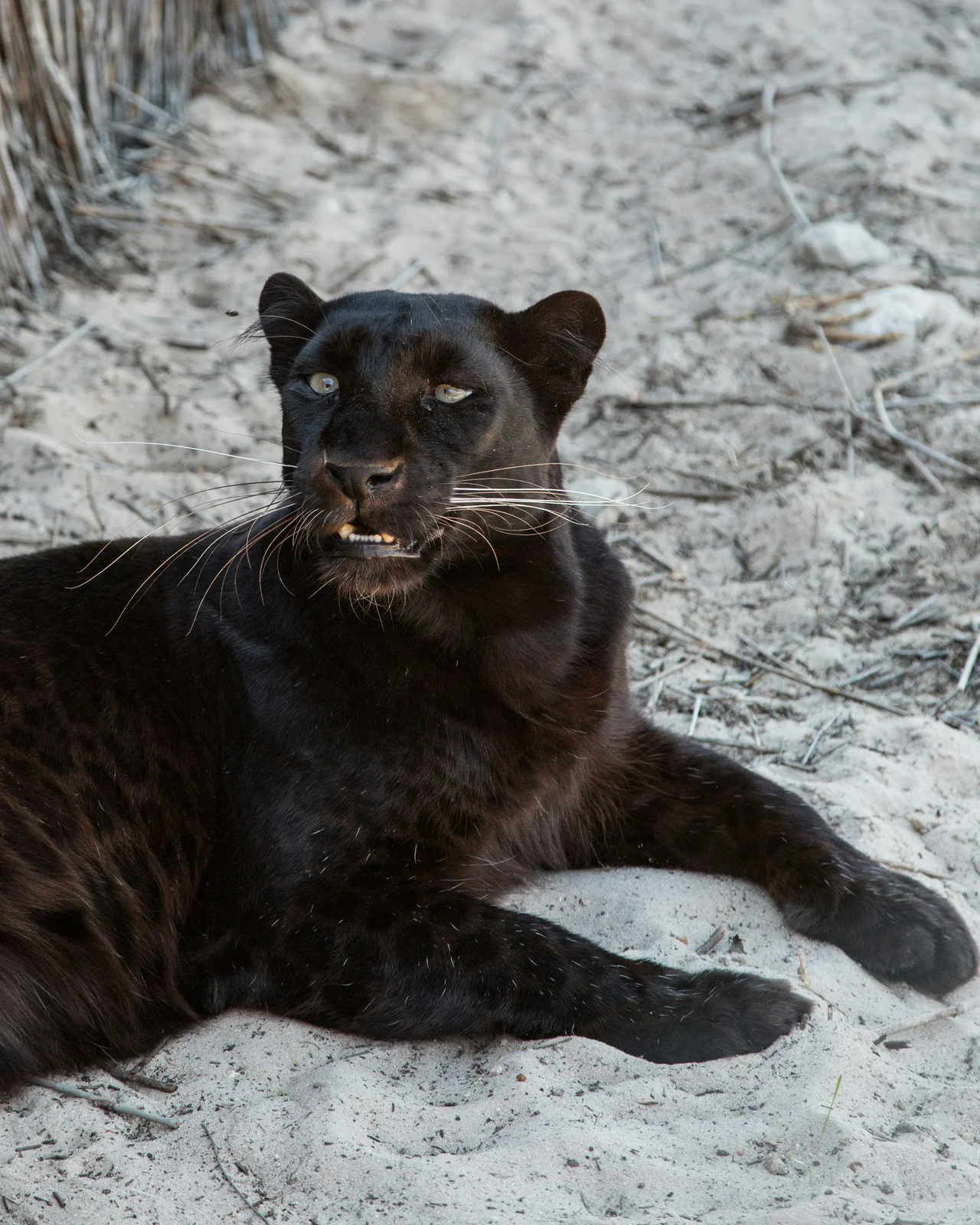
What looks like an absence of pattern is the pattern itself. Grazing light brings it back to the surface.
Add it to your Kinhood.Already part of your Kinhood.
Biography · Block 01 of 03 Black panther
Chapters · I–II–III

The story.

I
CH · 01 / 09

The George Town shophouse

Cesar was born in a shophouse in the Armenian quarter of George Town, Penang. His father had the gold-smithing workshop on the ground floor and the family lived upstairs — an arrangement Cesar would repeat twenty years later without intending to. The workshop smelled of borax, silver filings and coffee. At four in the afternoon, after school, Cesar would sit on a stool that was too tall and watch his father melt, hammer, polish. He wasn't allowed to touch the big tools until he was nine. By then he could tell 916 gold from 750 by colour alone.

His mother kept the workshop's accounts at night. Cesar remembers her with a ledger and a red pen she chewed when the numbers didn't add up.

At eleven, his father closed the workshop one Friday and didn't come back on Monday. He had left with a woman from Ipoh. He left the tools, a one-hundred-and-twenty-gram ingot of gold and a note that said "take care of your mother". Cesar didn't cry. He went down to the workshop, sat on his father's stool and stared at the tools until it got dark.

His mother sold the shophouse three months later. They moved to a rented flat in Butterworth, on the other side of the strait — a grey concrete block overlooking the industrial port. Cesar changed schools, lost the friends he had and started walking alone at night. He hasn't dropped that habit.

II
CH · 02 / 09

Butterworth

In Butterworth he was the quiet boy of block 14. He got decent grades. He played football on the wasteground when they were short a player — he never asked to play, but he didn't say no either.

At fourteen, Cesar found his father's tools in a box under his mother's bed. Ball-peen hammer, needle files, fine-tip torch, soldering plate with burn marks. He cleaned each one. He sewed a fabric cover for them.

And at fifteen he melted the ingot.

Three months on the floor of his bedroom. No workbench, no jeweller's bench, no proper loupe. A camping torch and a refractory brick he bought with money from delivering newspapers. Error after error. Burns on his fingers. The first solder held for four hours before breaking. The second, a day. The third held. Until he finished the chain of flat links he wears around his neck today. His mother said nothing when she saw it. She just nodded once, looking him in the eye.

III
CH · 03 / 09

Malacca

At seventeen, a Peranakan goldsmith from Malacca saw the chain on Cesar's neck during a family visit. He examined it with a loupe for five minutes. "Who taught you?" Cesar said: "No one." The master — Encik Rahman — offered him an apprenticeship.

Cesar went to Malacca at eighteen. Four years with Rahman: filigree, granulation, stone setting, restoration of old kerongsang — the traditional Nyonya brooches that Peranakan families keep as heirlooms and that no one knows how to repair anymore. Rahman was demanding, quiet and fair. He paid him little but taught him everything. Cesar slept in a three-by-four room above the workshop. Same story, different father.

In Malacca he learned two things. That craftsmanship can be a complete language — you don't need another way to communicate if your hands say what you're thinking. And that Malay goldsmith tradition was dying. Young people preferred plated-steel rings from shopping malls. They cost a tenth of the price and lasted a year.

At twenty-two, Rahman told him: "I don't have anything left to teach you that you can't learn alone." He gave him a set of vanadium-steel gravers — tools that cost more than two months of Cesar's pay — and pointed at the door.

Rahman died of a heart attack two years later. Cesar had been postponing a visit for months. Since then, if he thinks "I should go see him", he goes.

Voiceline · the character’s canonical quote Cesar · Black panther
Hover to pause
What looks like an absence of pattern is the pattern itself. Grazing light brings it back to the surface. AK · 01 · Cesar What looks like an absence of pattern is the pattern itself. Grazing light brings it back to the surface. Voiceline · Panthera pardus What looks like an absence of pattern is the pattern itself. Grazing light brings it back to the surface. AK · 01 · Cesar What looks like an absence of pattern is the pattern itself. Grazing light brings it back to the surface. AK · 01 · Cesar What looks like an absence of pattern is the pattern itself. Grazing light brings it back to the surface. Voiceline · Panthera pardus What looks like an absence of pattern is the pattern itself. Grazing light brings it back to the surface. AK · 01 · Cesar
§ 04 · Objects Open editions · everyday
10 pieces · Print on demand

Take Cesar home.

Biography · Block 02 of 03 Roots
Chapters · IV–V–VI

The roots.

IV
CH · 04 / 09

SS2

Cesar went to Petaling Jaya instead of central Kuala Lumpur. He found a ground-floor shop in a 1970s apartment block in SS2 — a former locksmith's workshop, with cross-ventilation and a loft accessible by ladder. He rented the flat upstairs, 7B, and opened without a launch, without a sign and without an online presence. A brass plate on the door: "CÉS — goldsmithing".

The first two years were hard. Few clients. The ones who came wanted cheap and quick — Cesar can't do either. He ate once a day: rice with egg, nasi lemak from the stall downstairs when he could afford it. Materials were expensive. Gold and silver bought from a Tamil supplier in Brickfields he has never haggled with without reason.

What saved him was an unexpected commission. A Peranakan family in KL needed four 1920 wedding kerongsang damaged by flooding restored. Gold brooches with enamel and granulation. It took him six weeks. He took each piece apart, filed off the corrosion, re-enamelled with techniques he'd only read about in Rahman's book. The family recommended him to other Peranakan families in Penang, Malacca and Singapore.

There was no explosion of clients, but a steady trickle: heirloom restoration, wedding commissions, bespoke engagement rings. Enough.

V
CH · 05 / 09

The kopitiam at six

During those hard months he met someone in a kopitiam at six in the morning. A botanist who worked at FRIM — the Forest Research Institute Malaysia, twenty minutes by motorbike from PJ. Both extreme early risers. They met because both were alone with a book at an hour when almost no one is awake. They started sharing a table out of space economy. Then out of habit. Then because they discovered they could sit together for an hour in silence without discomfort.

There's nothing romantic. There's something rarer: two people who enjoy shared silence. She talks to him about trees and ecosystems. He teaches her to tell metals apart by the sound they make when struck. They meet twice a week at the same kopitiam, almost without needing to confirm.

If you asked Cesar who the most important person in his life was, he probably wouldn't answer.

VI
CH · 06 / 09

The hands and the metal

Cesar, black panther, works with quiet precision. He plans every piece with a pencil sketch on tracing paper — always tracing paper, never digital — and only touches the metal when he knows exactly what he's going to do. If he skips his own process, rushed by a client or pressured, the piece comes out worse. And he doesn't rest until he's redone it.

His workshop has a safe built into the loft, accessible only by ladder. He keeps finished pieces and the most valuable materials there. No one sees a piece in progress. Only the finished one, and only when he decides it's ready. Once, someone he cares about said "it's beautiful" about a half-soldered pendant. Cesar covered it with a cloth without saying a word. "It's not anything yet," he replied. He finished it two weeks later and showed it to her as if for the first time.

He has no Instagram. Clients come by word of mouth and through the brass plate on the door.

The neighbours in the block call him "the silent one in 7B" and leave food at his door during Hari Raya. The Hokkien couple at the kopitiam downstairs keeps his table for him and lets him have coffee on credit if he forgets his wallet. The lady at the nasi campur stall on the corner gives him extra sambal because she knows he likes it. Cesar repairs the older neighbours' wedding rings for free. He waters the corridor plants when the retiree in 7C travels.

There's a calico cat that lives in the block. Cesar leaves food for her every night at ten on the staircase. He doesn't let her into the flat. She doesn't insist.

Biography · Block 03 of 03 Craft
Chapters · VII–VIII–IX

The present.

VII
CH · 07 / 09

The rooftop

He gets up at four-thirty. Kopi-o kosong — black, no sugar — at the kopitiam downstairs before sunrise. Workshop at six. Works until twelve-thirty. Heavy lunch. Thirty-minute nap on the loft, on a mat that smells of metal and borax. Workshop until nine. Light dinner — fruit, nuts, sometimes a roti canai from the night stall. Then, the walk.

Between ten and midnight Cesar walks the neighbourhood. Alone. In SS2, at that hour, the pavements are empty and the pasar malam stalls have packed up. The heat eases, the humidity stays, and everything smells of wet asphalt if it has rained or of curry from the last stalls if it hasn't. Sometimes he walks an hour. Sometimes two. Leopards are crepuscular — their activity peak coincides with dawn and dusk. Cesar works the same way. At two in the afternoon he's shut down. At night he switches on.

His favourite place is the block's rooftop. Accessed by a metal ladder from the seventh floor. No railing on one side. He sits on the edge with his feet dangling and looks at the city — the KL towers in the distance, the apartment blocks with laundry hung out, the crooked satellite dishes. Sometimes he takes a half-finished piece up to see it in sunset light, which isn't the same light as in the workshop. Sometimes he just sits.

On Sundays he takes the Honda CG125 — second-hand, black, rust on the exhaust — and goes to FRIM. Trails between giant dipterocarps, tree ferns, cicadas. Tropical forest that begins where the outskirts of KL end. Once he found fresh leopard tracks in the mud of a trail: hind prints, retractable claws not visible, trilobed pad. A melanistic leopard had passed by hours earlier. He crouched, stared at the tracks for ten minutes. Didn't take a photo. He stayed still, listening. The forest was quiet — a sign that the animal wasn't far. He came back the following week. And the next. He has never seen it. But each time, tracks in different places. The leopard avoids him with the same elegance with which Cesar avoids people.

VIII
CH · 08 / 09

The black panther is not a separate species

This has to be said because most people confuse it: the black panther is not a species. It's a leopard with melanism, a recessive genetic variation that produces excess melanin. A black leopard and a golden one can be siblings from the same litter — same mother, same night, opposite coats. In peninsular Malaysia, where the forest is dense and the light is grazing, dark fur is an adaptive advantage. That's why almost half of the leopards here are black.

And underneath the black, the rosettes are there. They don't disappear. They're visible under direct light, under an infrared camera, under morning sun when the angle is right. Every leopard has a unique pattern — biologists identify them that way. There's also something not everyone knows: the leopard is the only big cat that purrs. It can roar — its "saw roar" sounds like wood being sawn — and also purr like a domestic cat when it's at ease. Cesar has something similar. Glacial silence and fixed gaze in one moment. A deep laugh and a palm on the shoulder of someone he respects the next. No transition.

In Malay, the black panther is called harimau kumbang — "bumblebee tiger", after the black colour of the insect. In Malay folklore, seeing a black panther is a sign the forest is healthy. Killing it brings misfortune. Melanistic leopards in Malaysia were photographed by camera trap for the first time in 2010, in the Central Forest Spine. Before that, many biologists doubted they were so abundant. Fewer than a thousand leopards survive in the wild today in peninsular Malaysia. Deforestation for oil-palm plantations is the main threat. The same forests surrounding Kuala Lumpur — the ones Cesar walks on Sundays — shrink every year.

IX
CH · 09 / 09

What he doesn't answer

There's a dealer in Singapore who wants to represent him. "Your work is art, not craft," he wrote in an email months ago. He proposes three Southeast Asian galleries, gallery prices, art-fair presence. Cesar read the email three times. Marked it as unread. Didn't reply. The dealer wrote again three months later. Cesar read it again. Didn't reply again.

It's not that he isn't interested. The line between craft and art seems false to him — but gallery prices would solve the rent problem. Because that's the other matter: the gentrification of SS2 is threatening his block. The owner has received offers from property developers. If they sell, Cesar loses both workshop and flat. He has no plan B. He has never needed one.

The email remains unanswered.

His mother lives in Butterworth. Weekly calls, visits every two months. She doesn't ask about the work. He doesn't ask about the father. A tacit agreement that works.

In his flat — one bedroom, an almost empty living room, a kitchen with one burner and three cups of which he only uses one — there's a mattress on the floor, a rattan chair and a shelf with metalworking books. A 1978 copy of The Goldsmith's and Silversmith's Handbook that was Rahman's, with a dedication on the first page: "For Cas, who didn't need a master."

And on the bedside table, a family photo: him aged five, his mother, his father, in the George Town shophouse. He looks at it when he thinks no one is watching. He turns it face down when he has visitors.

The chain weighs one hundred and twenty grams. The first piece he finished and the last of his father's gold. That's all Cesar shows of his inside. The rest is there, underneath — like the rosettes beneath black fur, like tracks in the mud of a FRIM trail. Not because he's hiding. Because there are things you only see up close.

> **Canonical quote:** What looks like an absence of pattern is the pattern itself, waiting for grazing light to bring it back to the surface.

§ 06 · Connected souls 01 canonical bonds
Animal Kinhood

Connected souls.

§ 07 · Species file Panthera pardus
Felidae · Carnivora

About the black panther.

Habitat
The species with the greatest habitat plasticity among the big cats: humid tropical forests in Malaysia and Borneo, African savannas, Caucasus scrubland, Himalayan slopes up to 5,200 m altitude and the peri-urban edges of Mumbai and Nairobi. Melanistic leopards concentrate in tropical forests with dense canopy.
Diet
Opportunistic carnivore with the broadest repertoire of any big cat: hunts everything from rodents and insects to 90 kg antelope. It is the only big cat that hauls its prey into trees to protect it from scavengers.
Lifespan
12-17 years in the wild / up to 23 years in captivity.
Weight
Males between 31 and 72 kg; females between 20 and 43 kg. Malaysian and Southeast Asian individuals are generally smaller than their African counterparts.
Adaptation
Melanism in leopards is caused by a recessive mutation in the ASIP gene: two parents with normal coats can produce entirely black cubs if both carry one heterozygous copy.
Record
On the Malay Peninsula, more than 50% of leopards are melanistic, the highest frequency recorded in any feline population on the planet.

Main threats

  1. Habitat loss and fragmentation from agriculture, oil-palm plantations and urban expansion.
  2. Poaching and illegal trafficking of skins, bones and live animals; melanistic individuals command a premium on the black market.
  3. Human-leopard conflict: livestock attacks trigger reprisals with traps, poison and firearms.
  4. Prey depletion from subsistence hunting that pushes leopards closer to human settlements.

Did you know…?

01

The black coat doesn't erase the rosette pattern: under grazing sunlight or an infrared camera, the design is perfectly visible, as unique as a fingerprint. Melanism covers the yellow pigmentation but not the distribution of dark pigment, which stays there, latent, for the animal's whole life.

02

The mutation that causes the black coat is recessive in the ASIP gene: a normal-looking leopard can carry the variant without expressing it for generations. On the Malay Peninsula, more than 50% of leopards are black, the result of centuries of selection in undergrowth without direct light.

03

The leopard can haul carcasses heavier than its own body weight up vertical trunks, sometimes more than six metres, to keep them out of reach of hyenas and lions. No other big cat combines that muscular strength with the ability to climb under real load.

04

It is the most ecologically plastic feline on the planet: it lives from sea level to 5,200 metres altitude on Kilimanjaro, from tropical forest to semi-desert, from rural areas to the interior of national parks surrounded by millions of people.

05

The leopard produces a rhythmic vocalisation called the sawing call — a sound that recalls a saw blade cutting wood — that can be heard more than a kilometre away. Unlike the lion or the tiger, it also purrs in calm situations.

06

Melanistic individuals command prices up to three times higher on the illegal black market because of their symbolic value. According to TRAFFIC data, between 4,500 and 7,000 leopards are poached each year in Africa for their skins alone.

§ 08 · Conservation three programs · verified
Black panther

Help protect this species.

Every purchase helps, but a direct donation does more. Three NGOs with specific programs verified for this species.

No. 01 / 03

Panthera.

Panthera Corporation

The only organisation in the world dedicated exclusively to the conservation of the 40 wild felines; its Project Pardus is the first global-scale programme for the leopard, active in 30 countries.

Donate to Panthera
No. 02 / 03

IUCN CatSG.

IUCN/SSC Cat Specialist Group

Specialist group on felines that maintains the Red List assessments for the leopard, develops action plans for critical subspecies and coordinates reintroduction programmes.

Donate to IUCN CatSG
No. 03 / 03

TRAFFIC.

TRAFFIC Wildlife Trade Monitoring Network

International network monitoring the wildlife trade that documents the illegal trafficking of leopard skins and bones and supplies data to prosecutors and governments.

Donate to TRAFFIC
Animal Kinhood · 19 characters

Nineteen names. Nineteen stories. Nineteen personalities. One same project.

Full catalogue · Drop 01 — Q3 2026 Explore Animal Kinhood