Animal Kinhood Wild animals Least Concern
12 min read 6 chapters
Yeray · Atlantic canary AK · 19 Yeray PHOTO ©YP · 2025
Animal Kinhood · Wild animals No. 19 / 19 Episode · Yeray
Serinus canaria

Yeray.

Atlantic canary

Clean air and clear permission. The sound gets archived under both conditions.
Add it to your Kinhood.Already part of your Kinhood.
Biography · Block 01 of 03 Atlantic canary
Chapters · I–II

The story.

I
CH · 01 / 06

The notebook where the wind has a name

Yeray, the Atlantic canary, opens his notebook the moment he crosses the threshold of home. Squared paper, dog-eared corners and a strip of paper masking tape with one word written by hand: "N‑E". It isn't a password or a gesture for the camera. It's the way he decides, before anything else, whether that day calls for heading up to the green edges or staying in the city.

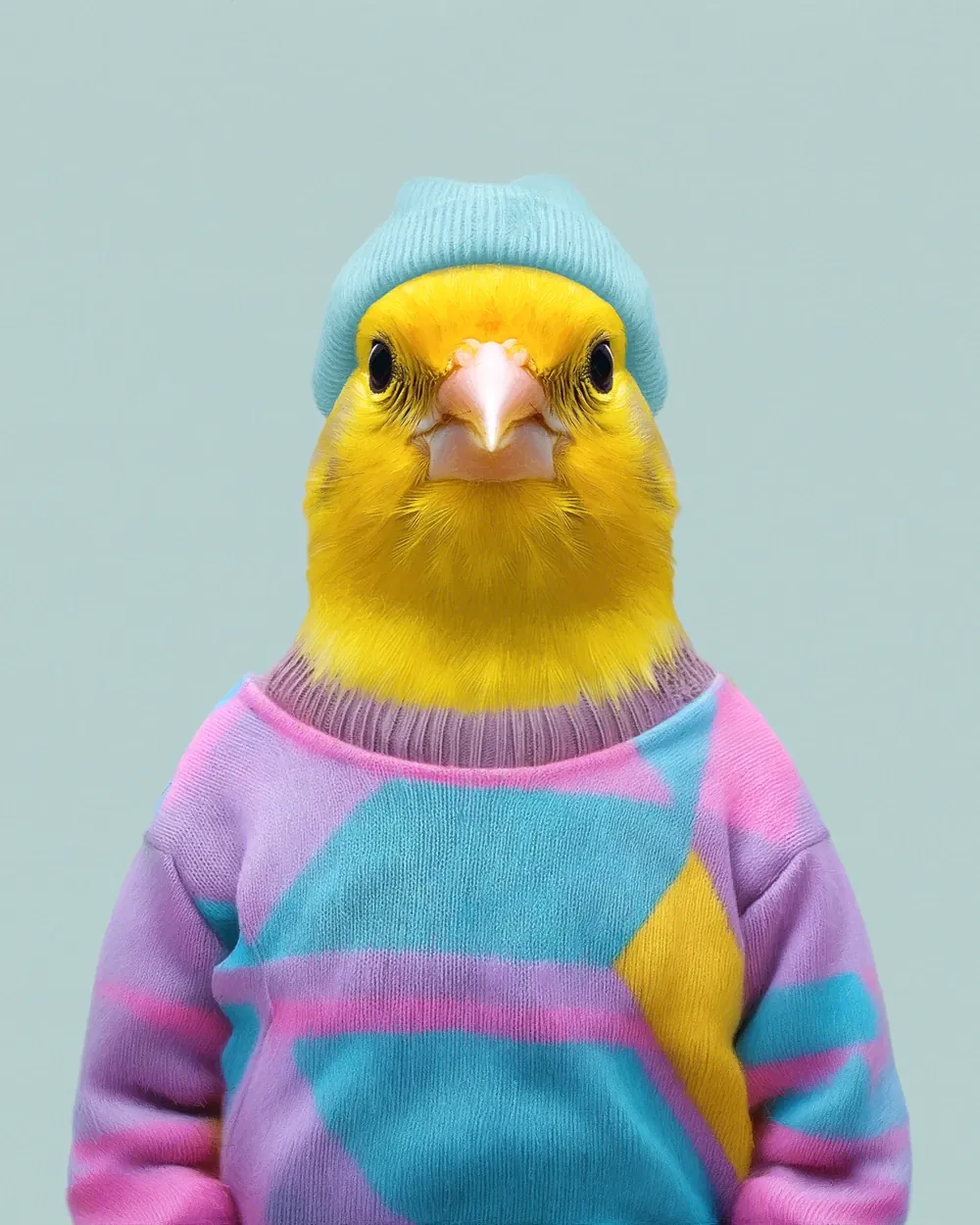
When he goes out early, before the tram fills up and before La Laguna turns up the volume, he closes the door carefully so as not to wake the neighbours in the courtyard. He puts on the blue knitted hat —for warmth and out of habit— and pulls up the grey collar of the layer underneath. The multicoloured knitted jumper looks too cheerful for someone who works in silence, but it serves him as a practical signal: if you see him cross, you know he's going to do something specific, not to improvise.

There are mornings when he records nothing. He just walks, notes down "breeze", "echo", "metal door" and comes back. Other times he comes into the station with cold fingers, pours himself a coffee and starts what almost no one sees: cleaning, trimming and labelling so that a sound isn't just a sound, but a memory with a date, a place and permission.

II
CH · 02 / 06

A house that breathes

Yeray lives in La Laguna, in a flat where ventilation is a household rule. It isn't a pretty phrase or a mysterious quirk: if the air goes still, his body notices straight away. That's why he opens windows before sitting down to work and why he avoids closed places with smoke or strong perfumes. If he has to talk to someone and the air is heavy, he suggests going outside without making a drama of it: "better out here".

His home is small, but it's organised as if it were a studio. There's a table with the audio interface, a hook where the headphones hang, a little box of cables labelled by colour and a high stool beside a window. He likes to work a little raised up, in natural light. In the kitchen there's the basics: bread, fruit, nuts. He grazes more than he sits down to long meals. If he skips breakfast, you can hear it in his voice.

On the balcony there are two hardy plants and a folding chair. He doesn't keep them as "decoration": he keeps them because they remind him that the air moves, that there's life beyond the archive. On hazy calima days, that chair stays inside and the window opens just a crack. He doesn't get angry at the weather; he adjusts his plan and that's that.

The knitted jumper has a clear role in that life: it's a soft layer that lets him move, carry a backpack and sit on the floor sorting material without feeling "office-dressed". The blue hat, on the other hand, is a soft boundary. When he puts it on, the noise of the world goes down, and so does his own.

Voiceline · the character’s canonical quote Yeray · Atlantic canary
Hover to pause
Clean air and clear permission. The sound gets archived under both conditions. AK · 19 · Yeray Clean air and clear permission. The sound gets archived under both conditions. Voiceline · Serinus canaria Clean air and clear permission. The sound gets archived under both conditions. AK · 19 · Yeray Clean air and clear permission. The sound gets archived under both conditions. AK · 19 · Yeray Clean air and clear permission. The sound gets archived under both conditions. Voiceline · Serinus canaria Clean air and clear permission. The sound gets archived under both conditions. AK · 19 · Yeray
§ 04 · Objects Open editions · everyday
10 pieces · Print on demand

Take Yeray home.

Biography · Block 02 of 03 Roots
Chapters · III–IV

The roots.

III
CH · 03 / 06

The invisible work of the archive

At the local university radio station, Yeray isn't the person who "goes on air" by default. He's the person who makes everything sound right. He sets levels, prevents feedback, reviews recordings and, above all, keeps order. His archive isn't a cloud folder with generic names: each folder carries a date, a place, a sentence of context and, when needed, an ethical note about permissions.

Years ago he made a small mistake that left a large mark: he broadcast a fragment in which someone from the neighbourhood was recognisable, without meaning to. There was no scandal. No public consequences. But a physical shame stayed with him, as if his throat had closed. Ever since, his rule is clear: if a person could be left exposed, the audio is cut or deleted.

That rule led him to invent another way of working. Instead of recording "about" people, he leads listening walks. They're short walks, in a small group, where it's decided what gets recorded and what doesn't. Sometimes the group only listens and nothing is kept. Sometimes a stretch of wind between buildings or the echo of a corridor is recorded. Yeray translates what he hears into actions: "there's more calm here", "the metal bounces here", "the birdsong mixes with the traffic here".

In the workshops with schools you see another side of him: not the technician's, but the translator's. He asks for silence without imposing it, suggests simple games ("close your eyes and count three sounds") and teaches them to stop. If a child speeds up, he turns the volume down a notch, opens a window and carries on. He doesn't moralise. He adjusts the surroundings.

His trade has conflicts that aren't talked about much: people who ask for "just one audio" without permission, events that want volume over clarity, meetings that drag on without order. He answers them all with the same thing: precision. He asks what exactly they need, offers three options and delivers the one he promises.

IV
CH · 04 / 06

Who keeps him steady

Yeray's life isn't built for large groups. It holds together in small format.

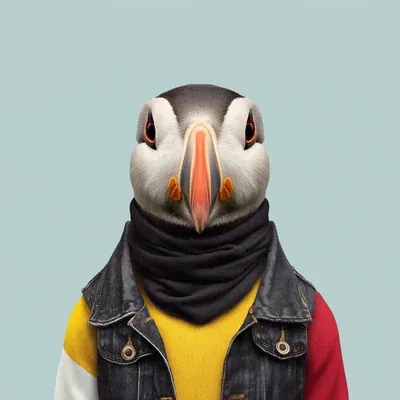
In his home there's a presence whose schedule doesn't match his: Luz, a Cory's shearwater who works at night near the north coast. Her shifts and Yeray's cross at an odd point: he leaves as she comes back. They don't live the bond as an epic story; they live it as affectionate logistics. Thermos flasks on the table, short messages, a note that says "windy today; don't go up the mountain". The biology shows in the everyday: like the birds that take turns caring for one another, they learn not to ask the other for the impossible.

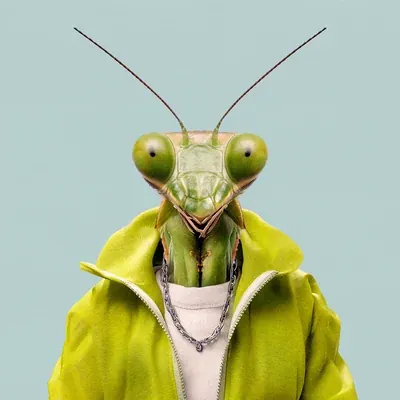
At work, his most stable friendship isn't always in person. Bruno, a praying mantis who lives in Valencia, shares an odd interest with him: how the city sounds when you don't try to make it sound "pretty". They swap short clips, hypotheses and protocols. Bruno pushes him to simplify; Yeray pushes him not to skip permissions. They look out for each other with craft.

And there's his family, who turn up without grand speeches. His mother keeps the clean-air rule as if it were an inherited habit. His grandmother —the one who taught him to recognise the neighbourhood by its sounds— is still the anchor when Yeray gets too demanding with himself. And his father, who doesn't fully understand the archive, understands something more useful: when Yeray is at his limit. Sometimes he calls and only says "did you eat?". It irritates Yeray and saves him at the same time.

They don't talk about "emotional management". They talk about concrete things: "eat something", "open the window", "don't work so late". With Yeray it works better that way.

Biography · Block 03 of 03 Craft
Chapters · V–VI

The present.

V
CH · 05 / 06

What he likes and what he avoids

Yeray likes mornings with soft light, inner courtyards where the sound is muffled and one-to-one conversations. He likes early coffee and he likes walking without headphones so he can listen to his surroundings. He likes objects that can be named without marketing: a notebook, a cable, a battery. And, contradictory as it seems, he likes colours. Not as decoration, but as a sign of life and as visibility when he crosses half-empty streets.

He avoids tobacco smoke with the same firmness with which other people avoid a bad night. He avoids strong perfumes. He avoids sharp bangs and slammed doors. He avoids meetings where no one decides anything. He avoids vague promises. The moment he senses that a conversation is going to turn into shouting, he cuts it off before it escalates. He doesn't leave out of superiority: he leaves because his body reads it as danger.

He has a particular way of regulating himself: small sounds. He doesn't always sing; sometimes he just hums three notes while connecting a cable or while walking down a narrow street. He does it to mark a rhythm, the way others pat their pocket to check they've got their keys. If someone hears him, they might think he's happy. He's really just tuning himself.

There's a small mystery he carries: a deleted audio he doesn't talk about. It isn't some great secret out of a novel. It's a mistake he doesn't want to spin into a story. Sometimes, when he's alone editing and hears a laugh too close to the microphone, he goes still for a second and switches tasks.

VI
CH · 06 / 06

Two possible futures, without drama

Yeray's future depends less on talent than on his capacity to close things off.

On the bright path, his archive becomes a tool: it's folded into an island education project, helping people learn to listen to their city and its green edges without invading them. Yeray learns to call a piece of work good once it does its job. He doesn't re-record ten times. He shares, with clear conditions, and lets himself be helped.

On the dark path, he doesn't break: he shrinks. He becomes a rigid guardian of the archive, stops sharing out of fear of getting it wrong, and his world grows smaller. He'd still be competent. He'd only lose the pleasure of going out to walk without recording.

For now, what keeps him on the good side is simple and repeatable: an open window, a thermos, a short list, and the certainty that listening can be a form of care if it's done with permission and with humility.

§ 06 · Connected souls 04 canonical bonds
Animal Kinhood

Connected souls.

§ 07 · Species file Serinus canaria
Fringillidae · Passeriformes

About the atlantic canary.

Habitat
The Macaronesian archipelagos of the Canary Islands, Madeira and the Azores, from sea level up to 2,000 metres in altitude. It occupies coastal scrub, laurel forest, pine woods, orchards, gardens and crop margins with open shrubby cover.
Diet
A specialist granivore that feeds mainly on the seeds of grasses, thistles, endemic scrub and herbaceous plants; supplemented with tender shoots, buds and small insects during the breeding season.
Lifespan
5-10 years in the wild / up to 15 years in captivity.
Weight
15-20 grams, with a length of 11-13 cm and a wingspan of 20-23 cm; the wild male shows a brighter yellow-green colouring than the female.
Adaptation
A highly complex song learned socially during the juvenile stage: each male develops an individual vocal sequence of up to 30 distinct syllables that he memorises and imitates from nearby adults, turning his repertoire into a unique identifying signature.
Record
In experiments at the Max Planck Institute (1990-2010), juvenile males exposed to tutors with complex repertoires were recorded developing more new neurons in the HVC nucleus of the telencephalon, making the canary the most studied vertebrate model for investigating adult neurogenesis linked to learning.

Main threats

  1. Habitat loss and degradation from unplanned urbanisation, infrastructure and the touristification of the island territory.
  2. High-intensity wildfires that destroy pine woods, laurel forest and summit scrub.
  3. Predation by feral cats and other invasive species (rats, weasels).
  4. Illegal capture for the songbird and captive-breeding market.
  5. Hybridisation with escaped domestic canaries, which threatens the genetic integrity of wild populations.

Did you know…?

01

Every wild canary learns its own song from the adults around it during its first months of life: it isn't born with it. This process makes the canary one of the most used models in neuroscience for studying how the brains of adult vertebrates generate new neurons each season.

02

Domestication began in the fifteenth century when the Castilian conquerors found the Guanches capturing these birds for their song. By the seventeenth century the canary was already the most prized cage bird in Europe, traded along routes that ran from Gran Canaria to Amsterdam and London.

03

The wild canary exists naturally only in the Canaries, Madeira and the Azores, three volcanic archipelagos of the North Atlantic. The populations of each archipelago show dialectal differences in song and slight morphological variations.

04

The brain of the wild male canary grows and shrinks measurably over the course of the year. In spring, when daylight hours and testosterone levels rise, the HVC nucleus of the telencephalon can increase its volume by up to 40%; in winter, it shrinks back down.

05

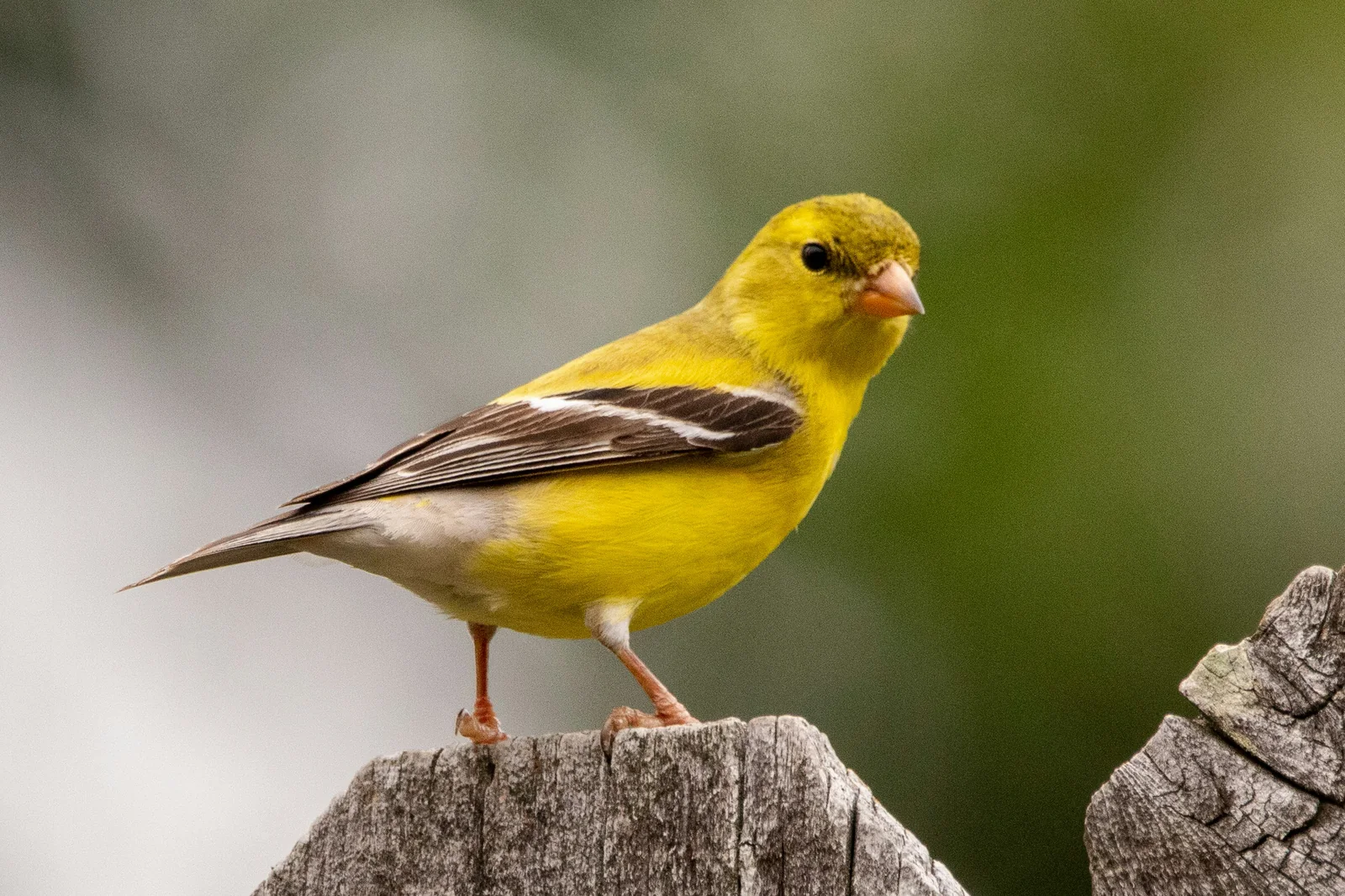
The wild canary has yellow-green plumage with brown streaking, an effective camouflage among Canarian vegetation. The intense yellow or white of today's domestic canaries is the result of centuries of artificial selection, starting from a recessive mutation identified in the seventeenth century.

06

The wild canary gives the Canary archipelago its name —not the other way around: the Canaries take their Latin name from Insula Canaria (island of the dogs), but the bird is called a canary because its captors named it after the islands where they caught it.

§ 08 · Conservation three programs · verified
Atlantic canary

Help protect this species.

Every purchase helps, but a direct donation does more. Three NGOs with specific programs verified for this species.

No. 01 / 03

SEO/BirdLife.

Sociedad Española de Ornitología

Active delegation in the Canaries since 1992; carries out censuses of breeding birds, citizen-science programmes and campaigns against illegal capture.

Donate to SEO/BirdLife
No. 02 / 03

GOHNIC.

Grupo de Ornitología e Historia Natural de las Islas Canarias

A Canarian association specialising in island ornithology and natural history; publishes bird inventories and works on outreach and conservation advocacy.

Donate to GOHNIC
No. 03 / 03

BirdLife.

BirdLife International

A global network of which SEO/BirdLife is the partner for Spain and Macaronesia; publishes the IUCN assessment of the Atlantic canary and coordinates regional strategies.

Donate to BirdLife
Animal Kinhood · 19 characters

Nineteen names. Nineteen stories. Nineteen personalities. One same project.

Full catalogue · Drop 01 — Q3 2026 Explore Animal Kinhood