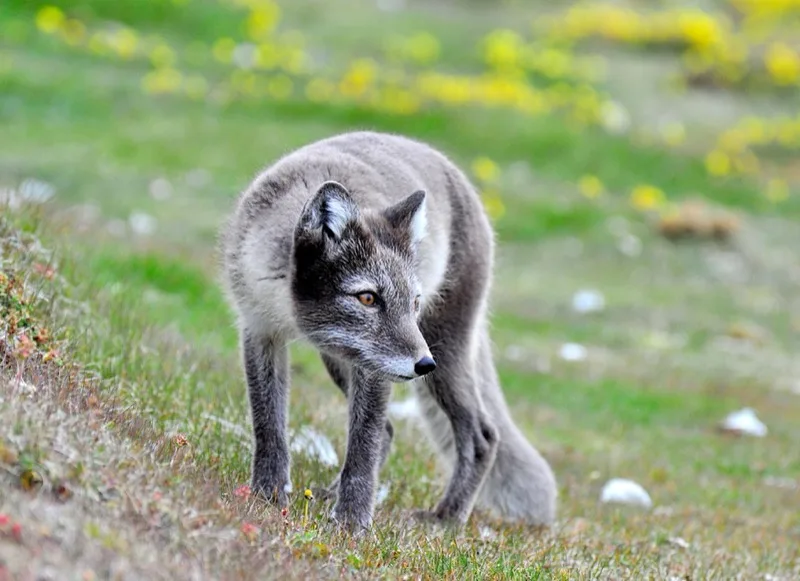
The six o'clock call
His mother's call came at six in the morning, right as he was stepping out of the cold-storage room. Otto, an Arctic fox, still had the minus-twenty cold clinging to his clothes when he learned that Ragnhild had died. He didn't ask for the day off. He sat on the locker-room bench and stayed still for forty minutes, hands in his pockets, then went back to his shift.
Ragnhild was the reindeer-Kin who had raised him in the afternoons in Hammerfest while his mother worked long shifts. She wasn't his mother, and no blood relation either. She was the older neighbor with the basement grow-lamp garden and the labeled jars, the one who taught him to tell one fermentation smell from another, and to stay quiet when silence was worth more than any explanation.
The following week he took the night bus to Hammerfest, brought three boxes down from the basement — seeds, preserves, a hardback notebook — and rode back with them in the seat beside him. He was twenty. It's the worst thing that's ever happened to him, and he still hasn't looked it in the eye.