Animal Kinhood Wild animals Least Concern
12 min read 8 chapters
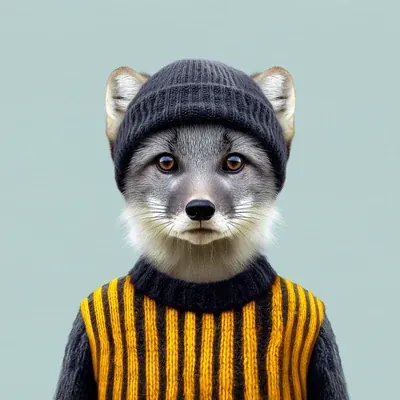
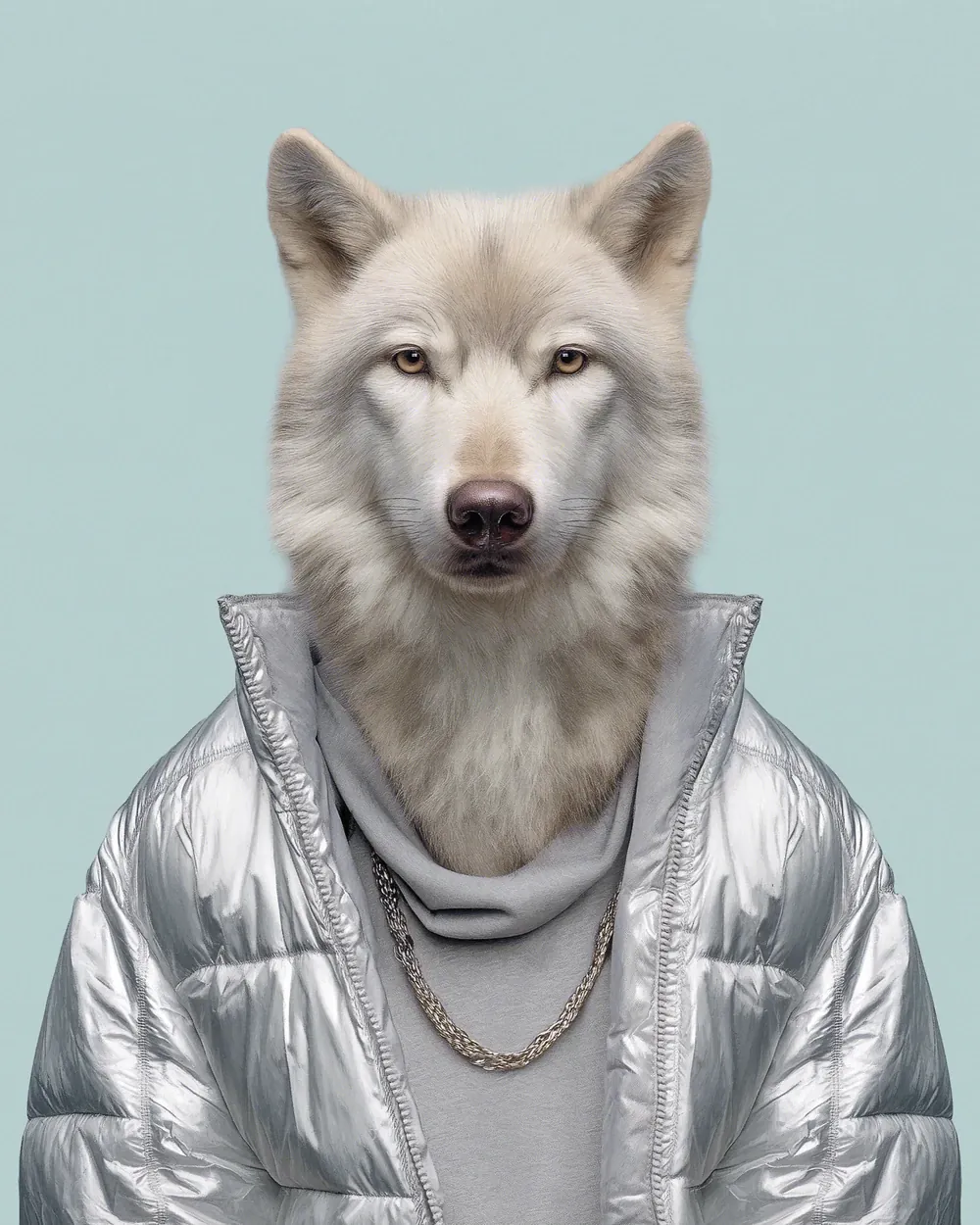
Benjamin · Arctic wolf AK · 04 Benjamin PHOTO ©YP · 2025
Animal Kinhood · Wild animals No. 04 / 19 Episode · Benjamin
Canis lupus arctos

Benjamin.

Arctic wolf

A route done well doesn't need you to explain it afterwards.
Add it to your Kinhood.Already part of your Kinhood.
Biography · Block 01 of 03 Arctic wolf
Chapters · I–II

The story.

I
CH · 01 / 08

The vocation that arrived by snowmobile

At fourteen, Benjamin was taller than most boys his age. Quiet in class, good with his hands. He wasn't interested in football or hockey, but he could walk for hours across the tundra without getting bored. Sometimes alone, sometimes with his cousin David. The walks were silent. He learned to read the sky and the wind not as a skill but as a habit: look up, look far, register.

At sixteen an Environment Canada technician came to Igloolik. He needed a local to take him by snowmobile to an automated weather station outside town. Benjamin volunteered. He spent three days watching the technician calibrate sensors, solder connections, clean solar panels, download climate data. He said almost nothing. When he got home, he told his mother: "I want to do that."

He finished secondary school and moved to Iqaluit at eighteen. Arctic College: two years of instrumentation and electronics. Iqaluit felt enormous — eight thousand people, which says something about where he came from. He shared a residence with three students. The constant noise made him tense: the dirty kitchen, the conversations that went nowhere, the television on at eleven at night on a Tuesday. But the structure of the technical programme suited him: concrete problems, verifiable solutions, things that either work or don't.

That's where he met the pilot. She was interning at First Air, talked a lot and laughed loud. Benjamin listened. They connected because neither of them was pretending to be something else. Fifteen years later they're still friends.

II
CH · 02 / 08

Isachsen

At twenty-two, Benjamin, arctic wolf, was already working for Environment and Climate Change Canada. First long route: six stations in the Queen Elizabeth Archipelago, three weeks by snowmobile and small plane. At the third station — Isachsen, Ellef Ringnes Island, one of the most remote abandoned bases in the Arctic — the weather worsened and the pickup flight was delayed five days.

Alone. Without satellite coverage the first forty-eight hours because the antenna had been wind-damaged. Food for three days that he stretched to five. Outside temperature: minus forty-seven. The station's generator had an intermittent fault that could leave him without heating. He fixed it with improvised material.

What changed him wasn't the danger. It was the clarity. No voices, no screens, no schedules. Only the wind, the instruments and his capacity to sort things out. When the plane arrived, the pilot asked if he was okay. Benjamin said: "Perfectly." And it was true, but not entirely. Because he also discovered something uncomfortable: that he had felt no urgency to go back. That total solitude didn't hurt him. That worried him. He called his mother that night and spoke for twenty minutes, twice his usual.

Voiceline · the character’s canonical quote Benjamin · Arctic wolf
Hover to pause
A route done well doesn't need you to explain it afterwards. AK · 04 · Benjamin A route done well doesn't need you to explain it afterwards. Voiceline · Canis lupus arctos A route done well doesn't need you to explain it afterwards. AK · 04 · Benjamin A route done well doesn't need you to explain it afterwards. AK · 04 · Benjamin A route done well doesn't need you to explain it afterwards. Voiceline · Canis lupus arctos A route done well doesn't need you to explain it afterwards. AK · 04 · Benjamin
§ 04 · Objects Open editions · everyday
10 pieces · Print on demand

Take Benjamin home.

Biography · Block 02 of 03 Roots
Chapters · III–IV

The roots.

III
CH · 03 / 08

What came after learning to be alone

The years that followed were years of internal calibration. He became very good at his job: on time, precise, self-sufficient. He was promoted to senior technician at twenty-six. More stations, longer routes, responsibility for the rookies arriving from the south who didn't know that at minus forty you have to sleep with your socks on.

He learned to dose his solitude. He set himself rules: call his mother every two days, eat with the pilot when he was in Iqaluit, go to Igloolik once a year for Christmas. He didn't always keep them, but having them anchored him.

He bought an apartment in Iqaluit with his savings. A small studio in a government building overlooking Frobisher Bay. He furnished it with the minimum. The first time the pilot visited, she said: "It looks like a mountain refuge." Benjamin took it as a compliment.

The apartment is his fixed territory. Everything in its place: the tools on the workbench by the window, the parka on the hook, the char frozen in the fridge. When he comes back after three weeks on a route he needs nothing to have changed. Heating at seventeen degrees. Window always open a crack, even in winter. White sheets, grey towels, no colour. The only bit of shine in the whole apartment is a photo of his mother and uncle Thomas on the shelf and a topographic map of the archipelago on the wall.

He always dresses in greys, whites and silvers. It isn't an aesthetic decision — or he doesn't see it as one. It's deep comfort. A colleague once gave him a red T-shirt. He folded it, put it away and never wore it. He didn't say anything.

The metallic puffer jacket he wears in the portrait he bought with his first fixed salary. Shiny nylon with a silver finish, high collar, open zip. The previous one was second-hand and too big. The inner lining has an engine-grease stain that can't be seen from outside. He hasn't tried to clean it.

IV
CH · 04 / 08

The chain

At twenty-five, Benjamin went to Igloolik to visit uncle Thomas. Thomas took a metal box out of the cupboard. Inside was a silver chain. Plain links, slightly matte from wear. "It was James's. Now it's yours." Benjamin looked at it for a minute without touching it. Then he put it on.

He hasn't taken it off since. Only to work with heavy machinery: he keeps it in the inner pocket of the puffer, where it won't snag. If anyone asks, he says "it was a gift". The only point of contrast in his whole wardrobe. Silver on grey on white.

Thomas died two years later. Benjamin was twenty-eight. He lost the man who had taught him to repair things, to fish without talking, to be present without filling the silence. The first Christmas without him, his mother cooked caribou exactly the way Thomas did. The smell filled the house. Benjamin sat at the table and ate without talking. His mother didn't talk either. Afterwards they washed up together. She said: "Piujuq, are you okay?" He said: "Yes." It wasn't entirely true, but neither was it a lie. He understood something that night: that presence is worth more than conversation. That being there, eating the same food, touching the same plates.

Biography · Block 03 of 03 Craft
Chapters · V–VI–VII–VIII

The present.

V
CH · 05 / 08

The wolf routine

Benjamin's life is divided into two rhythms. Two-thirds of the month away: weather stations scattered across the Queen Elizabeths, travelling by Twin Otter or snowmobile. The remaining third in Iqaluit: reports, logistics, video calls with the Ottawa office.

On a route, Benjamin works alone or with a junior colleague. He calibrates sensors, downloads climate data, repairs antennas, replaces batteries. He eats what he carries: dried caribou, bannock, instant coffee. He sleeps in prefab huts with a generator and minimal heating. He doesn't follow a schedule: he eats when he's hungry, sleeps when he's sleepy. At stations where there's no one else, he runs on four- or five-hour blocks of work and rest. He doesn't use an alarm. He has a watch but rarely checks it.

When a twenty-two-year-old technician freshly arrived from Montreal asked how you survive up there, Benjamin handed him a packet of tea, a wind-up torch and said: "Sleep with your socks on. The rest you learn."

That same rookie once adjusted the generator regulator without following protocol. The fuel tank froze. Benjamin didn't say anything. He dismantled the tank, heated the lines with a hand torch, purged the system. Three hours. The rookie watched in silence. When he finished, Benjamin told him: "Next time, ask." The rookie nodded. He never skipped a protocol again.

Benjamin looks after people that way: with acts, not words. He starts the generator before the others get up so there's hot coffee. He sends paper postcards to his mother when he passes through Resolute, even though they take weeks to arrive. He leaves the best portion of food for whoever arrives last. The pilots of the supply planes save him coffee because they know he'll fix their radio if it fails.

VI
CH · 06 / 08

The signal and the silence

In Iqaluit, Benjamin walks along the Frobisher Bay waterfront when he gets home from work. He watches the ice in winter, the water in summer. No headphones. At home he doesn't put on background music: silence or the weather radio. He checks the forecasts before bed even if he isn't going out. He chews ice when he thinks.

He communicates with short voice messages. Fifteen seconds, functional. "I'm at Eureka. All fine. Back Thursday." His mother got used to that format. She knows that if Benjamin calls and talks for more than a minute, something's wrong.

With [Otto](/animal-kinhood/otto/), an arctic fox who lives in Tromsø, communication works the same way. They met on an online forum for weather-station technicians. Benjamin gave him advice on anemometer calibration. Otto sent him a tin of Norwegian smoked cod by post. They met once in Helsinki, at a polar meteorology conference. They had dinner together. They didn't talk much. They didn't need to. Now they send each other voice messages every two or three weeks. Sometimes photos of extreme weather conditions, no text. Otto talks more; Benjamin listens. Otto once sent a two-minute audio describing a storm in Tromsø with ambient wind. Benjamin listened to it twice, smiled and recorded: "Same here but without the sea."

In meetings, Benjamin looks distracted but then quotes details no one remembers having said. In a video call with the Ottawa office, six people were talking at once. Benjamin waited. When there was silence, he said one sentence that resolved the problem. No one knew how he'd arrived at the conclusion.

He doesn't care who leads if the task gets done well. At the Eureka station, when the generator failed, a younger technician had the right idea. Benjamin told him "do it" and held the torch for him. He doesn't need it on record that he already knew.

VII
CH · 07 / 08

The photo and the wolf

At twenty-seven, at Eureka, Benjamin saw the most beautiful aurora of his life. Green and purple over the station. He took out his phone, took a photo. He looked at it. He deleted it. He sent his mother a voice message: "Mum, I've just seen the most beautiful aurora of my life." And nothing more. Then he drew the aurora on a piece of weather-report paper and gave it to the pilot. She framed it. He doesn't understand why, but he likes that she did.

There are things that only exist if you live them. A boss once asked him to send reports by WhatsApp with photos. Benjamin sent the photos, without text. The boss learned to read the images.

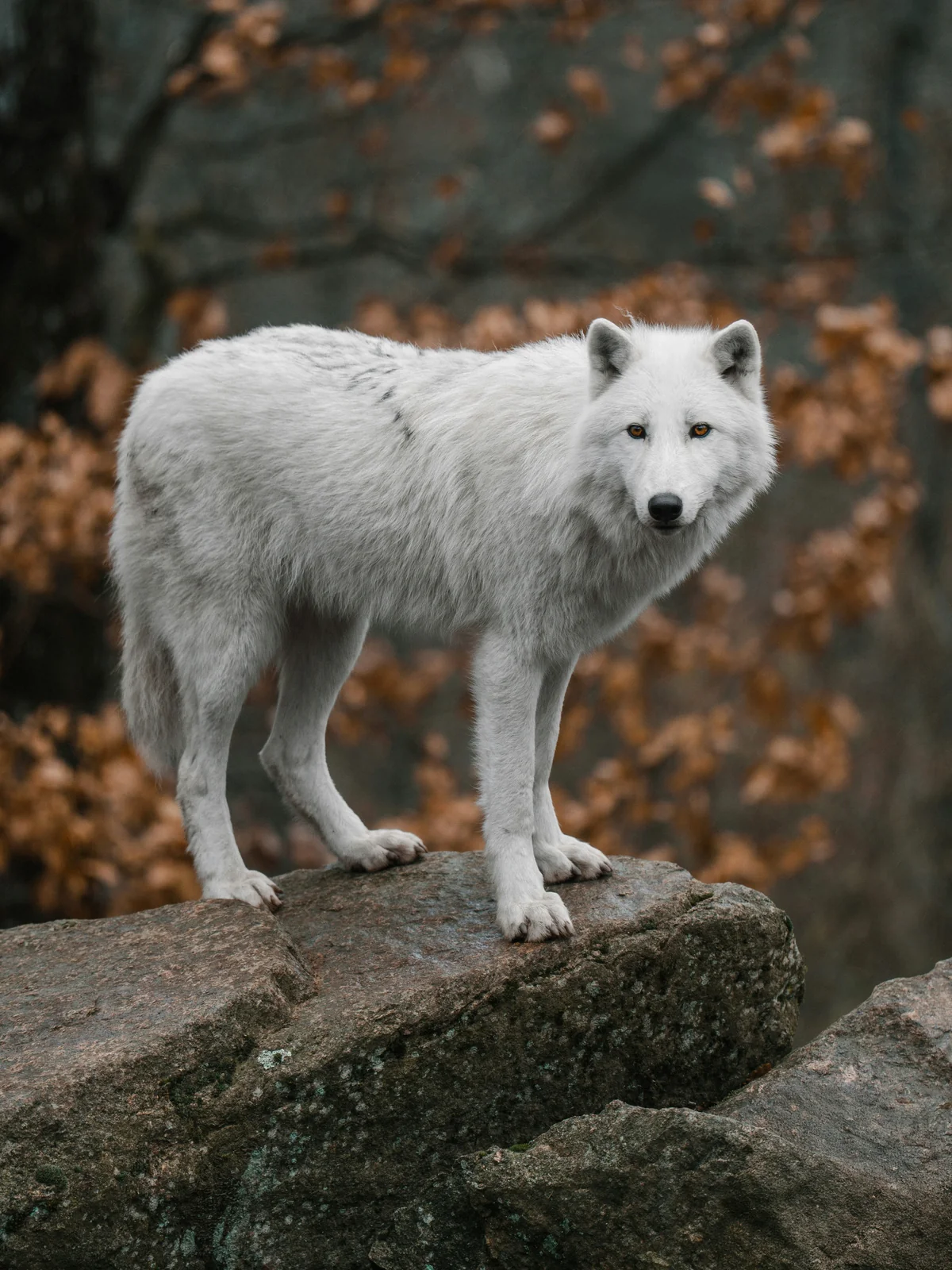
At thirty — right now —, near the Eureka station, checking a camera trap, an arctic wolf appeared twenty metres away. White. Still. The Ellesmere wolves haven't been hunted. They don't flee from people, they don't attack them. They simply are. Biologist David Mech spent parts of twenty-four summers living alongside a pack six hundred miles from the North Pole; the cubs untied his bootlaces.

This wolf looked at Benjamin. Benjamin stood still. Not out of fear: out of recognition. The wolf smelled him from a distance, tilted its head and kept walking. Benjamin sat down in the snow and stayed there a while. Then he recorded an audio for the pilot: "I saw a wolf. I didn't scare it."

VIII
CH · 08 / 08

Three things he doesn't say

His mother wants him to come back to Igloolik. Siku is getting old. Thomas is gone. Benjamin knows. He doesn't know how to be more present without giving up the work that gives meaning to his days. He calls every two days. He goes for Christmas. It isn't enough and they both know it.

The government wants more telemetry and fewer technical visits. If automation moves forward, his job may change or disappear. Benjamin doesn't know how to do anything else. He doesn't want to do anything else.

And the cold is getting to him a little more than before. Not much. But a bit. He hasn't told anyone.

What he wants is the Ellesmere route. The most remote, the most coveted among veteran technicians. Not for prestige — he doesn't know what to do with prestige. Because Ellesmere is the place where he saw the wolf, where he saw the aurora, where the world shrinks to instruments, ice and the certainty of knowing exactly what he has to do.

His usual farewell, when he leaves on a route, is always the same. He doesn't say goodbye: he says "I'll be back". And he comes back.

> **Canonical quote:** He doesn't say goodbye. He says "I'll be back" and he comes back. Benjamin prefers the certainty of a completed route to the drama of a bigger word.

§ 06 · Connected souls 01 canonical bonds
Animal Kinhood

Connected souls.

§ 07 · Species file Canis lupus arctos
Canidae · Carnivora

About the arctic wolf.

Habitat
High Arctic tundra, exclusively north of the tree line: Queen Elizabeth Archipelago (Ellesmere, Axel Heiberg, Devon, Ellef Ringnes) in Canada and northern Greenland. A landscape of permanent permafrost without tree cover, with temperatures that swing between -50 °C in winter and 5-10 °C in the brief Arctic summer.
Diet
Opportunistic predator of large prey: muskox (frequency ~39% in scat analysis), arctic hare (~55%), Peary caribou when available, and occasionally lemmings, arctic foxes and birds. Hunts in groups with pack coordination; capable of fasting up to two weeks between successful captures.
Lifespan
7-10 years in the wild / up to 17 years in captivity.
Weight
Between 32 and 80 kg, with males notably larger than females. Compact build with sturdy limbs: shorter and broader than other grey wolves of lower latitudes, in direct application of Bergmann's and Allen's rules.
Adaptation
A permanently white double coat — dense insulating undercoat and waterproof outer layer — combined with paw pads with counter-current blood circulation that prevents the feet from freezing on ice. Rounded ears and a shortened snout reduce heat-loss surface, an optimisation no other terrestrial canid of its size shares.
Record
Biologist L. David Mech camped by the den of a pack on Ellesmere Island for parts of 24 consecutive summers (1986-2010), less than 600 miles from the North Pole, without cages or fences, documenting behaviours never recorded before. No other wild wolf species has allowed scientific coexistence of such duration and proximity.

Main threats

  1. Accelerated climate change in the Arctic: permafrost thaw and regional warming — advancing at a rate two to four times the global average — alter tundra vegetation and reduce the availability and distribution of key prey like muskox and Peary caribou.
  2. Prey population collapse: extreme-weather variations (rain-on-snow events) can devastate arctic hare and caribou populations — the two most consumed species — in a matter of months, causing famine in packs with no alternative dispersal routes.
  3. Industrial development in the Arctic: the expansion of oil, gas and mineral extraction infrastructure in the Canadian Arctic brings acoustic disturbance, habitat fragmentation and pollution to one of the last practically intact terrestrial ecosystems on the planet.
  4. Genetic isolation: High Arctic packs are geographically confined by sea and ice, which limits gene flow and increases vulnerability to disease or extreme climate events affecting a single population.

Did you know…?

01

The arctic wolf was never hunted by humans in the High Arctic: no hunter ever made it up there. So it never learned to fear them. The Ellesmere packs let researchers sit within metres of their den and accompany the cubs on their first explorations.

02

Only the dominant pair and sometimes the beta female have pups. The rest of the pack — older siblings, uncles, unpaired adults — invests its energy in caring for those cubs: watching them, feeding them, teaching them. If resources get scarce, breeding self-regulates without imposition. The whole pack implicitly chooses how many offspring it can support.

03

Unlike the arctic fox, which moults from white to brown in summer, the arctic wolf keeps its white coat for twelve months. In the High Arctic, where snow covers the ground almost all year, permanent white is more efficient than seasonal moulting: camouflage never fails even if spring arrives late or not at all.

04

A single pack can range over up to 2,600 km² of hunting territory — an area larger than Lebanon — while still returning each season to the same dens in the same rock formations. The Ellesmere wolves reuse the same shelters for decades, generation after generation, as if the place had a memory of its own.

05

In the High Arctic, the sun doesn't set for months in summer and doesn't rise for months in winter. The arctic wolf doesn't synchronise its activity with light: it hunts, sleeps and moves by internal cycles independent of the solar clock, adapting to the rhythm of its prey rather than the rhythm of day. It is one of the few terrestrial mammals with this complete dissociation from the photoperiod.

§ 08 · Conservation three programs · verified
Arctic wolf

Help protect this species.

Every purchase helps, but a direct donation does more. Three NGOs with specific programs verified for this species.

No. 01 / 03

WCS.

Wildlife Conservation Society

Runs research and conservation programmes in the Canadian Arctic and in grey-wolf range areas, collaborating with indigenous communities and government agencies to monitor wildlife populations and maintain functional habitats in remote regions.

Donate to WCS
No. 02 / 03

WWF Arctic.

WWF Global Arctic Programme

Works specifically in the Arctic to protect marine and terrestrial biodiversity against climate change and industrial development, monitoring Arctic fauna — including canids and their key prey such as muskox and caribou — and promoting regional governance with indigenous communities.

Donate to WWF Arctic
No. 03 / 03

CWF.

Canadian Wildlife Federation

Canadian organisation dedicated to the conservation of Canada's wildlife and habitats, with active programmes for species at risk and biodiversity that cover the arctic wolf's territory in Nunavut and the northern territories.

Donate to CWF
Animal Kinhood · 19 characters

Nineteen names. Nineteen stories. Nineteen personalities. One same project.

Full catalogue · Drop 01 — Q3 2026 Explore Animal Kinhood