Animal Kinhood Wild animals Least Concern
12 min read 5 chapters
Yara · Black caiman AK · 18 Yara PHOTO ©YP · 2025
Animal Kinhood · Wild animals No. 18 / 19 Episode · Yara
Melanosuchus niger

Yara.

Black caiman

The silence before the pulse is what matters.
Add it to your Kinhood.Already part of your Kinhood.
Biography · Block 01 of 03 Black caiman
Chapters · I

The story.

I
CH · 01 / 05

Estúdio Igapó opens at two in the afternoon

Eleven forty-seven at night. Yara has spent forty minutes on the same second of a master and hasn't moved a fader. She's sitting in the main armchair of the control room at Estúdio Igapó, ground floor of the pale yellow building with green shutters on rua dos Educandos, southern Manaus. Facing the Solimões. Three minutes to the river on foot if it's needed.

The shutter is down. It's always down. The only light comes from an amber lamp to the left of the console and from the green peak of the meters. Air conditioning at 19 °C — outside, the city sits at 32 °C and drops slowly toward dawn. Beside the armchair, a blanket woven in Tefé by her paternal grandmother. Under the console, two armchairs: hers and the client's. Three don't fit. That's the rule.

The second she keeps replaying has a woman's deep voice, a breath, and a cavaquinho string that comes in late. Yara isn't looking for the mistake. She's waiting to hear whether the mistake is the one she thought. "Deixa eu ouvir uma vez más," she murmurs to no one. She goes back three seconds. Listens. Goes back again. Listens. On the seventh pass she brings the string up 0.8 dB and the voice down 0.3 dB. The breath stays intact. That's it.

Between Manaus and the rest of the world, Yara works against the sun. Her day starts at two in the afternoon, when the city lowers its voice because of the heat, and ends at one in the morning. Between eight and eleven in the morning she's out: a walk along the shore, errands, a call to her mother Nilza, Mercado Adolpho Lisboa if there's fresh pirarucu. The siesta, from one to two, is untouchable. "Pera lá," she says if anyone tries to schedule that slot. And they hang up.

Regulars call her "a Yara do Igapó." In the Rio Negro communities where she's recorded, they call her "the one with the small boat and the black cables." And a Rio de Janeiro engineer who took her under his wing when she was twenty-two and taught her mastering remotely christened her Mãe-do-corte — mother of the cut — because she handled cuts tenderly. That name stuck in the head of everyone who later hired her. She likes it and it makes her uneasy in equal measure.

Voiceline · the character’s canonical quote Yara · Black caiman
Hover to pause
The silence before the pulse is what matters. AK · 18 · Yara The silence before the pulse is what matters. Voiceline · Melanosuchus niger The silence before the pulse is what matters. AK · 18 · Yara The silence before the pulse is what matters. AK · 18 · Yara The silence before the pulse is what matters. Voiceline · Melanosuchus niger The silence before the pulse is what matters. AK · 18 · Yara
§ 04 · Objects Open editions · everyday
10 pieces · Print on demand

Take Yara home.

Biography · Block 02 of 03 Roots
Chapters · II

The roots.

II
CH · 02 / 05

Ambush patience as a professional technique

There's an idea Yara says out loud when a new client presses her on deadlines: I charge what I said I charge, and I deliver when I said I'd deliver. The minimum rate for a master is eight hundred reais. In the last two years she's lost three clients for refusing to drop below that floor. She's gained four who pay her more. She knows the math works out.

What she doesn't say out loud, because there's no need, is how she works. She can go twenty minutes without speaking in front of an artist. The first time it happens to a young client, the silence makes him uncomfortable. By the second session, he imitates it. By the third, he asks for it.

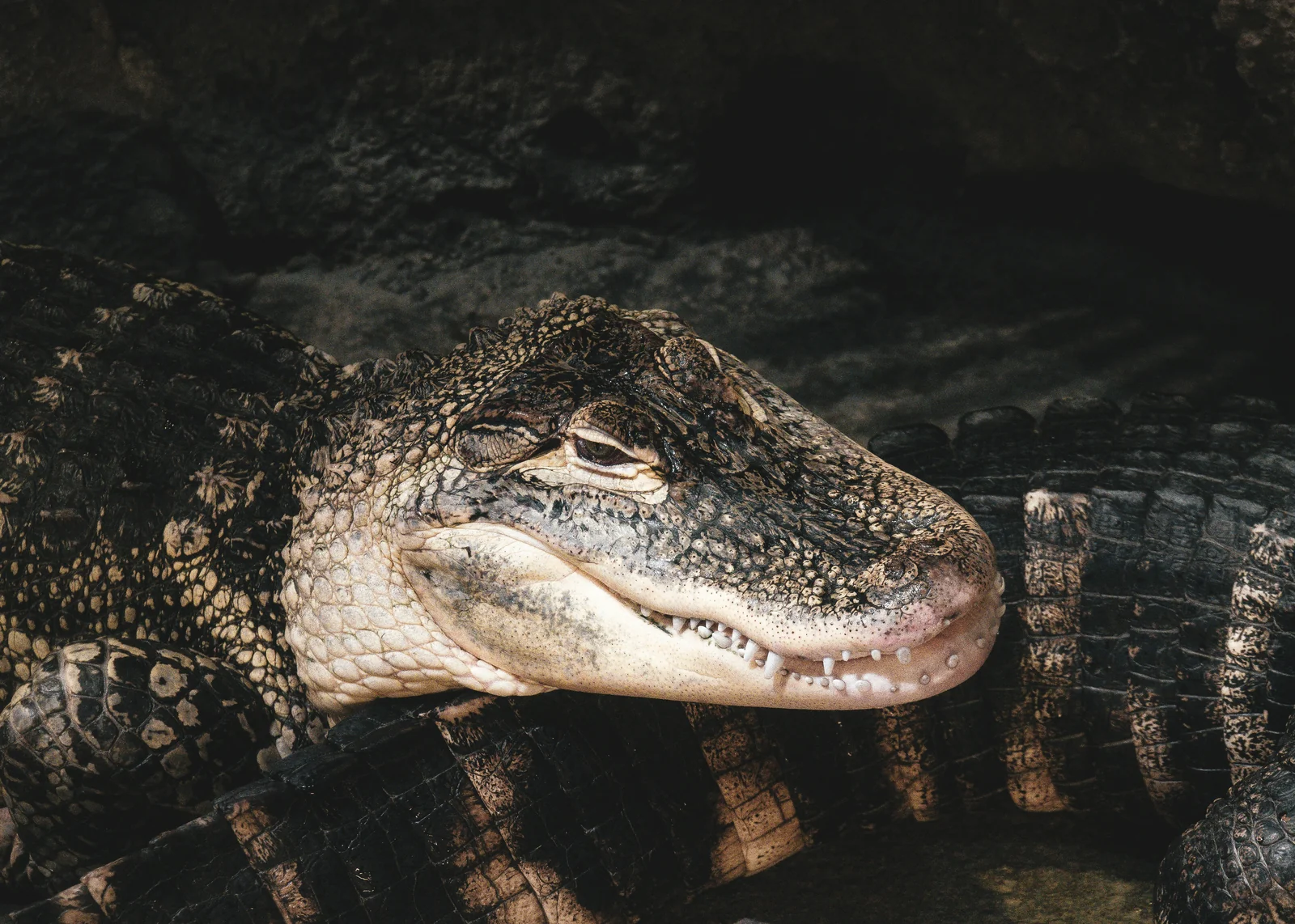
There's a kind of waiting the black caiman practices in the várzea igarapés: it stays motionless for hours with only its eyes and nostrils above the water, and when movement comes, the jaw closes in a tenth of a second. Patience isn't a moral virtue for this species: it's the whole hunting technique. The rest of the body only works if that stillness holds. Yara doesn't explain it that way to anyone. But when a band comes in to mix and the drummer starts talking over the playback, she switches off the console, stands up, and says: "when you're ready to listen without talking, we'll mix again." There's never an argument.

Last year, a rapper from Brasília hired her on a recommendation. He didn't read the emails where she explained the schedule. On delivery day he asked for five changes. Yara delivered what had been agreed, charged in full, and wrote a single line of goodbye: next time, read the emails before recording. She cut contact with absolute courtesy. Lost the referral. Reinforced the rule: no signed contract, no project start. She never signs the same day a contract is put in front of her. Never.

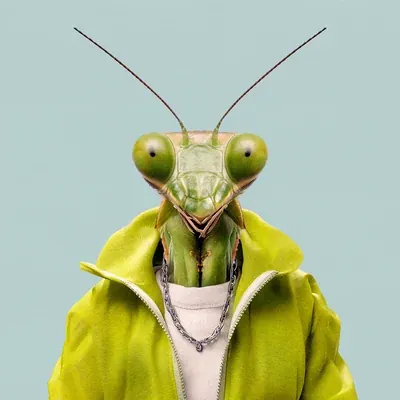
Every two months, Bruno — a praying mantis who does live sound at a theater in Marseille — calls her on Zoom. He works the other face of the trade: a full room, three hundred people breathing at the same time, the mix that has to come out right the first time and live. She works alone with headphones, a second that repeats forty times, and a master that never comes back. They write each other about compressors, about the difference between a poorly monitored live show and a badly delivered master, about what to do when a client pays late. They've never met in person. The oceanic distance lets them ask each other things without ego. When Bruno faces a young engineer who talks back to him on tour, he gets an audio from Yara: your silence is worth more than his shouting. When Yara hesitates about raising her rates, Bruno sends her his numbers.

Biography · Block 03 of 03 Craft
Chapters · III–IV–V

The present.

III
CH · 03 / 05

Gold is memory, not ornament

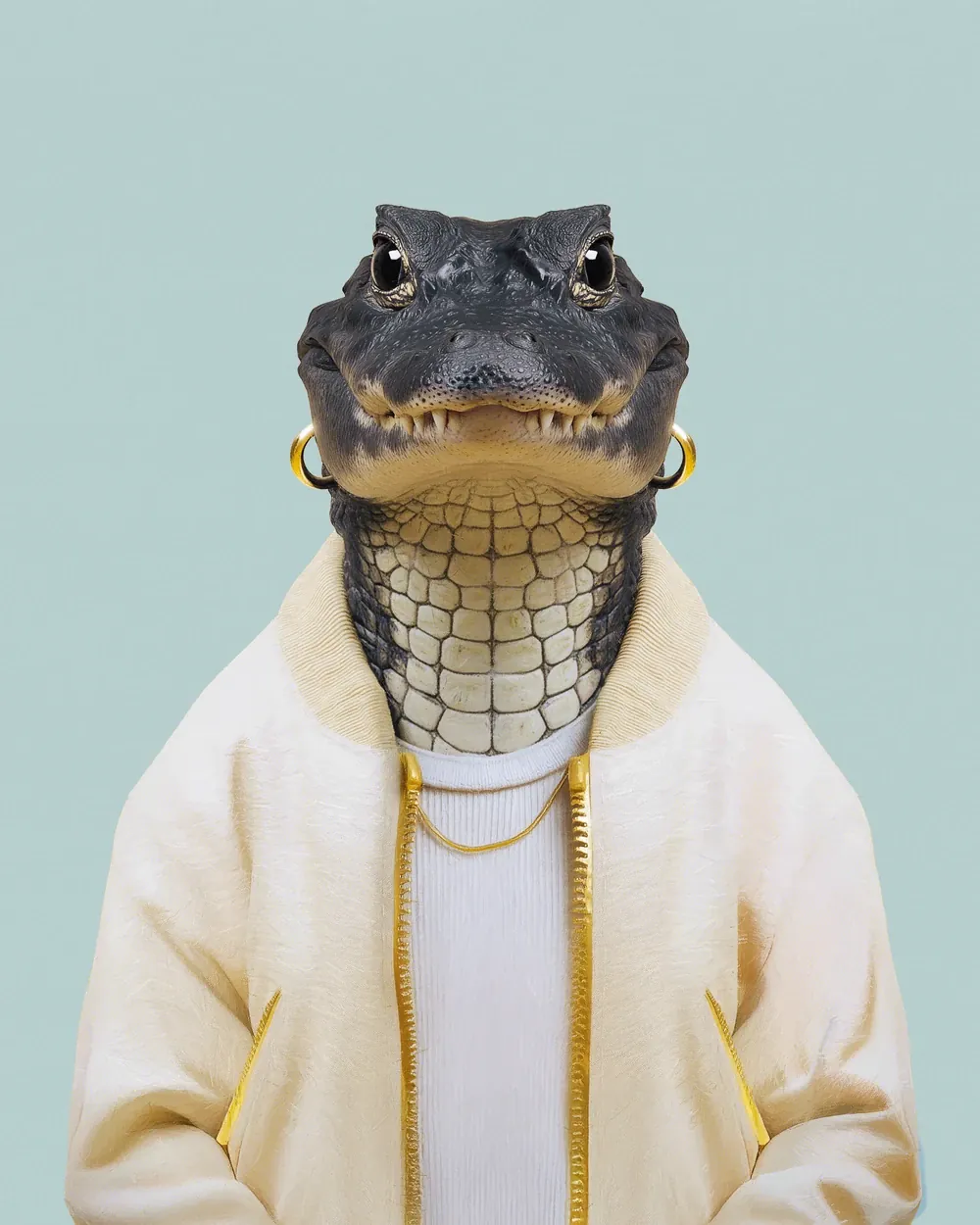
The thin chain Yara wears around her neck is sixteen years old. Nilza gave it to her in 2007, two years after her fifteenth birthday, because saving the gold took that long. It's a chain with no pendant, minimum link, the kind that in northern Brazil marks adult women with a stable life. It says I have memory without needing to shout that I have money. The clasp wears out every two years and Yara takes it to the jeweler on rua Barroso without taking it off; the jeweler repairs it around her neck. She sleeps with it on.

The two gold hoops, one on each side of her lower jaw, look identical at first glance and aren't. The left one belonged to Dona Mercedes, her paternal grandmother, who lived in Tefé until June 9, 2019, and died while Yara was traveling on the Manaus–Tefé riverboat — thirty-six hours upstream. She arrived eighteen hours late. Her grandmother was already prepared. Yara put the left hoop in her ear the night before the wake, next to the other piece of jewelry Dona Mercedes had wanted, and the next day, in the room where she had slept thirty times since she was five, she took it back from the porcelain saucer.

The right hoop Yara bought the following week, back in Manaus, at a small jeweler's in the do Centro district that worked with inherited fine gold. She asked the jeweler for one identical to the left, but that wouldn't look identical. The jeweler understood. He cast a different quarter-weight. The two hoops weigh the same but are not the same.

The right hoop has a tiny dent at the bottom. It happened in a session with a singer from Parintins, in the spring of 2022: the XLR cable of the main microphone caught on the hoop when she stood up from the chair. Yara didn't say anything, finished the take, and stored the episode as an anecdote she doesn't tell. The left hoop, on the other hand, remains intact. What she inherited she keeps intact; the one she bought goes with her to the office every day.

Her mother Nilza, now retired, still sells fish two days a week at Mercado Adolpho Lisboa out of habit. She lives in the do Coroado district, forty minutes by bus from Educandos. On Sundays she sends Yara a plastic tray with stewed tucunaré, cassava flour, and a fruit in season. Yara hasn't refused a tray in six years — since the pandemic, when her own billing disappeared for six months and those trays kept her standing. She doesn't need the food. She never refuses the gesture. When Nilza writes on WhatsApp, she calls her filhota. Yara is thirty-three.

IV
CH · 04 / 05

The sound archive is the second river

There's another job Yara does that almost no one knows she does. Two or three times a year she rents a small boat — with a driver, never without — and goes up Rio Negro igarapés and tributaries with a portable recorder, two dynamic microphones protected from humidity, and an A5 cloth-bound notebook. She spends between one and three days with riverside families who've agreed to host her. She records. Lullabies in Tukano, work songs, everyday phrases, the sound of water against the hull of a wooden canoe, the noise of an old radio tuned to the regional station. She pays what the family asks, before recording, in cash. She comes back to Manaus and files it away. Some of the files she sends to the Museu da Amazônia with a condition written into the email itself: only those who request it in writing may listen. It isn't published. It isn't uploaded to platforms. It isn't sampled.

She began without knowing she was beginning. In August 2019, Dona Mercedes died, and on the trip back to Manaus, along with the bag of clothes, Yara brought a cardboard box with fourteen cassettes from the eighties. Voices of river women singing amateur boi-bumbá in the patio of the Tefé house. The tape had mold. Yara smelled it before opening it. She got to Manaus and didn't record anything of her own for three weeks. On the fourth, she opened the first cassette, cleaned it with isopropyl alcohol, ran it through the head of a borrowed Tascam, and began digitizing.

It took her eight months. Fourteen hours of audio. No one had kept those recordings before Dona Mercedes, and Dona Mercedes kept them under the bed because she didn't know they were worth anything. Yara keeps them on a hard drive she only connects to the computer once a month. She sends copies to the Museu da Amazônia, to an archivist at the Universidade Federal do Amazonas, and to a distant cousin who works at a community radio station in Tefé.

In the river basin there's a tradition older than any professional studio: the hunters who nearly drove the black caiman to extinction in the sixties and seventies are today, in Mamirauá, the same ones who count them at night with flashlights from a canoe. A whole community learned that a river without its predator is a river that dies. The technique that served for killing now serves for watching. The red eye of the caiman, which used to shine at fifty meters against the hunters' lights, now shines for those who count. Yara has thought about that turn more than once, though she doesn't name it. The northern Amazon music industry, which for decades extracted melodies and rhythms without paying, may end up being preserved by people from that same place. She thinks it and works. She doesn't say it.

There's a project she's been turning over for three years and hasn't put together yet. A small label, digital distribution, thirty records in five years, permissions signed with the communities that sing, direct royalties. It would be called Igapó Records. It exists in a cloth-bound notebook where Yara writes down the days she's thought about dropping everything — there are three since 2020 — and on the next page, the name of the label and the list of the first ten possible records. She hasn't shown it to anyone. She'll tell her mother when she launches it.

V
CH · 05 / 05

What holds

The entrance plaque of Estúdio Igapó is slightly crooked. Nilza put it up with her own hands in September 2022, the day they christened the place. Igapó, in tupí-guaraní, means the flooded forest that forms when the river rises and enters among the trees without tearing them out. A place that works because it knows how to stay underwater without dying.

Yara has never straightened the plaque. It's the only visible sign of a hand that wasn't hers, and she's decided it should stay that way. When a new client walks in for the first time, they look at the plaque, look at Yara, and sometimes make a remark. She doesn't answer. She goes up three steps, opens the door to the control room, lowers the shutter one notch further, and sits in the main armchair. The air conditioning hums. The client looks for their armchair, the only one there is. They sit down. Yara hits play.

Outside, Manaus keeps sweating toward dawn. Inside, the sound arrives clean.

> **Canonical quote:** When a band comes in to mix and the drummer talks over the playback, Yara switches off the console until the room goes quiet.

§ 06 · Connected souls 01 canonical bonds
Animal Kinhood

Connected souls.

§ 07 · Species file Melanosuchus niger
Alligatoridae · Crocodilia

About the black caiman.

Habitat
The entire Amazon basin (Brazil, Ecuador, Peru, Bolivia, Colombia, Guyana, Suriname, Venezuela, French Guiana), the Orinoco basin and the Pantanal wetlands. It inhabits slow waters, lakes, várzea (seasonal floodplain), and both blackwater and whitewater.
Diet
Opportunistic generalist. Adults eat fish (piranhas, catfish, pacus), capybaras, smaller caimans, waterbirds and turtles. It hunts by ambush, almost fully submerged: only eyes and nostrils break the surface, and success depends on patience, not speed.
Lifespan
Estimated at 50-80 years in the wild, with little reliable captive data given the rarity of long-lived captive individuals.
Weight
Adult males of 300-400 kg and up to 5-6 m; females of 150-200 kg, rarely exceeding 3 m. Marked sexual dimorphism in size and jaw weight.
Adaptation
Black, thermoregulatory skin unique among crocodilians: it absorbs early sunlight and lets the animal regain body temperature after nights of hunting. Combined with the tapetum lucidum, which makes its eyes reflect red-orange at 50-80 m from a canoe.
Record
Radio-telemetry on the Juruá river (Brazil) documents individuals that travel up to 7 km in a single night and return systematically to the same resting spot at dawn, evidence of kilometre-scale spatial memory.

Main threats

  1. Residual poaching for meat (salted and dried, bound for Belém and Manaus) following the 1986 CITES ban on the skin trade.
  2. Growing human-caiman conflict: attacks on fishers and livestock along the banks driven by the population's recovery, documented by INPA over the past decade.
  3. Extreme Amazonian droughts in 2023-2024 that shrink várzea habitat and cause reproductive bottlenecks as nests dry out.
  4. Deforestation, illegal mining and large dams (Belo Monte, Madeira) that alter the hydrology and fragment populations across the range.
From 556 to 3,789 individuals in Mamirauá between 1994 and 1999 (+580% in five years) thanks to community-based management. The model has been partly replicated in other Brazilian and Colombian Amazonian reserves.

Did you know…?

01

The young emit ultrasonic calls from inside the egg that synchronise the opening of the nest and trigger an immediate maternal response. The female regulates the temperature of the floating vegetation mound (1.5 m high × 2-3 m across) by opening it with her snout to keep the eggs between 31-33 °C.

02

Among crocodilians, only a few species exceed twelve months of post-hatching care. The black caiman accompanies its young for up to eighteen months, an exceptional span that explains why the overhunting of breeding females collapsed the species within two human generations.

03

Its bank excavations during the dry season create pools known as *caiman holes* that retain water and shelter dozens of species. Removing it triggers documented trophic cascades: piranhas and pacus multiply and decimate the small fish the ribeirinhos depend on.

04

Between 1994 and 1999, active community-based management in the Mamirauá Reserve (Brazilian Amazon) raised the population by 580% in five years (from 556 to 3,789 individuals). Record densities in the core zones: 1.8-2.4 individuals per linear km of bank, the highest recorded anywhere.

05

Between 1950 and 1970, more than seven million black-caiman skins were traded, causing a 99% collapse across most of its range. Its listing on CITES Appendix I in 1986 banned international trade and allowed the recovery to begin.

06

Population genetics studies document differentiation between the populations of the Orinoco, the Colombian Caquetá and the Brazilian Juruá. Each refuge holds a distinct gene pool, critical to the species' resilience in the face of extreme droughts like those of 2023-2024.

§ 08 · Conservation three programs · verified
Black caiman

Help protect this species.

Every purchase helps, but a direct donation does more. Three NGOs with specific programs verified for this species.

No. 01 / 03

Instituto Mamirauá.

Instituto de Desenvolvimento Sustentável Mamirauá

A caiman research and management programme active since 1992 in the Mamirauá and Amanã Reserves (Brazilian Amazon). It generates the biological and ecological data that underpin sustainable community harvesting and the recovery model that is a world reference for *Melanosuchus niger*.

Donate to Instituto Mamirauá
No. 02 / 03

CSG-IUCN.

Crocodile Specialist Group

An IUCN worldwide network of biologists, managers and NGOs dedicated to the 23 crocodilian species. It coordinates the Red List assessments, publishes the action plans and maintains the dedicated black-caiman working group that advises the range states.

Donate to CSG-IUCN
No. 03 / 03

WCS Brasil.

Wildlife Conservation Society Brasil

WCS's Brazilian chapter, with fieldwork in the Amazon focused on aquatic fauna, human-wildlife conflict and community governance of resources. It documents the black caiman's recovery and the growing conflicts with fishers driven by the population's expansion.

Donate to WCS Brasil
Animal Kinhood · 19 characters

Nineteen names. Nineteen stories. Nineteen personalities. One same project.

Full catalogue · Drop 01 — Q3 2026 Explore Animal Kinhood