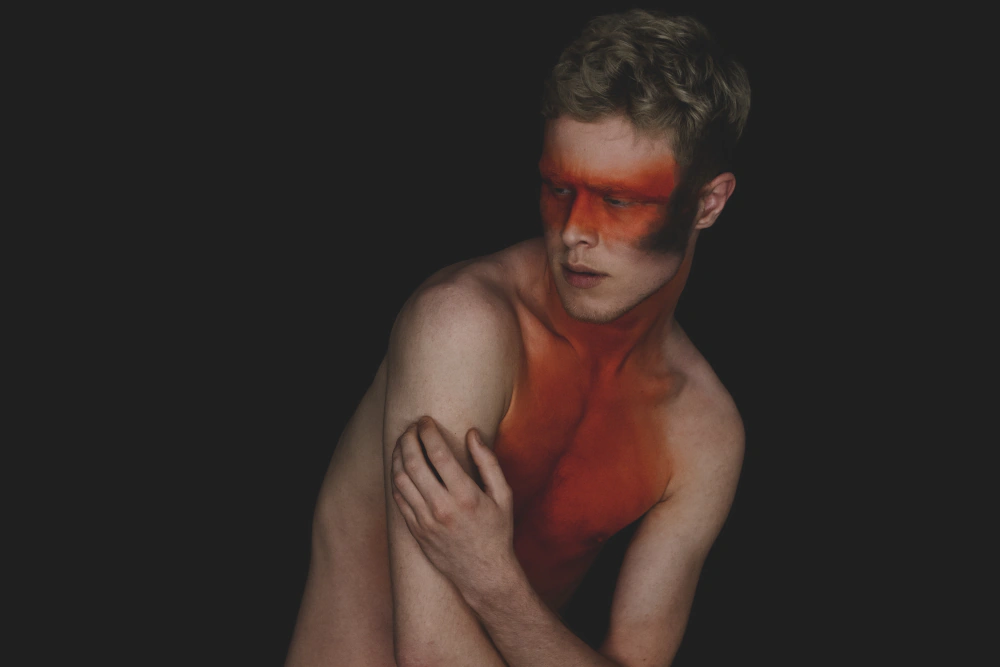
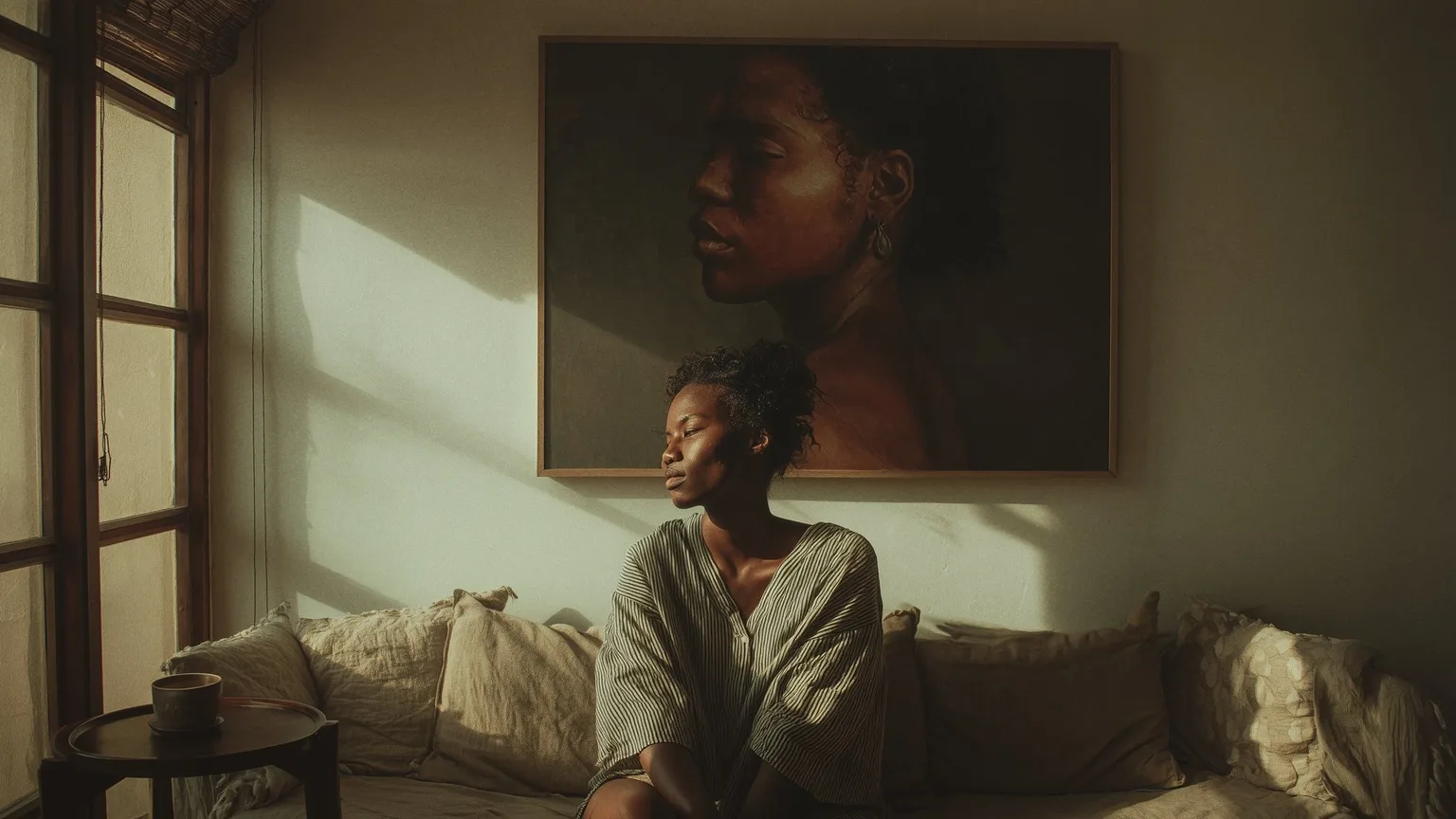
Shadows and light: how Jungs shadow appears in my work.
A personal reflection on the Jungian shadow and how it appears in my creative process without looking for it. I talk about duality, autism, imagination and the role of art as a mirror.
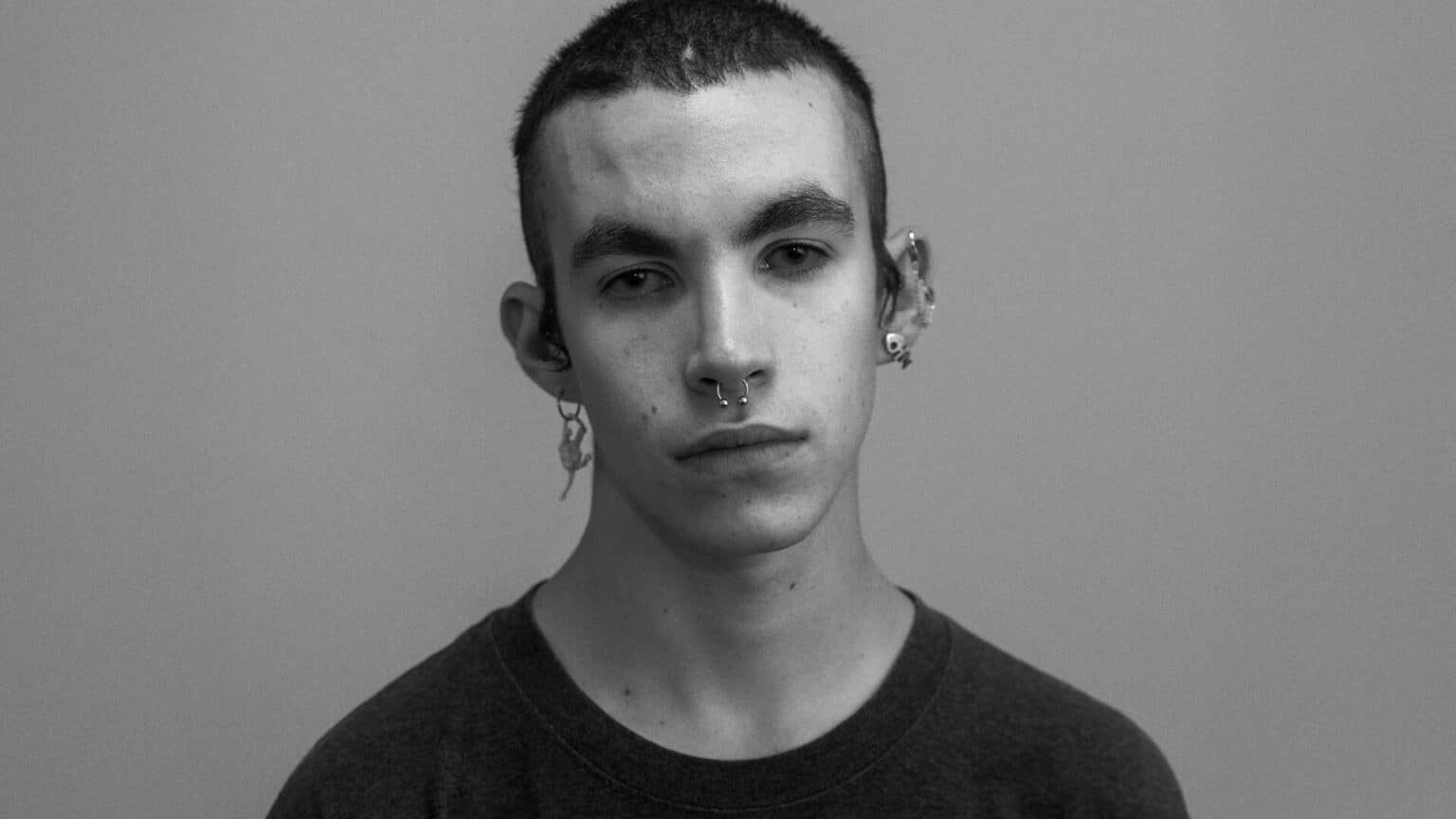
Between curiosity and what we hide
Have you ever caught yourself thinking: «This I feel, I can’t show it»? By «this» I mean that deep undercurrent that sometimes surfaces in our gestures or silences. It happens to me often. Before, I was not entirely clear about where this inner tension -between what I show and what I prefer to keep hidden- came from. Over time, and after a late diagnosis of autism, I began to connect the dots and realized that my way of perceiving the world, sometimes so intense and peculiar, has a lot to do with noticing details that most people overlook… including those that Carl Gustav Jung called the shadow.
I don’t mean that I deliberately think, «I’m going to represent the shadow in my works.» On the contrary, my creative process tends to be explosive and not at all planned: I experiment, I try things out, and suddenly something emerges that reminds me of that contrast between the pleasant and the disturbing, the tender and the disturbing. It happens to me again and again: without realizing it, the duality that Jung associated with that «other side» of ourselves comes to the surface.
The shadow according to Jung: hidden space, unavoidable expression
From the perspective of analytical psychology, Carl Gustav Jung described the shadow as the archetype that holds traits, impulses and desires that our self (the conscious part) would prefer to ignore or repress. This does not necessarily mean that it is «bad»: it simply brings together what does not fit the image we project of ourselves. Naturally, when someone mentions «the shadow,» we think of darkness or negativity. But Jung insisted that it also contains creative energy, which, if integrated, can help us grow.
In my own work I don’t tend to intentionally look for the shadow. For me, creating images -whether they are photographs, collages or portraits- is more a cathartic need, an impulse to pour out ideas without much previous reflection. Only later, when I look at them from a distance, do I notice that they convey something that I cannot express in words: a certain uneasiness or ambiguity. Often, even an apparently amiable or fantastic character is pierced by a faint signal that says, «Here’s something that doesn’t quite fit.»
Modern art and its constant flirtation with obscurity
A universal fascination, today freer than ever before
Art history is full of examples of our fascination with the dark side. However, in the modern art that creative freedom reaches another level. Many artists begin to explore their own inner conflicts, their relationship with the unconscious, and show it unreservedly: works that deal with taboo subjects, reveal psychic tensions or distort reality in an irreverent way. Each does it in his or her own way, but they all share the idea that there is something beyond the surface that art can bring to light.
For some, it is a political or social act; for others, a personal exorcism. In my case, I don’t follow a premeditated plan about what I want to criticize or denounce. I would say that my exploration of the shadow occurs behind my own intentions. I simply like to combine a pleasant atmosphere with a small detail that alters it. Why? Because that’s what emerges when I get carried away.
If I think about it, maybe there is a reason: my discomfort with «the different» or «the marginalized». I would have liked to photograph people «like me,» who felt out of place or lived on the margins, but I couldn’t get close enough in real life. I ended up replacing that desire by recreating them through fantasy: imagining characters that inhabit nebulous and hybrid zones, where sweetness can transform from one moment to the next into something disturbing.
A personal look: ASD and shadow perception
Living the world in my own way, with intensity
Since I received my ASD diagnosis in adulthood, I understood why social interactions sometimes threw me off and, at the same time, why I was haunted by certain visual or emotional details. It’s as if my internal radar picks up everything that others miss: a gesture, a color, a light out of place. That constant observation, coupled with the difficulty to express some emotional aspects, seeps into my work. It is not something planned, but the result of how I experience reality.
When I create, I don’t think, «I’m going to highlight my dark side» or «I’m going to emphasize this contrast.» Suddenly, the image appears, and upon seeing it I think, «There it is again.» Perhaps the shadow is my way of showing what I can’t say out loud: the mystery of my own contradictions, my fascination with the strange, or the discomfort that the excessively perfect provokes in me.
The shadow as a reflection, not as a pose
That’s why people sometimes comment to me: «Why are your portraits so weird? Are you trying to provoke?» And the truth is, no, at least not consciously. It just happens. I would say that the shadow creeps in because my mind doesn’t filter out those inner tensions. Where another sees a simple smile, I perceive an undercurrent. Where someone sees calm, I notice a slight restlessness. Without planning it, it ends up appearing in the work, and over time I have taken it further and further.
Intentionality (or lack thereof) in my creative process
Chaos and unfinished prototypes
It is true that in modern art many works present an elaborated discourse, a posture of the creator before certain themes. But I am more chaotic. I have hundreds of projects on my hard drive that I never finished: simple attempts or experiments. And in all that apparent disorder, something suddenly blossoms that captivates me. I work on it for a while, get tired and move on to something else. I don’t believe in perfection or in obsessively maintaining a single style.
This does not mean that my works lack identity, but rather that it becomes clearer when I see them as a whole, not separately. When I look at them this way, I notice the constant appearance of duality, of that «shadow» that emerges uninvited. My mind jumps to the next and the next, but the traces of that symbolic twilight remain, leaving a trail behind.
I am not here to moralize or to dramatize.
I know creators who immerse themselves in the shadow with an almost mystical aura, describing it as the source of their existential anguish or their personal epic. In my case I am more pragmatic: I neither glorify nor judge it; I simply live with it. Sometimes I am happy to see a work that arouses an emotion that I don’t know how to explain; others I ask myself, «Why does that picture that everyone loves leave me so indifferent?» In the end, that contrast seems honest to me, because it shows that we are not made of a single layer.
The frontier between reality and fantasy: representing the marginal from the imagination
Beings that I did not find on the street but in my sketches
I mentioned earlier that my inability to photograph marginalized people directly pushed me to create other beings in my mind: figures that personify «the other» without having to confront it literally. That turn towards the imaginary ended up giving my works a hybrid touch, almost as if I were painting creatures that could exist, though not quite. That is where the shadow finds its place for me: a space that is neither pure reality nor postcard fantasy.
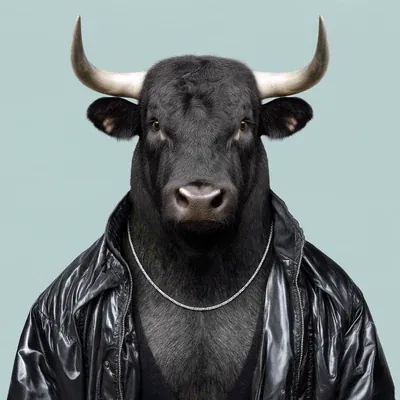
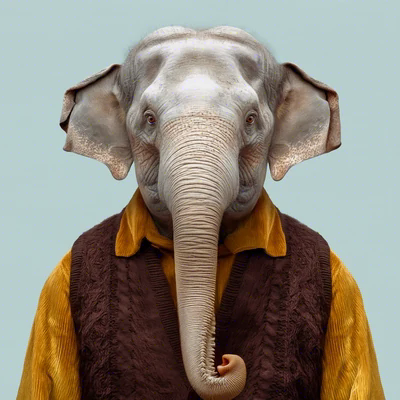
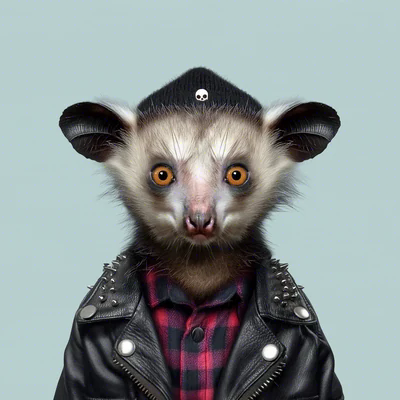
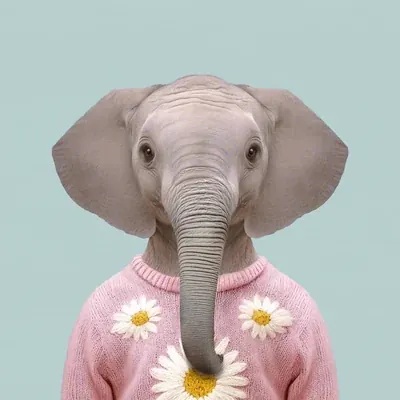
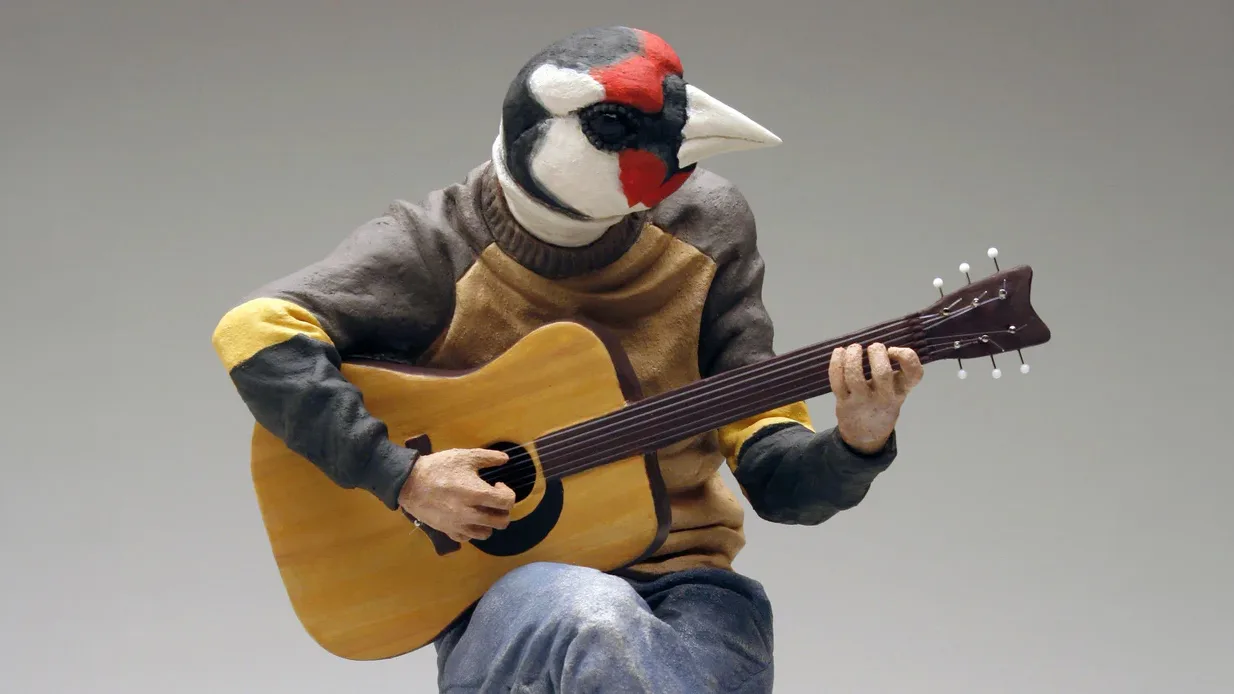
Sometimes I am told that my works border on that «unsettling valley», seeming close to something human (or animal, if we are talking about zoomorphic characters) but with a strangeness that makes me uncomfortable. It’s not that I sit around thinking, «I want to unsettle the viewer.» It just happens, and I think it’s the residue of what I can’t show directly in reality, coupled with my way of mixing tenderness with a dash of grim irony.
Duality as a personal language
Deep down, I believe that this duality between light and shadow defines my way of interpreting what surrounds me. A critical eye might say, «Your work is not uniform: sometimes it is kitsch, sometimes dark, sometimes luminous, sometimes scattered.» And it would be right. But it is precisely in that lack of uniformity that the sincerity of my process lies: the shadow appears in a colorful and clean piece as well as in a dark and nebulous one. Since I am not guided by a rigid conceptual framework, I let it emerge as it will.
The art, the shadow and the contour of a reflection
The shadow does not ask permission: it emerges
Going back to Jung, he said that the shadow is both personal and collective. I don’t see my art as a grand social statement or a manifesto about my inner life. It is rather a (chaotic) map of my creative trials. The shadow is there, not because I am looking for it, but because it is part of me: my amplified sensitivity and my difficulties in communicating. I believe that many contemporary artists have experienced something similar, perhaps without realizing it: the work says what we do not say, whether we like it or not.
And so, when observing the work of different creators, we notice that sometimes they share that aura of restlessness. It is the shadow making its way into a mural, a performance or a collage. Some do it consciously, with direct nods to Jung’s theory; others let it happen by chance. In any case, the shadow emerges every time the frontier with the unknown is diluted.
ASD, hyperobservation and link with the marginalized
Perhaps my habit of looking at everything - and focusing on the margins - comes from my autistic condition. I used to see it as a problem, because it was hard for me to follow the linear paths that others follow. Now I understand it as a kind of sensory advantage: by filtering less, I perceive details that others don’t see, and in those details dwells the shadow. I believe that this ability to detect peculiar nuances gives me a natural window to that «B side» of the image. And maybe that’s why my portraits, although far from being perfect or calculated, always transmit me that sharp sensation of «something more».
Final thoughts: when there is no intention, but the result resonates.
If there’s one thing I want to make clear, it’s that my relationship with the shadow is not born from an intellectual plan. Perhaps that is the most valuable (and the most chaotic) of my creative process: I do not set stylistic or thematic goals; I act on impulse and then I discover the traces I have left. And among those traces, the shadow is always there, as evidence of my own internal complexity and my difficulties to express myself.
Modern art, with its freedom and infinite ramifications, offers me the perfect context for these pieces to exist. I don’t need to justify mixing neon colors with a dark tone, or sweet motifs with a touch of distortion. Nor do I need to force a «political message» if I don’t feel it. Each work is what it is and connects with each viewer according to its own shadow. After all, the power of creation also lies in what it awakens in others.
Sometimes I feel that I unwittingly invite people to confront their own duality: «Is this lovely or disturbing? Why does that detail make you uncomfortable?» And I like to think that’s the unconscious gift of letting the shadow creep into my images. When you neither force it nor deny it, it just flows, and each person receives it according to their own darkness and their own light.
Sources or references
-
Jung, C. G. (2025). Aion: contributions to the symbolism of the self.. Trotta.
-
Jung, C. G. (2025). The dynamics of the unconscious. Trotta.
-
Garcia, S. (2024). Art as a vehicle for psychic transformation: an exploration of archetypes and symbols in Carl Gustav Jung’s Analytical Psychology. (Doctoral dissertation, DMC).
-
Hernández-Mella, R., D’Meza-Pérez, P., et al. (2020). Art and its transforming power. Unconscious, emotions and creation according to the Jungian perspective.. Science and Society, 45(1), 25-34.