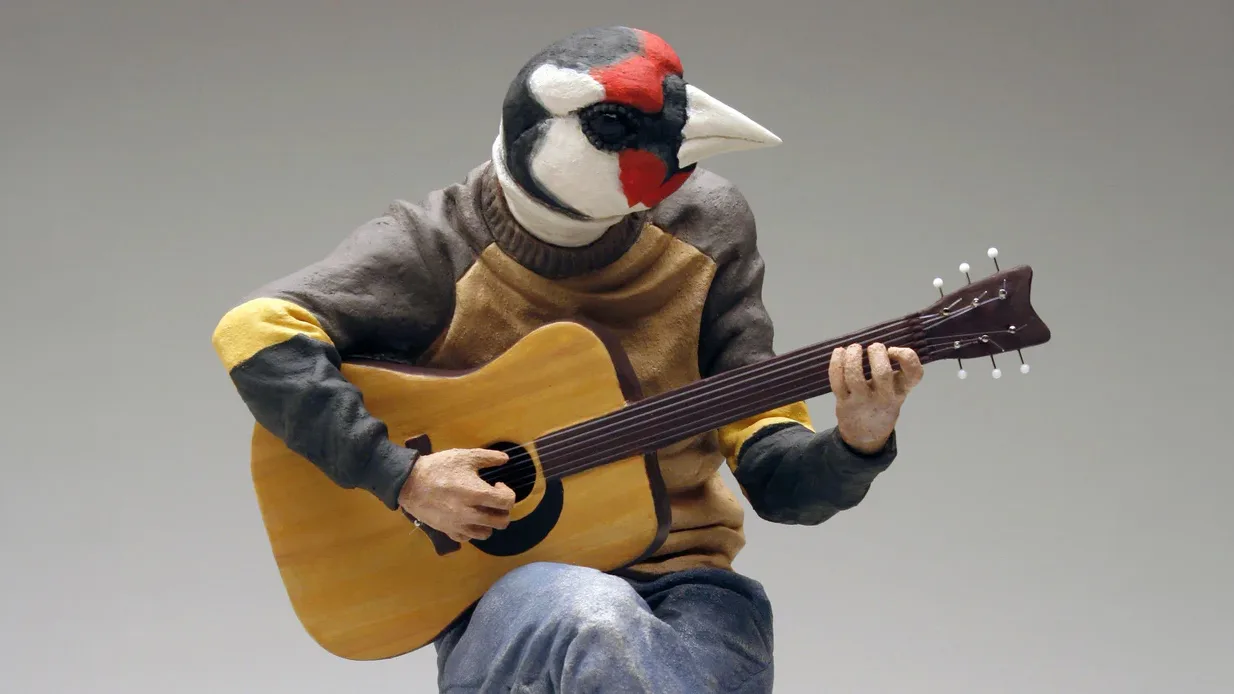
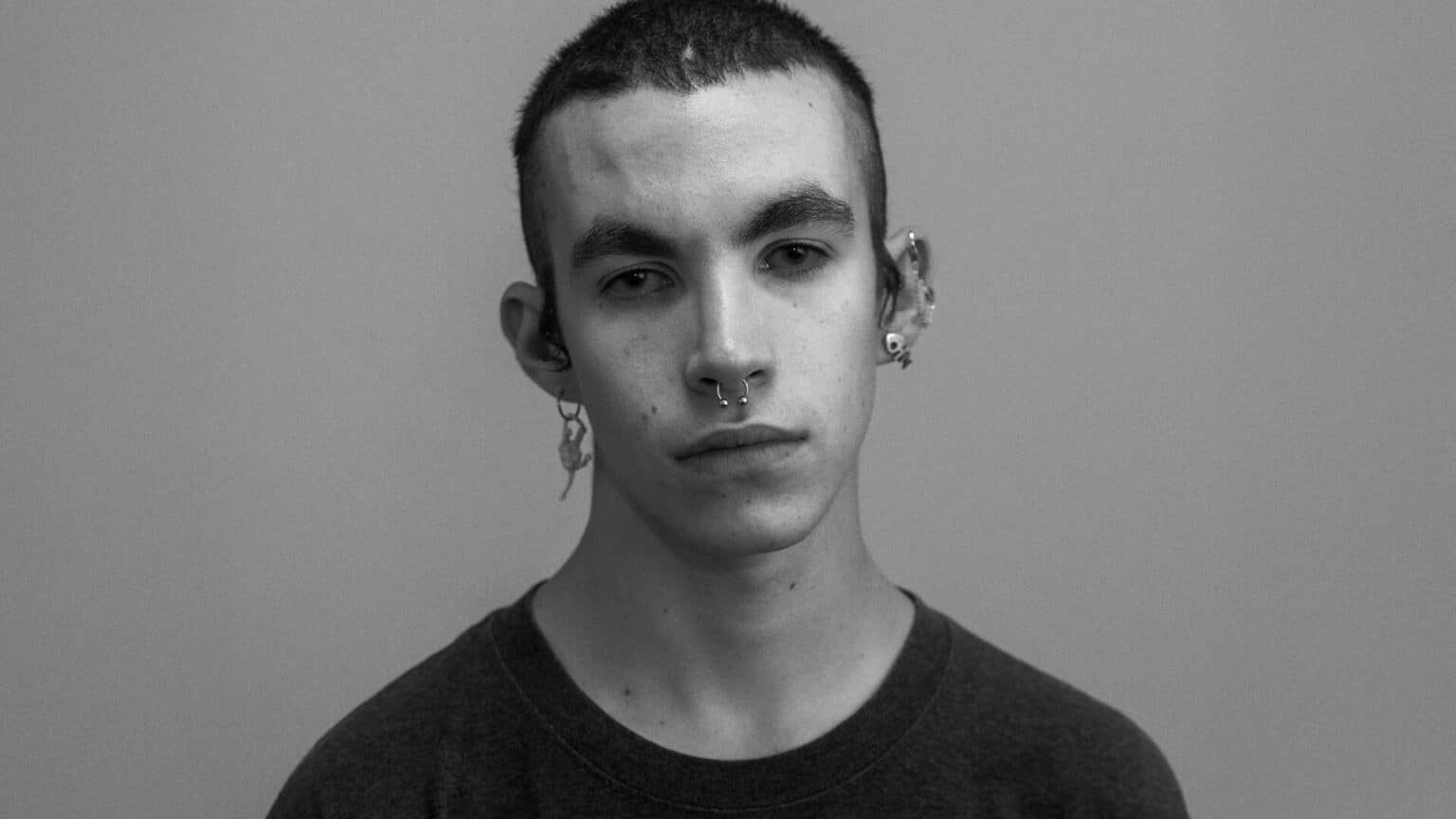
The portrait as XXL piece: why large scale changes the conversation with the viewer.
A large format portrait forces you to live with it. At 30 cm you look at it from the sofa; at 120 cm, it is the one who looks at you when you walk down the hall. This text explains how my process changes when I think big.
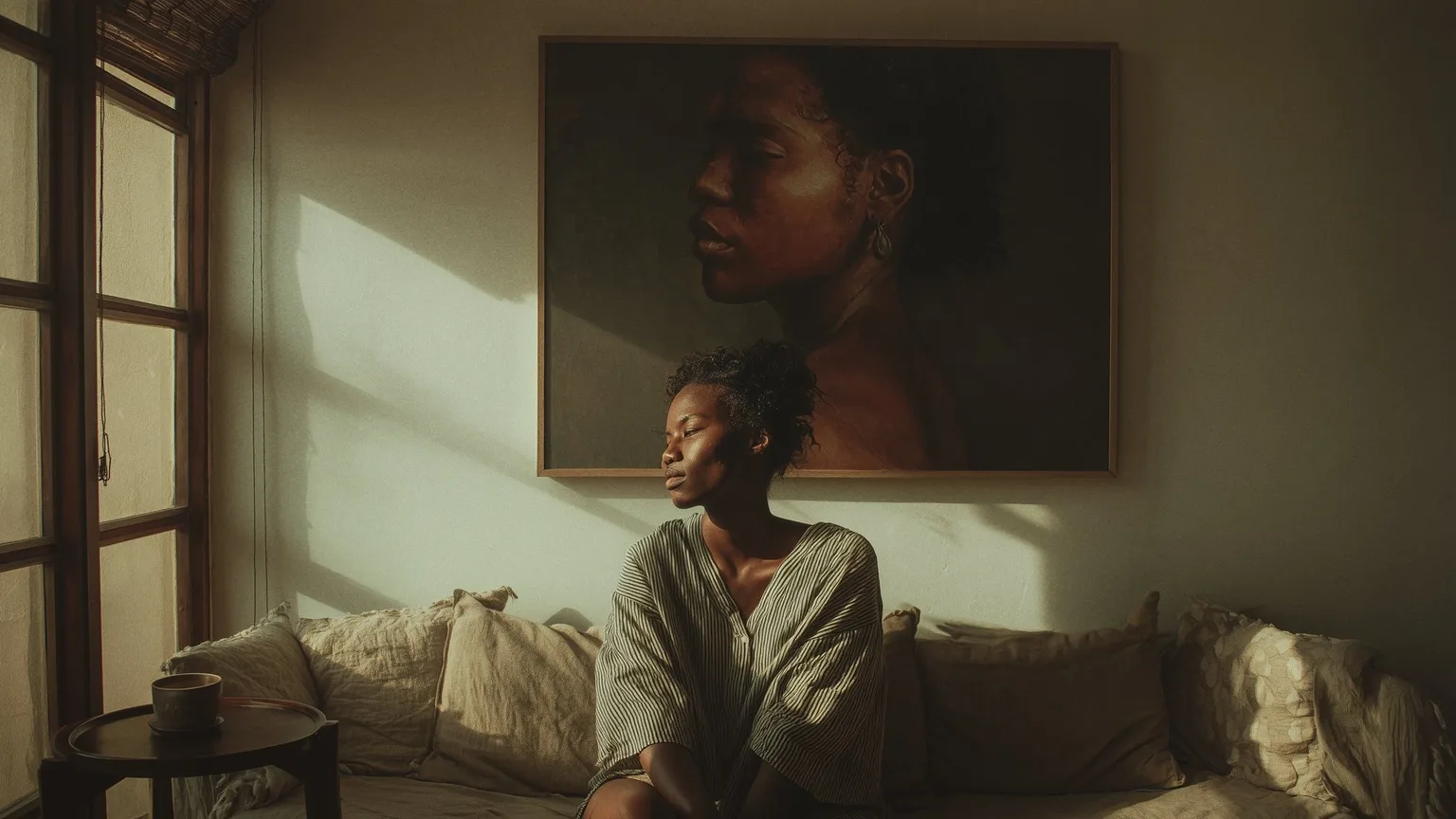
A large format portrait forces you to live with him. At 30 cm you look at him from the sofa; at 120 cm, it is he who looks at you when you walk down the hall. This text tries to explain how my process changes -and what I ask of the image- when I think big. It is not a tutorial on size. It is a diary of decisions about scale, detail and what happens when an image grows large enough to occupy your space.
What appears when the image grows
I work with photomontage, digital collage and digital painting. I put together pieces from different photographic sources (well, with extended license, which is not the same as «from the internet») to build an image that feels real, even if it is impossible. When the portrait is 30 cm, most of those seams disappear. The eye overlooks them because the whole works, and the small format favors quick reading: you recognize the character, you register the clothes, the gesture, the background, and you go on.
At 80 or 120 cm, that changes.
Textures appear. The transition between a painted area and a photographic area becomes visible. The layers of the collage cease to be invisible and become part of the experience. It is not that the image fails at that scale; it is that it shows how it is constructed. And that, which at first gave me vertigo, now interests me more than the clean result.
Chuck Close understood this before anyone else. His monumental portraits-some over six feet tall-worked differently depending on where you stood. From the back of the room they looked like high-resolution photographs. From up close, they dissolved into a web of abstract marks, pure colors, and manual decisions. Close said he didn’t want the viewer to see the whole head at once and assume that was the most important thing about the painting. He wanted the reading to change with distance, for the portrait to have more than one speed.
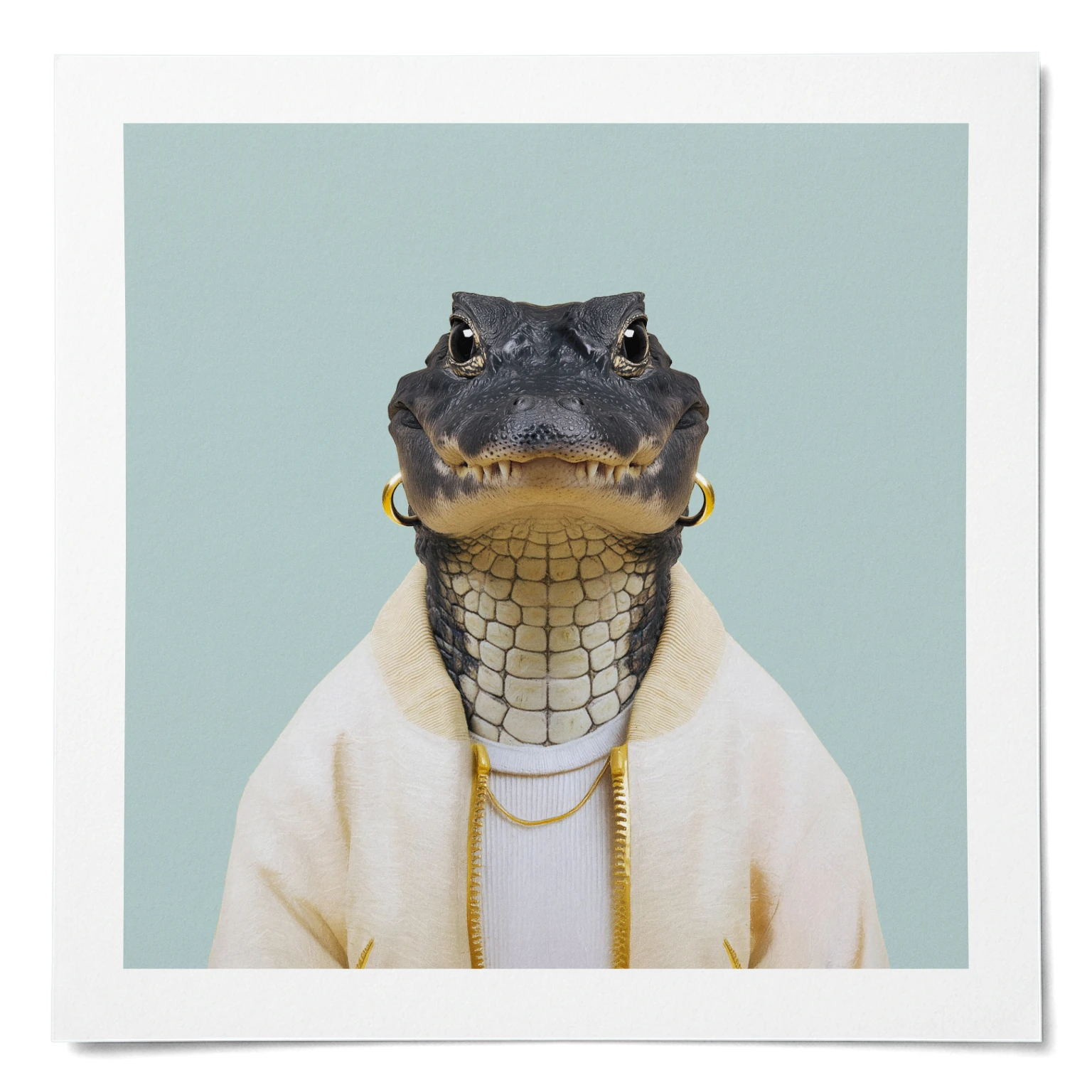
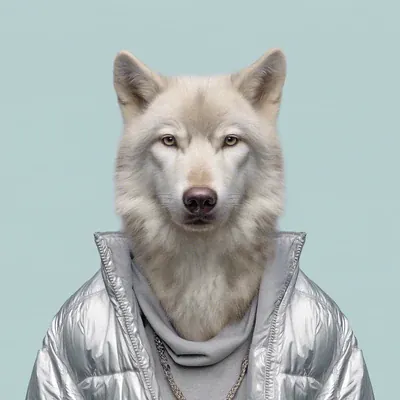
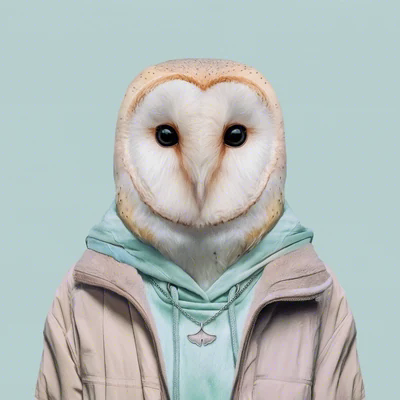
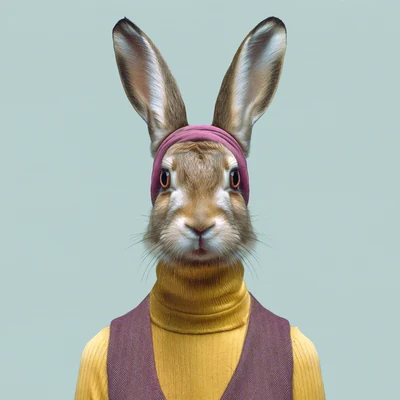
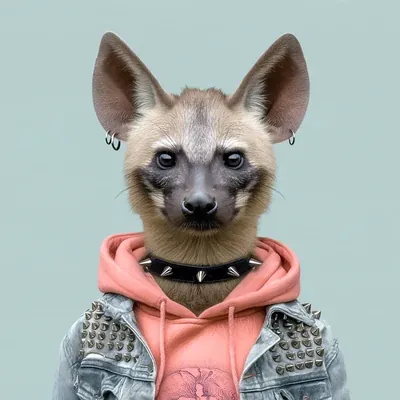
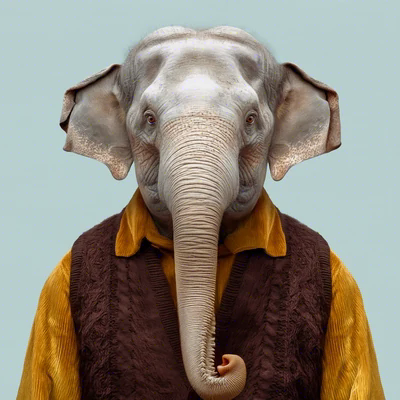
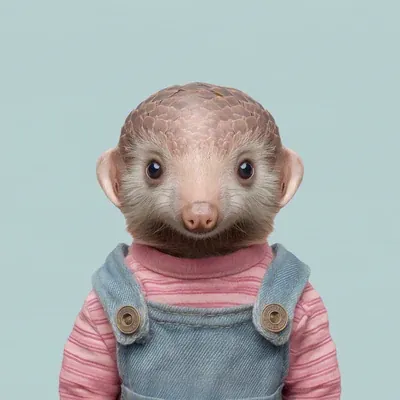
That’s exactly what happens to me when I scale my portraits of Animal Kinhood. At 30 cm, the character is a studio portrait in human clothing. At 120 cm, you begin to see how it is made. And that, far from being a defect, opens a second layer of reading that sometimes I like better than the first.
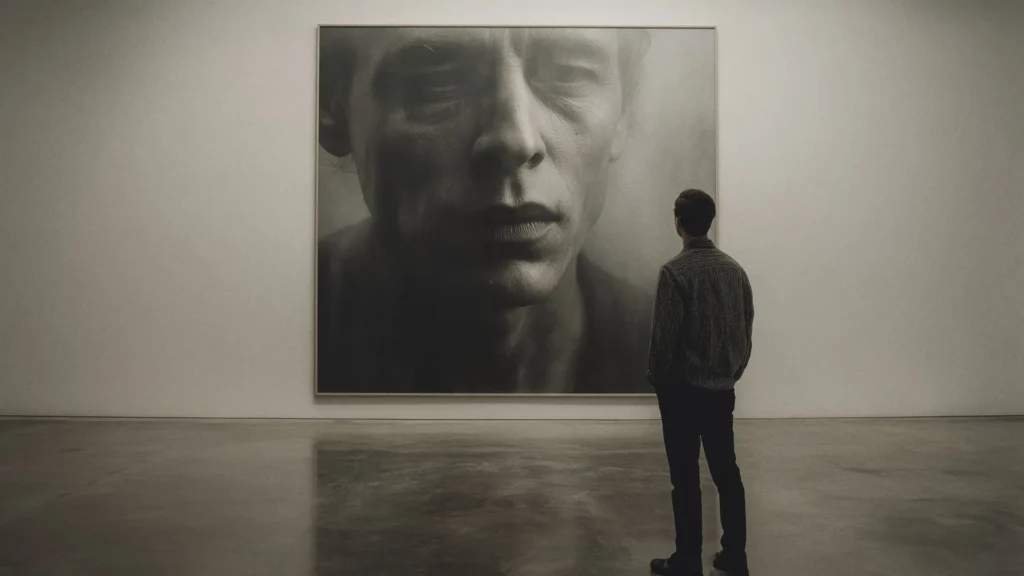
The air you gain (and the air you lose)
There is a concept in composition called «air»: the empty space around the subject. In a small print, the air is a margin. In a large print, the air is heavy. You can feel the distance between the edge of the character and the boundary of the paper. That distance breathes.
I am writing this after spending a whole afternoon adjusting three millimeters of margin on a file that was to be printed at a meter and a half.
When I prepare an image thinking in large format, the composition changes from the beginning. It’s deciding how much space to leave around the subject, because at that scale empty space has its own weight. A clean background at 30 cm is neutral; at 120 cm, it is a visual decision as strong as the portrait itself.
The frontality, which is a constant in my work -the character looking directly at the viewer, as in a passport photo-, gains another dimension in large format. On a small scale, that gaze is direct. On a large scale, it is confrontational. You can’t avoid it. You occupy the same space as the portrait and, in a way, the portrait occupies yours.
The pressure to make everything look more
Thinking big has a direct consequence on the source file: resolution. For a 100 cm print to look good you need between 150 and 300 dots per inch at actual size. Every detail of the collage, every retouched area, every layer of digital paint has to resist enlargement.
In practice, this forces me to work cleaner from the first layer. I can’t leave «soft» transitions thinking that at small size they won’t be noticed, because if I decide to scale, they will be noticed. And very much so.
I once tried enlarging a portrait I had worked on at fair resolution. The hair was pixelated and the suit lapel looked like a badly glued Photoshop patch. It was the third one I discarded that month.
Error tolerance also changes. On a tabletop print, a slightly inaccurate edge goes unnoticed. On a one-meter wall piece, that edge is the first thing you see. There’s nowhere to hide. Large format amplifies detail, but it also amplifies sloppiness.
To observe is not to coexist
There is an often unexplained difference between seeing a part on a screen and having it in front of you in large-scale physical form. On your monitor, the ratio is always the same: a 15-inch or 27-inch backlit rectangle. Whether the original work measures 30 cm or 3 meters, on the screen it occupies more or less the same.
The scale is lost. It’s as simple as that.
Photographer Pie Aerts, who prints his portraits of African wildlife at sizes that can reach 2 × 3 meters, says it clearly: the art is not meant to be viewed on an 800-pixel-wide screen. When he prints lions or rhinos almost life-size, he says that the animals regain the strength that the screen takes away from them. And that the large format slows down rapid consumption: it forces you to stop, to really look, to digest what is in front of you.
That connects with something I notice in my own portraits. An Animal Kinhood character on a cell phone screen is a curious image: you record it, you share it, you pass it on. That same character printed at 80 × 80 cm, hanging in a living room, is something else. You see him in the morning as you pass by with your coffee. You discover a new detail after three weeks. It changes with the light of day.
Why does the large scale change the way you look at a portrait? Because the portrait goes from being something you look at to something that shares a room with you. It occupies your field of vision, forces you to move-approach it, move away from it, go around it-and reveals layers that at a smaller size remain hidden.
What Ron Mueck taught me about altering the scale
Not everything in scale is about «bigger = more impact». Ron Mueck has been demonstrating for decades that altering scale in any direction - above or below life size - generates an intense reaction in the viewer. His sculpture Dead Dad is half its actual size, and that shrinkage makes it more fragile, more vulnerable, more difficult to hold with the gaze. Her monumental figures -a five-meter newborn baby, a naked man over two meters tall- produce something akin to vertigo: you know it’s not real, but your body reacts as if it were.
Mueck said in an interview that life-size figures didn’t interest him, because we encounter life-size people every day. Altering the scale is what gets you noticed.
That made me rethink my work. It’s about choosing the scale that generates the conversation you want to have with the viewer. Sometimes that’s a 30×30 cm portrait that you can hold in your hands. Sometimes it’s a three-foot piece that dominates a wall. The decision is more about narrative than technique. It’s usually like that. Not always.
The bracket also features
When I talk about large scale, I’m not just talking about centimeters. The medium changes the experience as much as the size. A portrait printed on fine art paper has a matte feel, a warmth and a visual weight that invites you to get closer. It is more like holding a book than looking at a screen. The same portrait mounted on dibond -a rigid aluminum panel- gains rigidity, cleanliness and a more industrial look. Under acrylic, it acquires depth and shine: the image seems to float. Each support changes the way the piece feels on the wall (in materials and quality there is more detail on this).
The matte finish is better. At least for what I do. I don’t have a fancy technical reason: simply the reflections from the gloss distract me from the portrait. But for my open editions, The matte paper works well because it maintains that studio character: the sheet arrives clean, unpretentious. For the limited editions, The premium finishes (acrylic on dibond, for example) are part of the experience: the piece is installed and dominates the wall from the first day.
What do you see in a large portrait that you don’t see in a small one? The textures of the process: the transitions between photographic and painted areas, the grain of the source file, the edges of the collage. Also the air around the subject, which at a large scale ceases to be margin and becomes space with intention.
Think big from the start
The most useful lesson that scale has taught me is that you can’t think «I’ll expand this later». If the file is not built from the beginning with the possibility of growing, it doesn’t grow well. Composition, resolution, edge cleanup and color management decisions have to be there from the first layer.
That’s not to say that every portrait should end up as a five-foot piece. But the process wins when you work with margin. When you know your image could work at 120 cm, you work more carefully at any size.
Does changing the scale also change the artist’s process? In my case, yes. Thinking big forces me to reconsider the composition, the resolution of the source file, the cleanliness of the collage layers and the tolerable margin of error. It’s not just enlarging.
Why I keep coming back to the scale
Every time I finish a portrait I ask myself the same question: what size works best? It’s not a business question. It’s a question about what kind of relationship I want the image to have with whoever ends up living with it.
Some portraits require privacy. They work best small, on a shelf, next to a book. They are pieces that you look at closely and that return a restrained gaze. Others ask for a wall. They need space to breathe, distance to compose themselves and closeness to reveal their texture.
Would I have come to understand this without misprinting a few times?
Animal Kinhood is one of my series, but the study encompasses other portraits and visual universes. In all of them, the question of scale is the same: not how much the image measures, but how much space it needs to say what it has to say.
Scale is the first agreement between the image and the place it will inhabit. And when you get it right -when the portrait and the wall are in the right proportion-, the image ceases to be something you hang and becomes something that is there. That coexists. And that, for me, is the work.
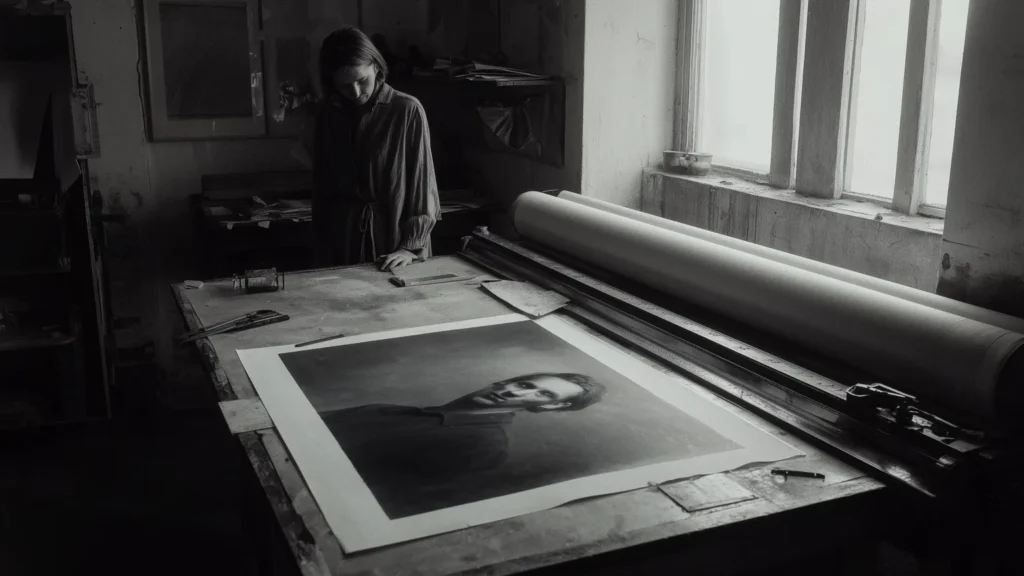
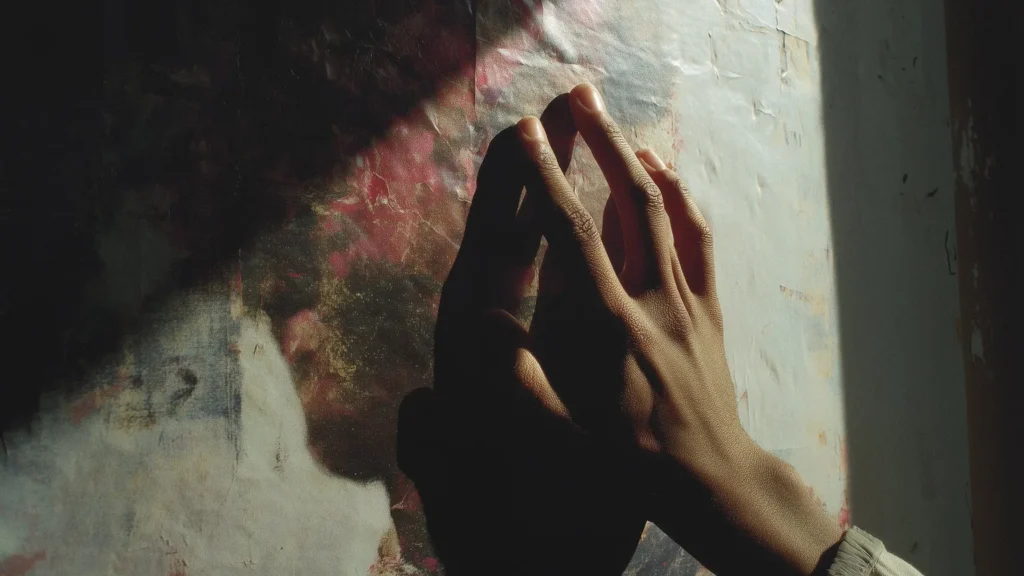
About the images in this article: the four scenes illustrating it —the gallery, the living room, the worktable and the detail— were generated with AI by me, as visual support for the text. They are not Animal Kinhood or Portrait Journal work: those are made another way, and that is exactly what you have just read about.