The animal that looks at us: artists who taught me to dress what was already there.
A personal tour of artists who use animals as a mirror of the human: from Grandville to BoJack Horseman, from Beatrix Potter to Beth Cavener. Why anthropomorphic portraiture matters.
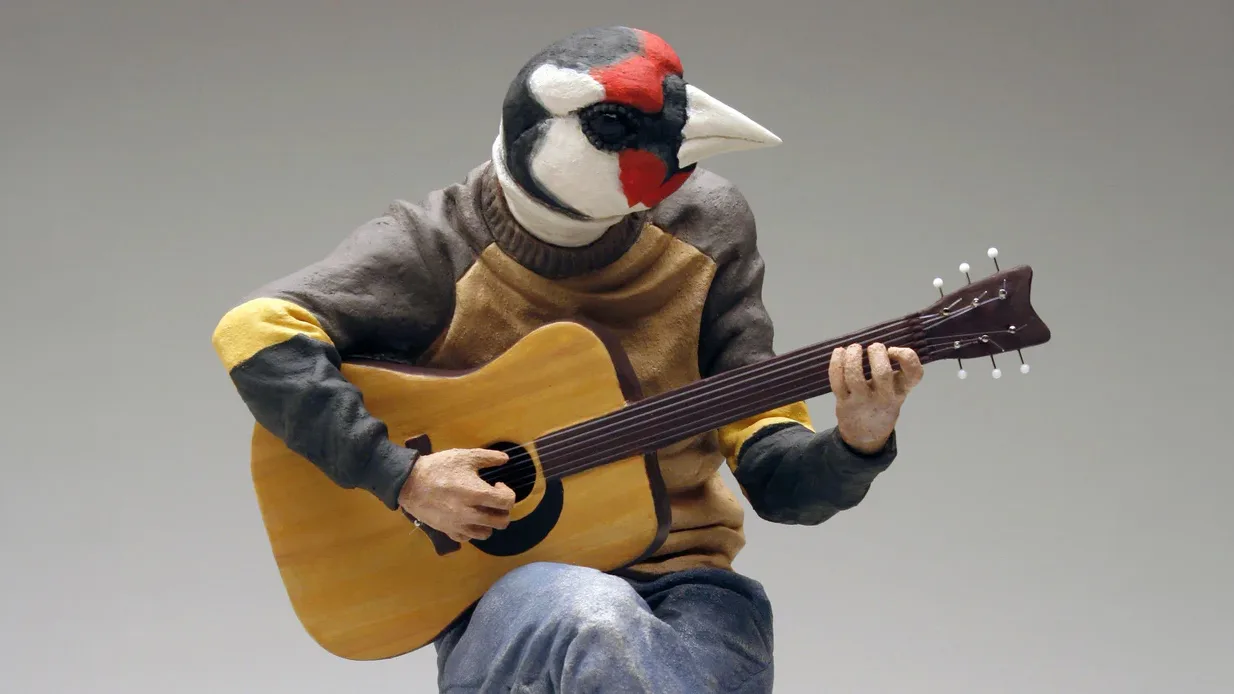
There is a question I have been asked many times and I have never been able to answer it in a clean sentence: why are animals dressed? What follows is not the answer. It is something longer and more honest than an answer: a journey through the artists, series, books and sculptures that, without me planning it, were building the way I look at animals and the reason why I ended up dressing them.
What was there before we knew it existed
Before I knew what anthropomorphism was -before I even knew that what I was doing had a name- I was already consuming it. Like almost everyone of my generation in Spain, I grew up with La aldea del arce. Patty Rabbit, Bobby Bear, Gretel the wolf. A Canadian village in the thirties where the neighbors were animals who wore aprons, delivered mail and argued over neighborhood nonsense. The series was Japanese, directed by Junichi Satoh -who would later make Sailor Moon-, but it came to me with Emilio Aragón’s song and I didn’t care where it came from. What mattered to me was that those characters had small problems and solved them clumsily. They were animals, yes, but they were more real than many of the people in the live-action series that were shown later.
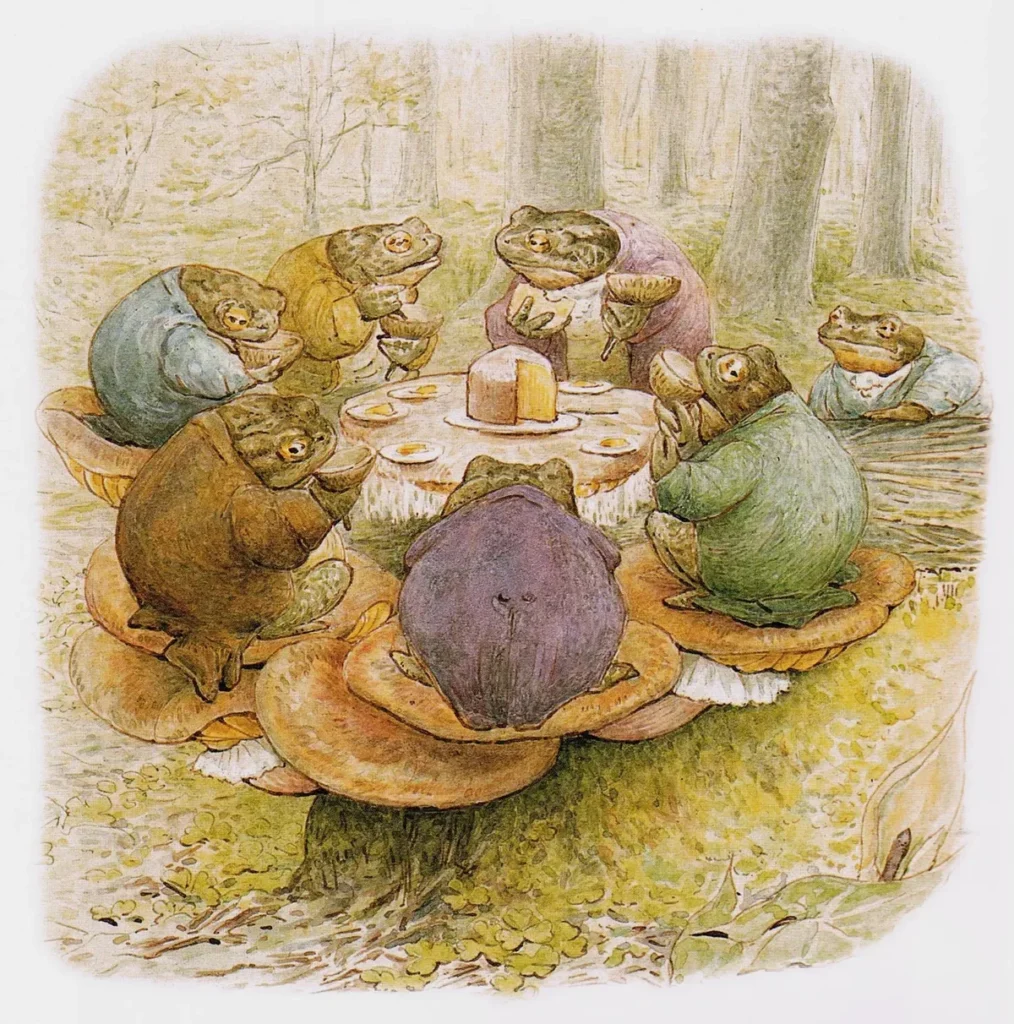
Richard Scarry did something similar from paper. His books were whole towns at work: letter carrier’s cats, fireman’s pigs, worms driving apples on wheels. There was no drama or grand moral, just an absurd community that worked. And Beatrix Potter, long before that, with her watercolors of mice and rabbits in English cottages, had already found the formula: if you put a vest on a rabbit, the child looks at it as someone. Not as something.
Therein lies the key, I think. The clothed animal is not a disguise. It’s a shortcut to empathy.
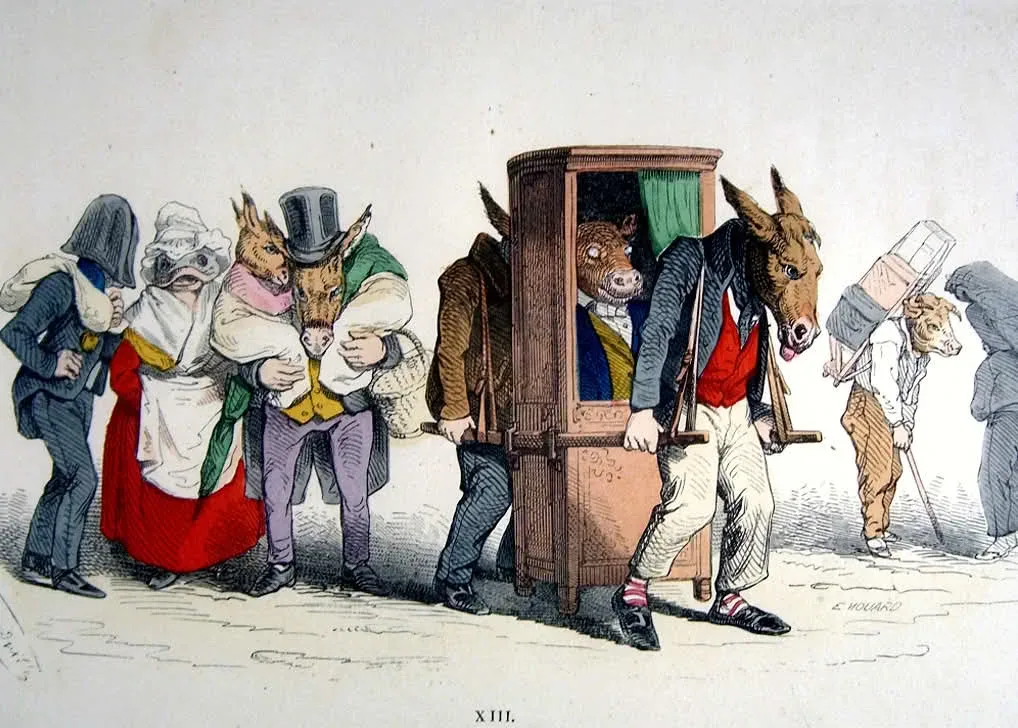
Grandville and the first time an animal wore a suit to say something uncomfortable.
Long before Disney, long before any cartoon, there was a Frenchman who did it all first. J.J. Grandville published The Métamorphoses of the day in 1828: seventy lithographs of figures with human bodies and animal heads satirizing the Parisian bourgeoisie. A banker monkey. A notary vulture. A pig with a cane.
Baudelaire said that Grandville frightened him. Max Ernst, a century later, dedicated a frontispiece to him with the phrase «A new world is born. Glory to Grandville. And Disney, who never openly acknowledged it, owes him more than it seems: that idea that an animal in a hat can tell a human story without asking your permission.
Grandville died at the age of 43, shattered by the death of several of his children. What he left behind was not only a style: it was a vocabulary. The idea that the dressed animal portrait is not decoration, but a mirror.
Chuck Jones, Disney, Miyazaki, Toriyama: The School of Motion
There’s a huge jump between the Grandville lithograph and a Looney Tunes still, but the principle is the same. Chuck Jones took a rabbit and gave him comic timing, vanity, intelligence and the ability to chew a carrot as if he couldn’t care less about the world. Bugs Bunny is a rabbit in name only: an attitude with ears.
Walt Disney brought anthropomorphism to cinema in a way that can no longer be separated from 20th century visual culture. Not only Mickey: the animals of The Jungle Book, Robin Hood, The Lion King are entire generations learning emotions through non-human faces. Juanjo Guarnido, who would end up creating one of the most important works in European comics, began working at Disney Animation in Paris. That step matters.
Hayao Miyazaki never dresses his animals in clothes, but he does something just as powerful: he places them at the center of the relationship between the human and the natural. Porco Rosso is a pilot-turned-pig; Chihiro works in a bathhouse for spirits in animal form; the kodama of Princess Mononoke observe without speaking. In Miyazaki, the animal is not a mirror of the human: it is a witness.
And then there was Akira Toriyama, who put an anthropomorphic pig and a flying cat in a martial arts saga and nobody blinked, because the universe he built was so coherent that the anthropomorphism needed no justification. It was just there, as one more fact of the world. That seems to me more difficult than it sounds.
Where the animal ceases to be tender
There is a moment when you discover that the anthropomorphic animal doesn’t have to be friendly. For me, that moment had several names.
Beth Cavener works with clay on a monumental scale. His rabbits, goats and wolves wear no clothes and have no name. What they have is posture. A body that twists, that shrinks, that offers itself or defends itself. She says it better than I can: she works with human psychology stripped of context, articulated through animal forms. Her sculptures do not represent animals that feel like people. They represent what people feel when they stop acting.
Kate Clark does something discomforting in a different way. He takes recycled taxidermy skins - skins with bullet holes, with burns, that taxidermists discard - and sculpts a human face on them. The result is a deer with a serene expression, a zebra that looks at you with the eyes of someone you know. She began by researching how the human face evolved to communicate, and ended up putting that communication on bodies that don’t belong to her.
Patricia Piccinini goes further. His hyper-realistic silicone and fiberglass sculptures create hybrid creatures that don’t exist but could. Mothers with animal features breastfeeding. Babies with wrinkled skin and huge eyes. They are sculptures that do not ask what is human and what is animal, but what we owe to what we create. In France they have been exhibited at the Centre Pompidou. I think they work best in an empty room, with a child in front of them who doesn’t know he should be afraid.
Y Chen Wenling, with their pigs. Huge pigs of painted fiberglass, with humanized bodies, jade jewelry, lewd poses and open mouths. His series Happy Life is irreverent to the point of nausea, grotesque and festive at the same time. A pig with a pearl necklace smoking. A pig lying in a sheepskin on a white sofa. It is the Chinese version, pop and without complexes of anthropomorphism: there is no moral, there is excess. And I like it precisely for that reason: because it shows that dressing an animal can be a scream as well as a whisper.
Blacksad: when the dressed animal becomes a crime novel
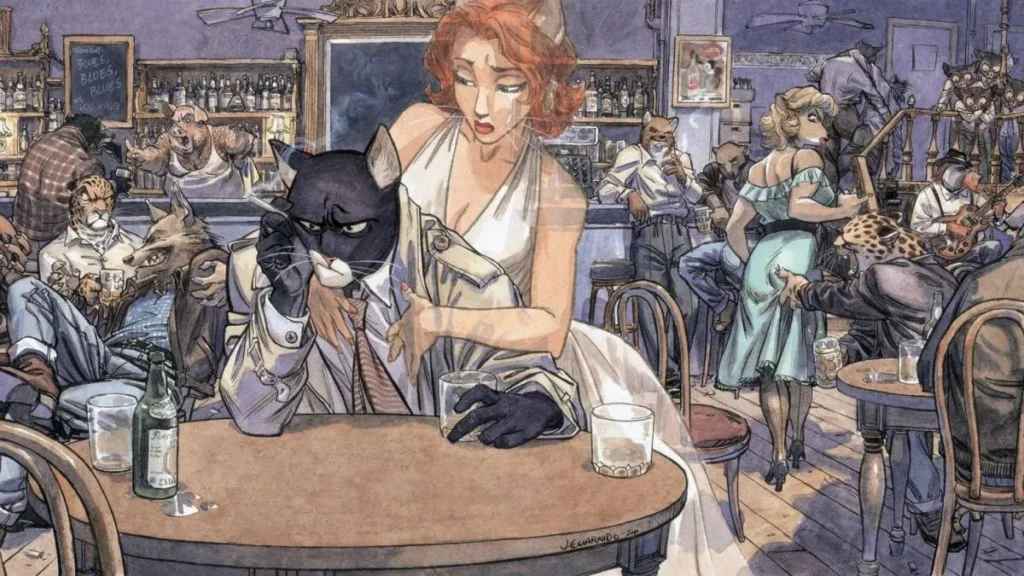
If I had to pick just one work that demonstrates what anthropomorphism can do when taken seriously, it would be Blacksad. Written by Juan Díaz Canales and drawn by Juanjo Guarnido, this graphic novel series sets a black cat detective in post-war America, complete with racism, witch hunts and police corruption. The characters are animals, but the story is so adult and so hard-boiled that the species of each one functions as another layer of reading: polar bears are white supremacists, reptiles are mobsters, weasels are tabloid journalists.
Guarnido paints each vignette in watercolor. He comes from Disney. He has won Eisner awards, awards in Angoulême, awards in Barcelona. And what he does with a stroke is not to illustrate animals that act like people: it is to portray people whose truth is best seen when they have a snout.
Why does it work? Because the distance the animal creates allows you to watch without defense. If Blacksad were a black man in a story of racism, some of the audience would guard themselves. With a black cat, they let their guard down. And then the story comes in.
What I found next: Chueh’s bear, Hanawalt’s birds, the portraits surrounding me.
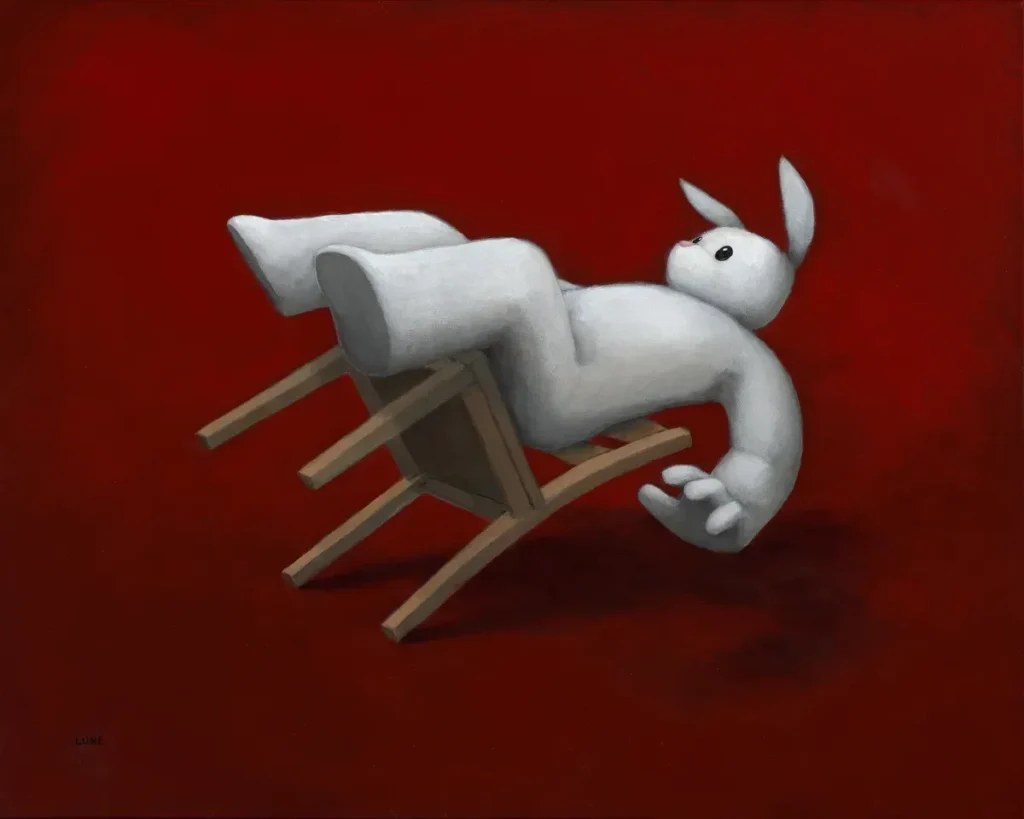
Luke Chueh paints white bears with empty eyes in situations that oscillate between the tender and the sinister. A bear tearing off its skin. A bear sitting while the room burns. It’s pop surrealism, it’s autobiography in the form of a pet, it’s a guy who overcame an addiction to painkillers and tells it through a stuffed animal that bleeds. His exhibition was called ANTHROPOMORPHUCKED. Thus, all together.
Lisa Hanawalt designed the visual universe of BoJack Horseman from his drawings of animals wearing clothes. One critic compared his work to «an adult Richard Scarry turned absurdist social commentator.» That’s exactly what it is: the leap between childhood and adulthood told through a depressed horse who was a former TV star. If you ask me what series has proven that anthropomorphism can sustain top-notch adult drama, that’s it.
And then there are the artists that come to me through other paths. Alessandro Gallo, who studied law in Genoa before going to London to sculpt ceramic hybrids: human bodies with the heads of donkeys, frogs and vultures, trapped in everyday gestures. Lucia Heffernan, who paints chickens doing yoga and hippos reading the newspaper with an oil realism that forces you to take them seriously.
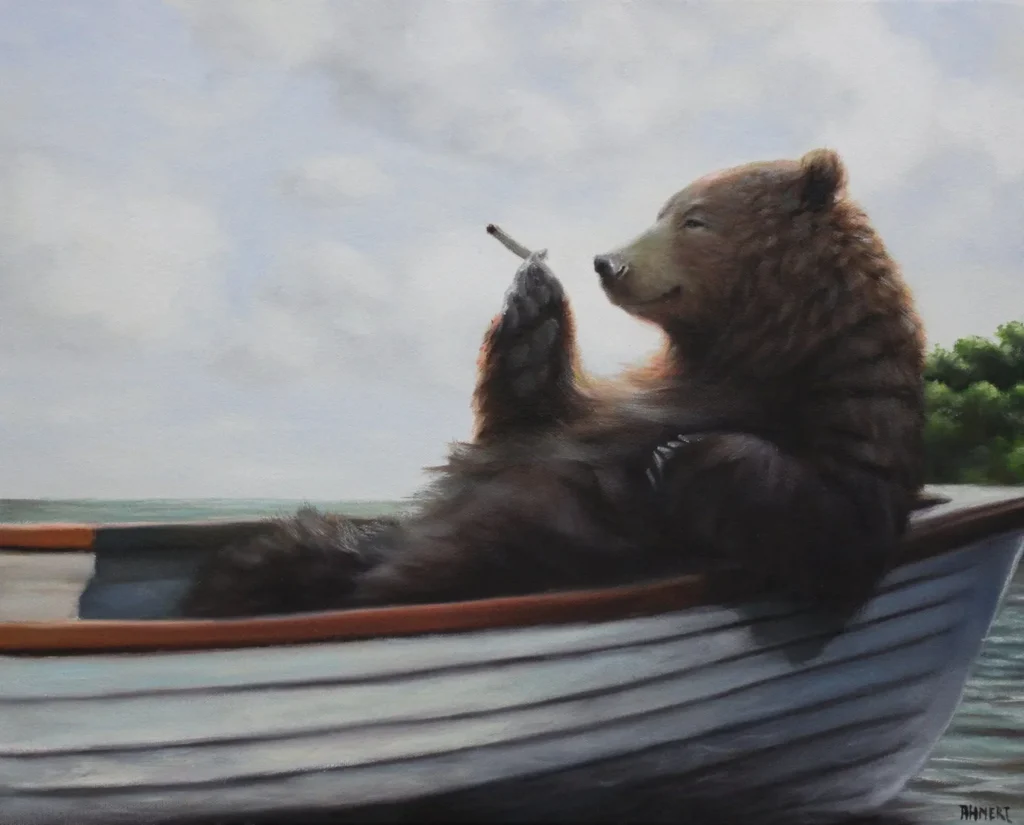
Richard Ahnert, whose oil paintings of humanized animals have something that grabs me every time I see them. Albeniz Rodriguez, with his animal illustrations full of expression, close to the design for animation. Tess Garman, known as Kenket, He is a painter of anthropomorphic animals with the intensity of a classic portrait.
Y Borja Montoro, Spanish animator who has given life to characters in films such as Frozen, Moana and Enchantment. He does not work with dressed animals, but his craft is to give humanity to what has none, and that is a form of anthropomorphism that I deeply admire.
Why dress animals?
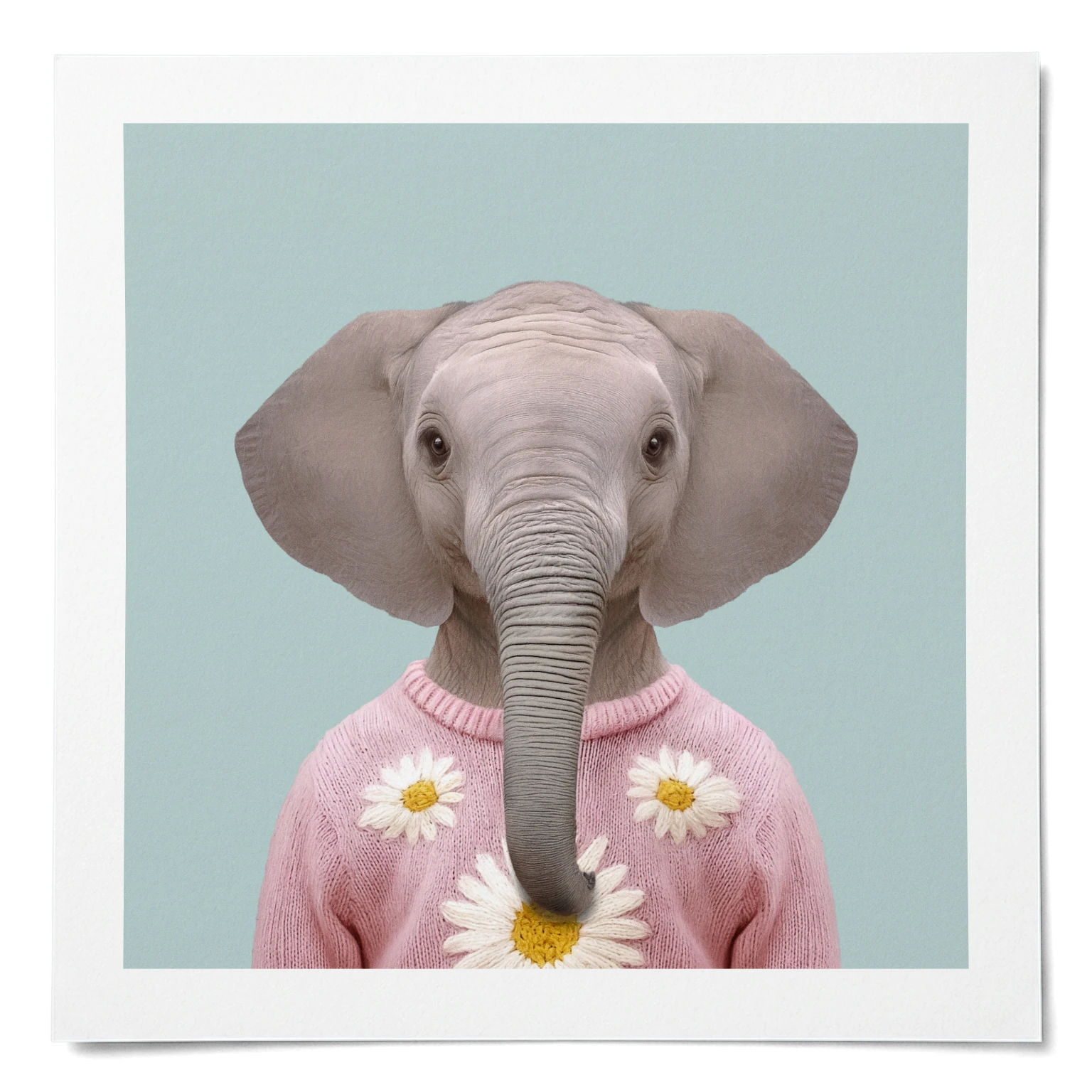
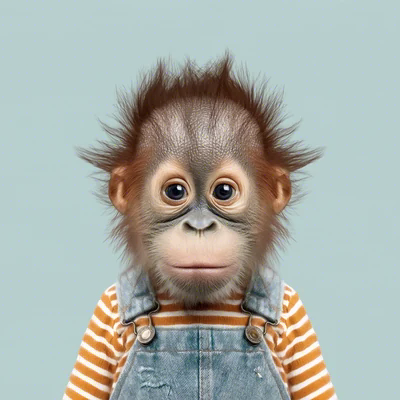
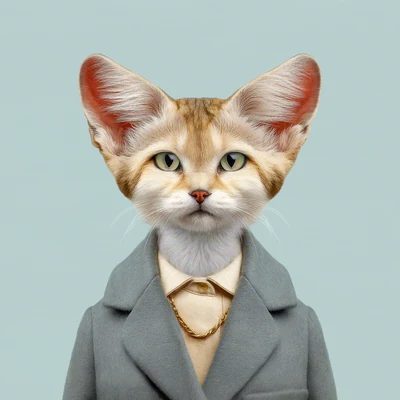
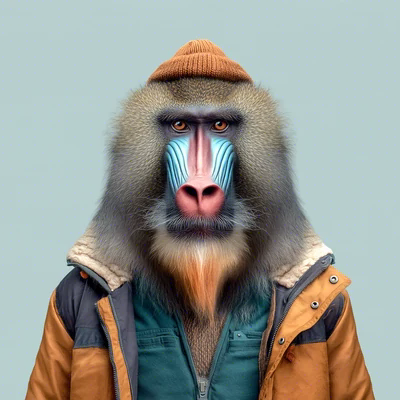
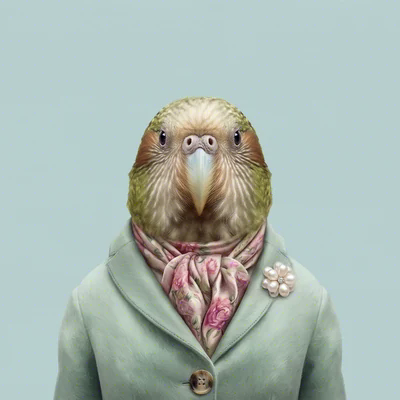
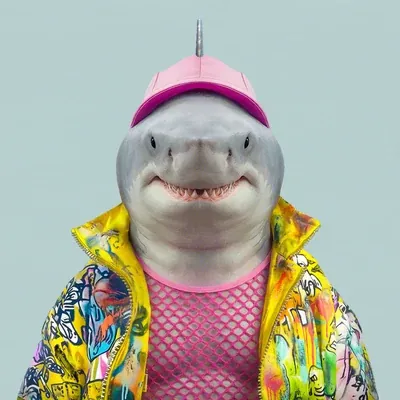
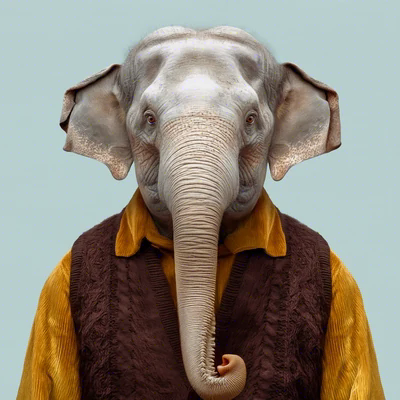
I don’t quite know. I know I’ve been doing it for years with Animal Kinhood and that I used to do it with Zoo Portraits, and that the question is still open. I know that when I put a costume on a fox, I am not disguising the fox: I am bringing out something that was already in the image. Something that has to do with how we look, with what we project, with the need to recognize ourselves in what is not like us.
Neuroscientists have a name for it. They call it intersubjectivity: the ability to attribute mental states to others. Anthropomorphism activates that mechanism with non-human beings, and that’s why it works. It is not a trick. It’s a cognitive function that art has been using since someone carved a man with a lion’s head out of mammoth ivory thirty-two thousand years ago.
Each artist I have mentioned here works with that function in a different way. Grandville used it for satire. Cavener, for pain. Guarnido, for justice. Hanawalt, for laughter that hurts. Chen Wenling, for pure provocation.
I use it for portraiture. To look at an animal and see someone who could live on my street, sit on the subway, have opinions about the weather. And for whoever looks at that portrait to see a little bit of themselves in a place they didn’t expect.
I don’t know if that answers the question. But it’s the closest I’ve come.