Animal Kinhood Wild animals Vulnerable
12 min read 9 chapters Live · Sahel · Niger
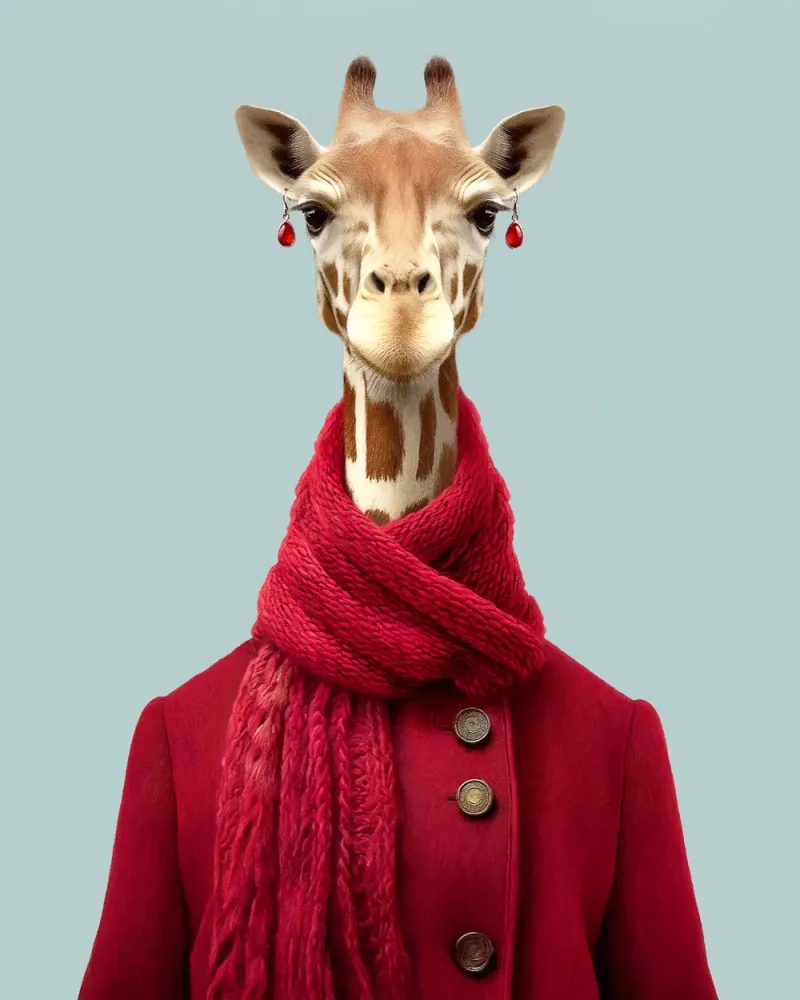
Ayana, West African giraffe — Animal Kinhood portrait by Yago Partal AK · 09 N 13°31′ E 2°07′ Ayana Sahel · Niger PHOTO ©YP · 2026
Animal Kinhood · Wild animals No. 09 / 25 Episode · Ayana
Giraffa camelopardalis peralta

Ayana.

West African giraffe

You don't need NASA to look up. You need a dark night and to know where to look.
Add it to your Kinhood.Already part of your Kinhood.
Biography · Block 01 of 03 West African giraffe
Chapters · I–II–III

The story.

I
CH · 01 / 09

The Rings, and Asking to Look Again

She was sixteen, at a village fair near Kouré. Someone had set up a small telescope on a table and let people take turns looking through it. Ayana put her eye to the eyepiece, and there they were: the rings of Saturn, crisp, hanging in the black as if someone had drawn them and walked away. Everyone else whooped, made the joke, moved along to the next one. She didn't whoop. She stepped aside, waited for her turn to come round again, and asked to look once more. And again.

No lightning bolt, no music swelling. Just a quiet recognition, the kind that takes years to learn its own name. When she asked the man at the table how you built a device that could pull something so far away up close like that, he shrugged. He didn't know. Ayana kept the whole question — the rings and the not-knowing, together — and carried it back to Niamey inside her. It took her years to work it out on her own. But it started that night.

II
CH · 02 / 09

The One That Doesn't Twinkle

The wonder went back further than that, to a rooftop in Dosso. As a child, on clear nights, her grandmother Haoua would take her up the outside stairs and name the sky for her, finger pointed. The one that doesn't twinkle is a planet. That belt of three is one single shape, even if they look scattered. This one here always rises from the same spot, look, always right there. She wasn't teaching her astronomy; she didn't know a word of astronomy. She was teaching her to look up, and never take the sky for granted.

Haoua still lives in Dosso. She's eighty-six now, nearly blind in one eye, and on clear nights she still climbs to the rooftop. When they talk on the phone — every two or three days, in Zarma — it's her who asks: and over in Niamey, what can you see these days? Ayana answers like someone handing back an old lesson. Oh, the low red one to the east? That's Mars. And her grandmother, on the other end, nods slowly.

III
CH · 03 / 09

So Who Put That There?

Her best nights are the ones when she carries the tripod down to the street. She sets the telescope up in front of the building, on the sidewalk, and lets the neighborhood kids take turns: first the craters of the Moon, big and full of shadow, then, if the night holds, the rings. One boy, eye pressed to the eyepiece, once asked her: so who put that there? Ayana laughed with her whole face, the first time in weeks she'd laughed like that. No one, sweetheart. It's been there since long before you and me.

She does it every month she can manage. She's also started teaching three kids from the neighborhood and from Kouré to find the constellations on their own, to read a simple sky chart, so they can keep looking without her — so the sky doesn't depend on Ayana climbing to the roof. Remember the name, she tells them. It's called what it was called a thousand years ago. Names stay; it's the first thing you learn about the sky.

Voiceline · the character’s canonical quote Ayana · West African giraffe
Hover to pause
You don't need NASA to look up. You need a dark night and to know where to look. AK · 09 · Ayana · Sahel · Niger 2025 You don't need NASA to look up. You need a dark night and to know where to look. Voiceline · Giraffa camelopardalis peralta You don't need NASA to look up. You need a dark night and to know where to look. AK · 09 · Ayana · Sahel · Niger 2025 You don't need NASA to look up. You need a dark night and to know where to look. AK · 09 · Ayana · Sahel · Niger 2025 You don't need NASA to look up. You need a dark night and to know where to look. Voiceline · Giraffa camelopardalis peralta You don't need NASA to look up. You need a dark night and to know where to look. AK · 09 · Ayana · Sahel · Niger 2025
§ 04 · Objects Open editions · everyday
10 pieces · Print on demand

Take Ayana home.

Biography · Block 02 of 03 Roots
Chapters · IV–V–VI

The roots.

IV
CH · 04 / 09

Two Lenses and a Plumbing Pipe

She couldn't afford a telescope, so she built one. Two lenses from an old pair of glasses, a length of PVC plumbing pipe, tape, and months of patience on the roof at night, aligning it by trial and error until the Moon stopped wobbling and the craters came into view. That clumsy pipe was her first real instrument. And it still works: it's the same one she carries down to the street for the kids.

By day she has a practical job that pays her just enough, steadily, and the money doesn't go on furniture — she lives in an almost-empty apartment — it goes on lenses and fabric. At the office she was once put in an interior room with no windows. In three days she couldn't get an hour of real work done. On the fourth, without telling anyone, she dragged her desk out to the hallway, next to the stairwell window. No one objected. She needs to see the horizon, a scrap of sky from wherever she is; shut in a closed room, she switches off. She doesn't argue about it. She fixes it.

V
CH · 05 / 09

No One Could Tell Her How

She learned on her own, with borrowed books, with trial and error, with whatever nights she had. How to polish a lens. Why a faint object won't quite come into focus. What that new light rising in the east is. No one gave her a course; the man at the table in Kouré hadn't known either, and she didn't wait around for someone who did.

She spent two years outside Niger, on a technical course, in a damp coastal city where the sky was washed out by light pollution: at night you could barely see a thing. The first few months she hardly slept, hunting for height and horizon. She came back with a dry, hard-won conviction: the Sahel sky, dark and impossibly clear, was among the best she'd ever seen, and it was worth mapping before the light pollution reached here too.

When someone marvels that she "knows about stars," or assumes it takes expensive equipment, Ayana lowers her voice, takes a long pause, and corrects them without arguing: you don't need NASA to look up; you need a dark night and to know where to look. She says it with no pose at all. The sky belongs to everyone, and the instrument can be built by hand — she has her own plumbing-pipe one to prove it. Attends, she'll sometimes say before answering. Wait. She lets the air settle, lets her eye adjust, and only then does the answer come.

VI
CH · 06 / 09

A Line for Every Clear Night

Around thirty she started her own star chart. A notebook where, every clear night, she writes down the date and what she saw, one line, then goes to bed. She cross-references sightings from different years the way you'd cross dirt roads on the savanna: the same star shifted slightly, an object that was there and this time isn't, two distant nights that suddenly line up. The notebook doesn't aim at anything grand: it just records, stubborn and by hand, the sky over Niamey and over the edge of the desert.

On cloudy nights she doesn't write anything, and it doesn't bother her: there'll be another one. She keeps count of what she's actually seen, dated, so she can't fool herself about how much sky she's really looked at. She observes most between November and March, when the harmattan lifts the red Saharan dust and brings the morning cold: some days the dust blots out everything, others it leaves the air the driest, clearest of the year. She times her nights out by the wind. Aligning the mount, logging each night with its date, tending her homemade lenses like a watchmaker — for her, all of that is a form of respect for what she's looking at.

Biography · Block 03 of 03 Craft
Chapters · VII–VIII–IX

The present.

VII
CH · 07 / 09

The Earrings, Into the Bowl Each Night

The one thing Ayana always wears is a pair of teardrop earrings with a red stone — garnet, or maybe handcrafted Agadez glass — set in gold. Haoua gave them to her on an ordinary day, when Ayana was twelve. There was no funeral behind them: her grandmother is still alive, in Dosso, and still asks her on the phone what she can see. In that one object she wears both of them at once — her grandmother, and the sky.

Every night, before sleep, she takes them off and sets them in a ceramic bowl by the bed. Every morning she puts them on before heading out. It's the first and last thing she touches each day, a hand gesture she repeats without thinking. When something's weighing on her — a night that clouds over, a whole week of full moon with the tripod folded in the corner — her hand goes down to touch them. The rest of the red she chose herself: the crimson coat of heavy wool with gold buttons that she bought in Ouagadougou, at FESPACO, which keeps her warm through the still early mornings by the tripod; the knitted scarf a neighbor made her. All of it red, and all of it chosen with the same care she uses to align the mount.

VIII
CH · 08 / 09

Someone Has to Stay Awake

Her best self comes out at night. Two in the morning, the rooftop, the notebook on her knee, the city asleep below. She sleeps five or six hours and spreads the rest across fifteen-minute naps that reset her; she'll doze off in the chair, right next to the telescope, wake two minutes later, jot down the last three things she saw, and keep going. She eats standing up, at all hours, small amounts often — dates, peanuts, wagashi cheese — never big meals. Merci, je grignote, she says at lunches, pushing aside the main plate and keeping the bread basket. She swears to her mother, on the phone, that she eats properly. It's half a lie.

When someone gets solemn about what she does, she cuts it short: someone has to stay awake to watch the sky, and it's her turn. They're balls of gas, and they're beautiful, both things at once. She says the same about her own kind, with no grand talk. The giraffes of Kouré nearly went out — forty-nine left, in a single valley — and today there are more than six hundred, on the strength of the same family going to the same place for thirty years. No miracle to it. That's where she gets her rule for everything, including looking up: you see more with many patient nights than with one spectacular one. That's why she never goes out to observe in the desert without swinging by Kouré first, to greet the elders.

With Bibata, the matriarch pushing eighty who remembers the near-collapse firsthand, she'll let her tell the same story a third time without interrupting, after the three rounds of green tea the ritual calls for, which she never rushes. And on clear nights she brings the telescope down for them, lets them look at the Moon up close; in return, they point out which star they used to navigate by when they were young, before there were roads.

IX
CH · 09 / 09

Tungu, Nuit, the One She Chases

There's a faint smudge, right at the edge of what her homemade lenses can resolve, that she's spent years trying to pin down and never quite manages. She keeps it on a separate page of the notebook, not properly classified, under a name that's half Zarma, half French: Tungu, nuit. It's the one thing in her whole orderly record that she's never put in order. She comes back to it some nights and leaves it just as it is.

She's so fixed on what's high up and far away — that smudge, the chart she never calls finished — that she sometimes misses what's right beside her: a call from her sister Halima left unanswered, the glass of bissap a neighbor leaves at her door that she finds cold in the morning, dinner going cold on the plate while she stands at the window taking notes. She chases something of her own up there with a stubbornness that isolates her a little without her noticing; when people point it out, she laughs and climbs back up. And the new streetlights around the building have multiplied, eating away a piece of the sky she used to see from the roof. Now, for the faint stuff, she drives the sixty kilometers to the edge of the desert, along a dusty road with checkpoints, and saves up for a telescope that can resolve what her plumbing-pipe optics can't reach. Every new streetlight is one less piece of night. And she keeps climbing.

> **Canonical quote:** Someone has to stay awake to watch the sky, and it's my turn; I wait for the air to settle, I focus, and I let a kid look.

§ 06 · Connected souls 01 canonical bonds
Animal Kinhood

Connected souls.

§ 07 · Species file Giraffa camelopardalis peralta

About the west african giraffe.

Classification
  1. Animalia
  2. Chordata
  3. MammaliaMammals
  4. Artiodactyla
  5. Giraffidae
Giraffa camelopardalis peralta Thomas, 1898
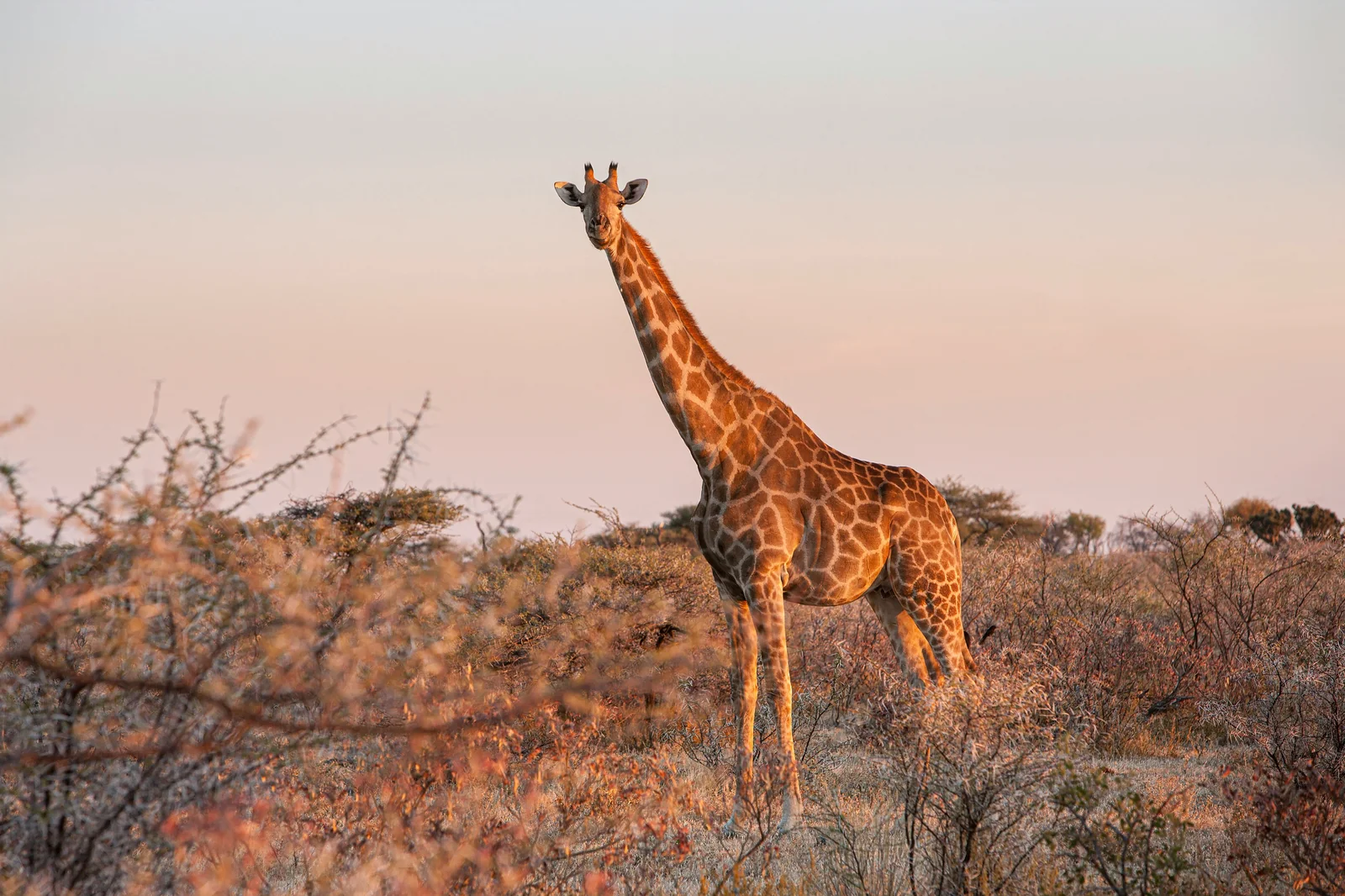
West African giraffe (Giraffa camelopardalis peralta) in the wild
The real animal · Giraffa camelopardalis peralta
Habitat
Open savanna and wooded savanna of the Sahel and East Africa: from Niger and Chad to Ethiopia, Uganda and South Sudan. The West African subspecies lives exclusively in the Kouré area (Niger), in savanna with acacias, combretum and balanites, at altitudes of 0 to 2,000 m.
Diet
Browsing herbivore: leaves, shoots, flowers and fruits of trees, mainly acacias. Forages between 16 and 20 hours a day in small continuous amounts using a prehensile tongue up to 45 cm long, pigmented blue-black to protect against UV radiation.
Lifespan
25 years in the wild / up to 28 years in captivity.
Weight
Females weigh between 800 and 1,200 kg, males between 1,100 and 1,900 kg; height ranges from 4.3-4.8 m in females to 4.8-5.5 m in males.
Adaptation
A heart of roughly 11 kg with arterial pressure of up to 280/180 mmHg to push blood up to the brain. A specialised arterial network (rete mirabile) at the base of the skull buffers the sudden pressure changes when the head lowers and rises.
Record
The 2018-2022 translocation in Niger, coordinated by GCF, established the first satellite population of West African giraffe outside Kouré: twelve individuals moved to the Gadabedji Biosphere Reserve.

Conservation status

Global (IUCN)
Vulnerable
Where it lives
Globally Vulnerable, but the western subspecies is much more vulnerable than giraffes as a whole, with a reduced range and isolated populations.
Population
Around 670 West African giraffes in the wild (2025), all in Niger; they are a subspecies of Giraffa camelopardalis, the species that contains them, with roughly 7,037 individuals in total (2024-2025).
View the IUCN Red List page

Main threats

  1. Habitat loss and degradation from agricultural expansion and intensive grazing in the Sahel.
  2. Poaching for bushmeat and traditional medicine.
  3. Genetic fragmentation among isolated populations.
  4. Political instability in the Sahel.
  5. Climate change that alters rainfall cycles and acacia availability.
The West African giraffe is the most documented recovery case: from 49 individuals in the nineties to around 670 in 2025.

Did you know…?

01
A heart bigger than a hoof

A giraffe's heart weighs around 11 kg and generates arterial pressure of 280/180 mmHg to push blood up to the brain, more than two metres above. Without that extraordinary motor, the tallest animal in the world couldn't even stand.

02
Spots that work as radiators

Under each coat patch there is a dense system of blood vessels capable of releasing heat to the outside in a controlled way. The spots are, literally, thermal windows: each giraffe carries its own personalised cooling system printed on the skin, and the pattern is as individual as a fingerprint.

03
The song no one was listening to

For decades scientists believed giraffes were mute. In 2015, researchers from the University of Vienna confirmed that they emit a low-frequency humming at night, audible only with sensitive equipment. The most visible animal on the savanna turns out to be one of the most discreet.

04
Grandmother effect documented

Post-reproductive females continue to live for years after losing the ability to breed and dedicate that time to caring for and protecting their daughters' calves. The giraffe is one of the few mammals, along with orcas and humans, where the grandmother effect has been documented as a survival factor.

05
A subspecies on the edge in the nineties

The West African giraffe, Ayana's subspecies, was down to just 49 individuals in Niger in the second half of the nineties. Thanks to formal protection by the Nigerien government and active conservation programmes, the population has climbed back to around 670 in 2025.

06
Four minutes of deep sleep

Giraffes sleep between 4.5 and 30 minutes of deep sleep a day, always in blocks of barely 5 minutes, often with the neck curled back to rest the head on the rump. It is one of the shortest sleep patterns of any mammal.

§ 08 · Conservation three programs · verified
West African giraffe

Help protect this species.

Every purchase helps, but a direct donation does more. Three NGOs with specific programs verified for this species.

No. 01 / 03

GCF.

Giraffe Conservation Foundation

The only NGO in the world dedicated exclusively to the conservation of giraffes in the wild, present in 21 African countries. Coordinated the first translocation of West African giraffes to the Gadabedji Biosphere Reserve (Niger, 2018-2022).

Donate to GCF
No. 02 / 03

AWF.

African Wildlife Foundation

Reference organisation in African wildlife conservation that works directly on the recovery of the West African giraffe's habitat, replanting acacias in the Sahel and training rural communities.

Donate to AWF
No. 03 / 03

GCF-Force.

Global Conservation Force

Deploys anti-trafficking teams and snare-removal patrols in giraffe habitats, collaborates with law-enforcement agencies and funds scientific collaring for population monitoring.

Donate to GCF-Force
Animal Kinhood · 25 characters

Twenty-five names. Twenty-five stories. Twenty-five personalities. One same project.

Full catalogue · Drop 01 — Q3 2026 Explore Animal Kinhood