The coast
When Otto goes walking along the coast of Kvaløya, he carries the bare minimum. Water, dried fruit, his phone switched on — a pact he's had with his mother since he was thirteen: as long as he keeps the phone on, he can go wherever he likes. No backpack. No map. He walks toward Rekvik or toward Kaldfjord with no fixed destination, sometimes three hours, sometimes eight, and comes back tired, soaked, his pockets full of stones or branches that later end up on the windowsill or in the trash.
Otto is one meter sixty-eight. Slight build, narrow shoulders, small quick hands that are surprisingly strong for their size. He takes up little space but you notice him. Not because of bulk: because of stillness. When everyone at the fish-processing plant is moving — the belt, the workers, the polystyrene crates — Otto is standing still, looking at something the others can't see. The driver of the refrigerated truck that arrives at five thirty has called him "ears" ever since Otto told him the engine sounded off and the belt failed the next day.
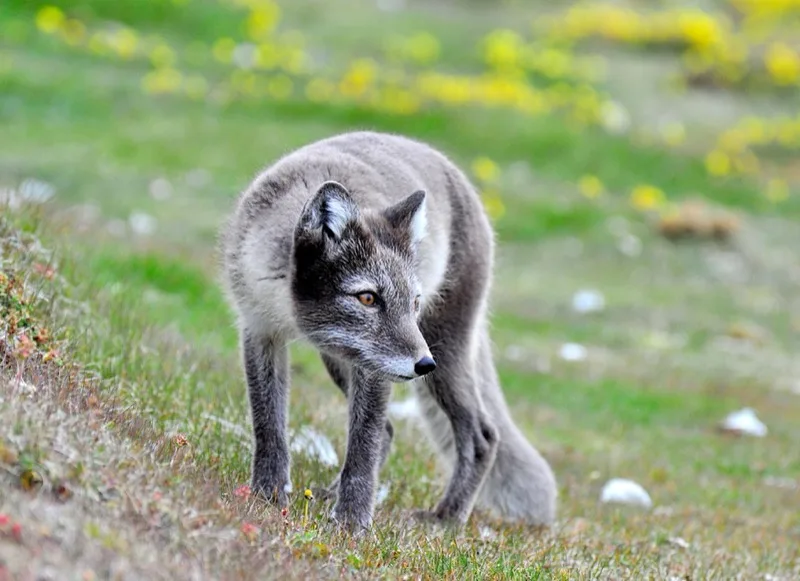
The arctic fox can cover four thousand five hundred kilometers in a single season, and all it carries is its fur. You probably need more. A laptop, a notebook, a water bottle, a jacket just in case, the keys that always end up at the bottom. This backpack is for that. The pockets help spread the load and keep things from getting lost. The straps adjust. The portrait sits on the outside, visible: beanie, sweater, amber eyes, silver-gray fur. The same cool tones with a warm accent that show up across all of Otto's products.


