Eighteen hatchlings
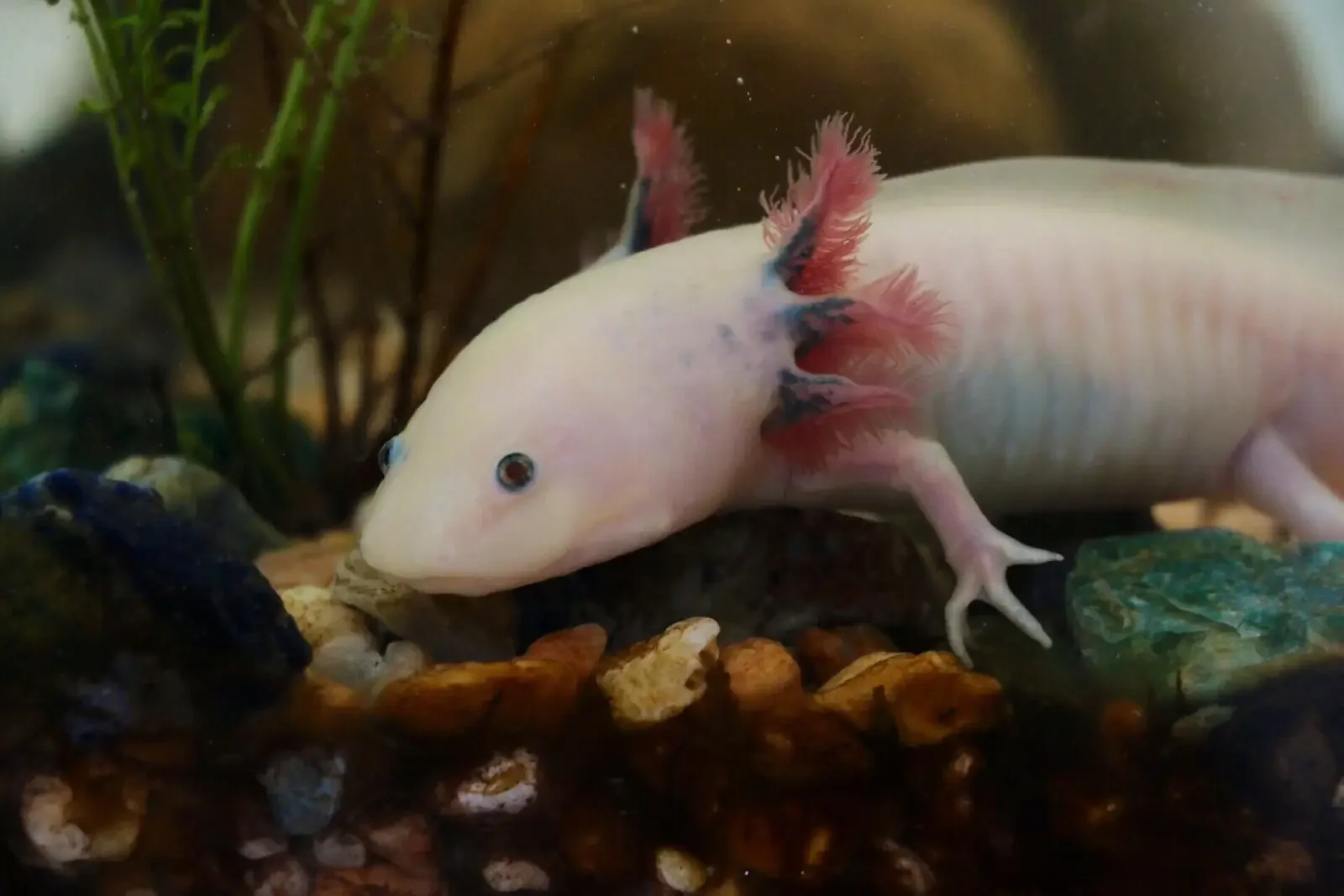
This kids' t-shirt of Ikal carries the portrait of an axolotl who works as a chinampa farmer in Xochimilco, in the south of Mexico City. For anyone who's never heard the word, an axolotl is a small, pink amphibian with a crown of red branch-like gills on either side of its head that it uses to breathe underwater. It lives in canals, eats worms, and spends its life looking younger than it is — even when fully grown.
In 2022, a team of biologists from the National Autonomous University of Mexico released eighteen captive-bred axolotls into restored canals near the dock where Ikal loads his vegetables. Eighteen. Not "about twenty," not "a group": eighteen. Most disappeared. Some were eaten by large fish that shouldn't have been there. Others swam off to areas where no human has found them since. But one is still alive. It's darker than the others, smaller, and Ikal has seen it twice this year with a hand torch, in the root of an ahuejote tree where it seems to have decided to stay. Kids understand that story well: there's a creature that was supposed to die and didn't.


