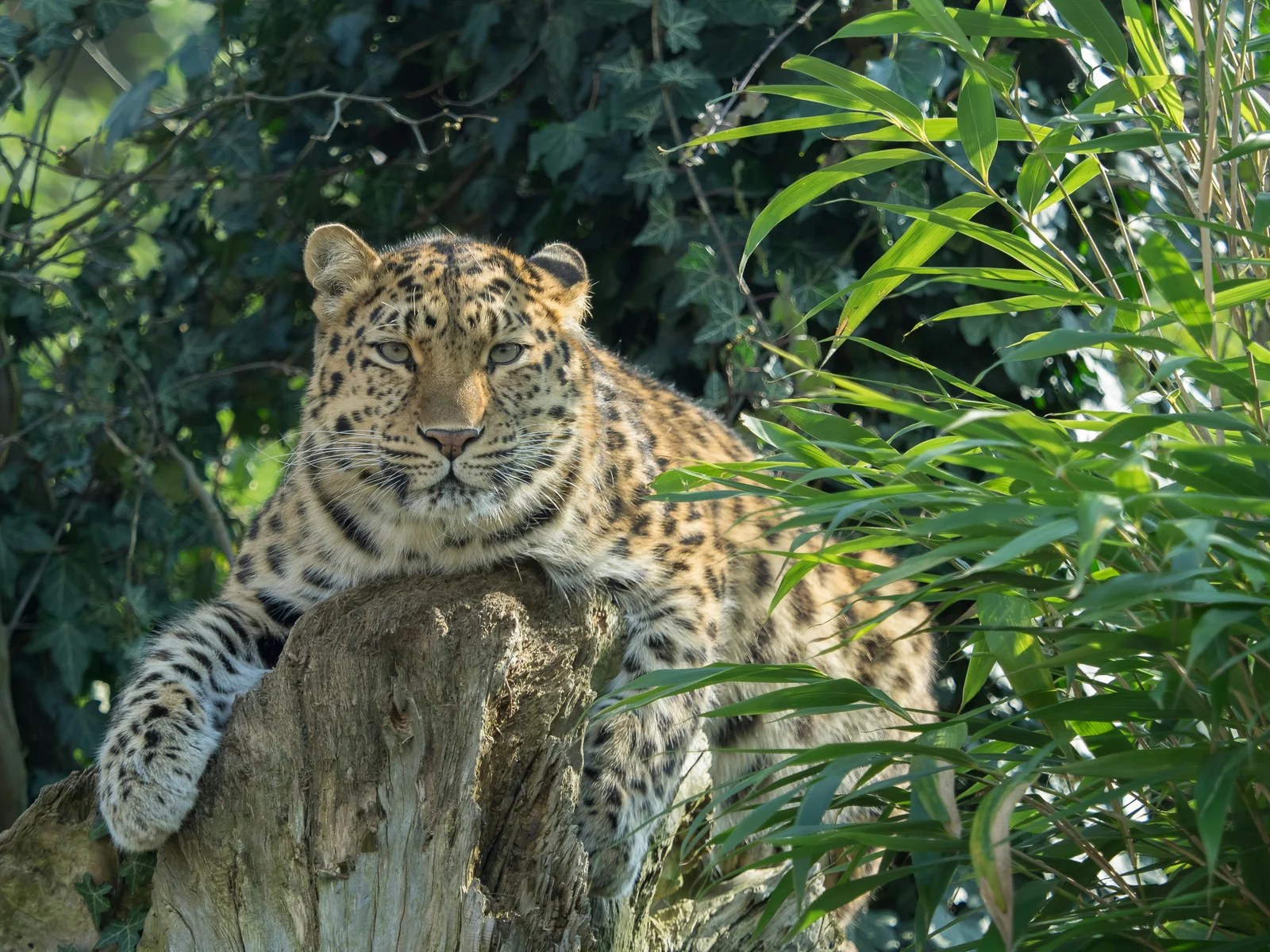
Three hours each way
Those three hours on the road shaped how Jeong works today. The habit of carrying what's needed, going where it's called for, coming back without complaint. At twenty-one the same logic holds: backpack with the drone, the thermos, the field notebook and a pencil he has to warm between his fingers so the tip doesn't snap. He leaves at a quarter to six in the morning, four kilometers on foot to the clearing where the drone lifts off, minus twenty-four degrees. Whatever he carries has to hold up.
The portrait shows him in his grandfather's aviator helmet — brown leather, pilot goggles on top, visible repairs in the leather, decades of wear. His grandfather flew light agricultural planes to spray fields in the Russian Far East. Jeong inherited the helmet at sixteen, when his grandmother died. Now he flies environmental surveillance drones for the wildlife monitoring program at Land of the Leopard National Park. A different kind of flying, the same helmet. The shearling jacket — black leather, white lining — was the first thing he bought with his first park paycheck. Underneath, the cornflower-blue sweater his grandmother gave him, which he has in three identical copies. The look is direct, no expression, from someone who has spent years paying attention to things most people walk past.
In [Jeong's biography](https://www.yagopartal.com/animal-kinhood/jeong/) is the full story — the one hundred and thirty Amur leopards left in the wild, the wire trap he found at nineteen, the village that calls him Ghost without him ever asking for it.


