
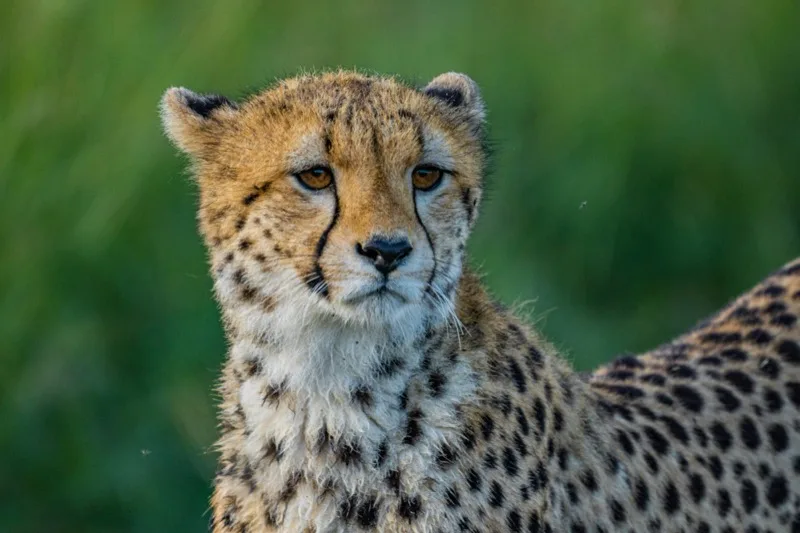
The markings
The black lines that run from Nayna's eyes down to her jaw are called tear marks. In a cheetah, those markings have a real function: they reduce glare from the sun during a hunt, channeling light like a kind of war paint that evolution has spent millions of years refining. They're why a cheetah can chase a gazelle at 100 km/h while looking straight ahead without the sun closing its eyes.
In Nayna, those lines do something else. People who don't know her think she's sad. Or angry. Or that she slept badly. It's the face she makes when she looks at an engine before touching it. The face she makes when she hears the sound of a clutch and already knows what's wrong before opening the casing. It's the face of someone processing information, not feeling grief. But the markings don't help: they trace a path from eyes to chin that on a human we'd read as a tear.
Mwangi, her 19-year-old apprentice, took three months to stop asking if she was okay. Now he knows the difference: when Nayna is focused, her eyes are still and her hands move on their own. When something is genuinely wrong, her voice drops. Not rises. Drops. And her hands stop. Mama Amina, from the chai stall three doors down from the workshop, saw it before anyone else: "That girl isn't sad. She's counting parts on the inside."


