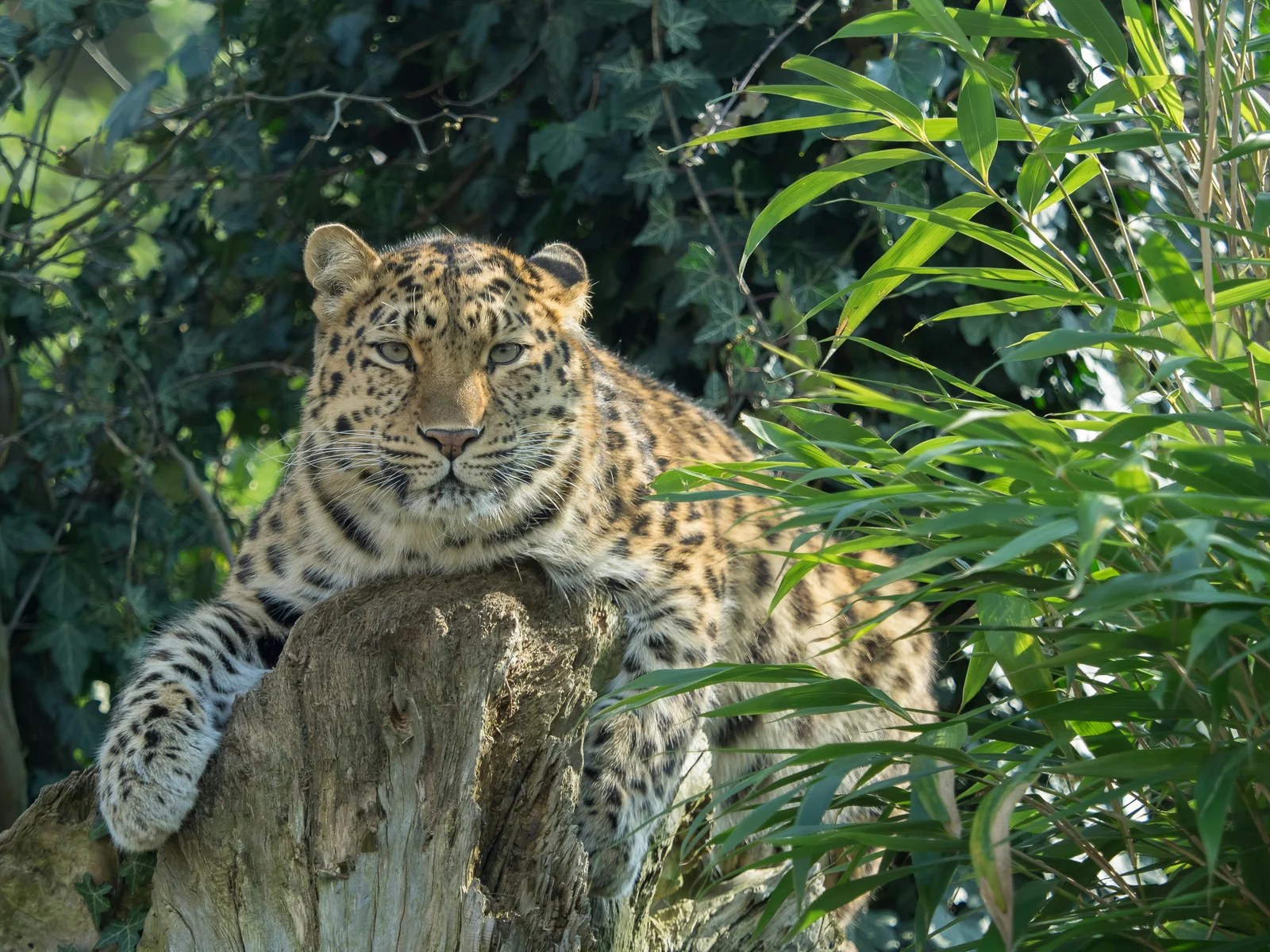
Ghost of the forest
The portrait captures that. The brown leather aviator helmet — inherited from his grandfather, who flew light agricultural planes in the Russian Far East — with the pilot goggles on top, the worn leather and visible repairs. The shearling jacket turned up to the ears: black leather, white lining, the first thing he bought with his own park paycheck. Underneath, a cornflower-blue sweater his grandmother gave him. He has three identical ones (Halmoni was practical: if something worked, she bought three). The look is direct, unadorned, from someone used to watching a long time before speaking.
Jeong is twenty-one. He's been flying environmental surveillance drones from eighteen in Barabash, Primorsky Krai, a town of three thousand people in the heart of the Amur leopard's range. One hundred and thirty individuals in the wild according to the latest census. Seventeen years ago there were nineteen on the entire planet. He recognizes each leopard by its rosettes without software — he draws them by hand in a notebook he shares with no one. Every animal has a unique spot pattern, like fingerprints. Researchers with PhDs use image-recognition programs. Jeong uses his eyes and a pencil he has to warm between his fingers every two minutes so the tip doesn't snap at twenty-four below zero.
If someone asks about his method, he answers in three sentences and then goes quiet. If they press, he changes the subject. His way of caring works the same: he turns the stove on so his roommate comes home to a warm place, leaves soup outside the door of whoever has a fever, keeps team birthdays in a notebook and shows up with a bag of warm pirozhki without saying a word. Invisible and precise.


