The unlocked door
Faiz lives in an apartment in Mutrah — the harbor district of Muscat, in Oman. Third floor, no elevator. The door has a latch that turns by hand, without a key. The neighbor on the second floor has told him several times: it's dangerous. Faiz smiles every time. If someone wants to get in, they'll get in. But he needs to be able to get out.
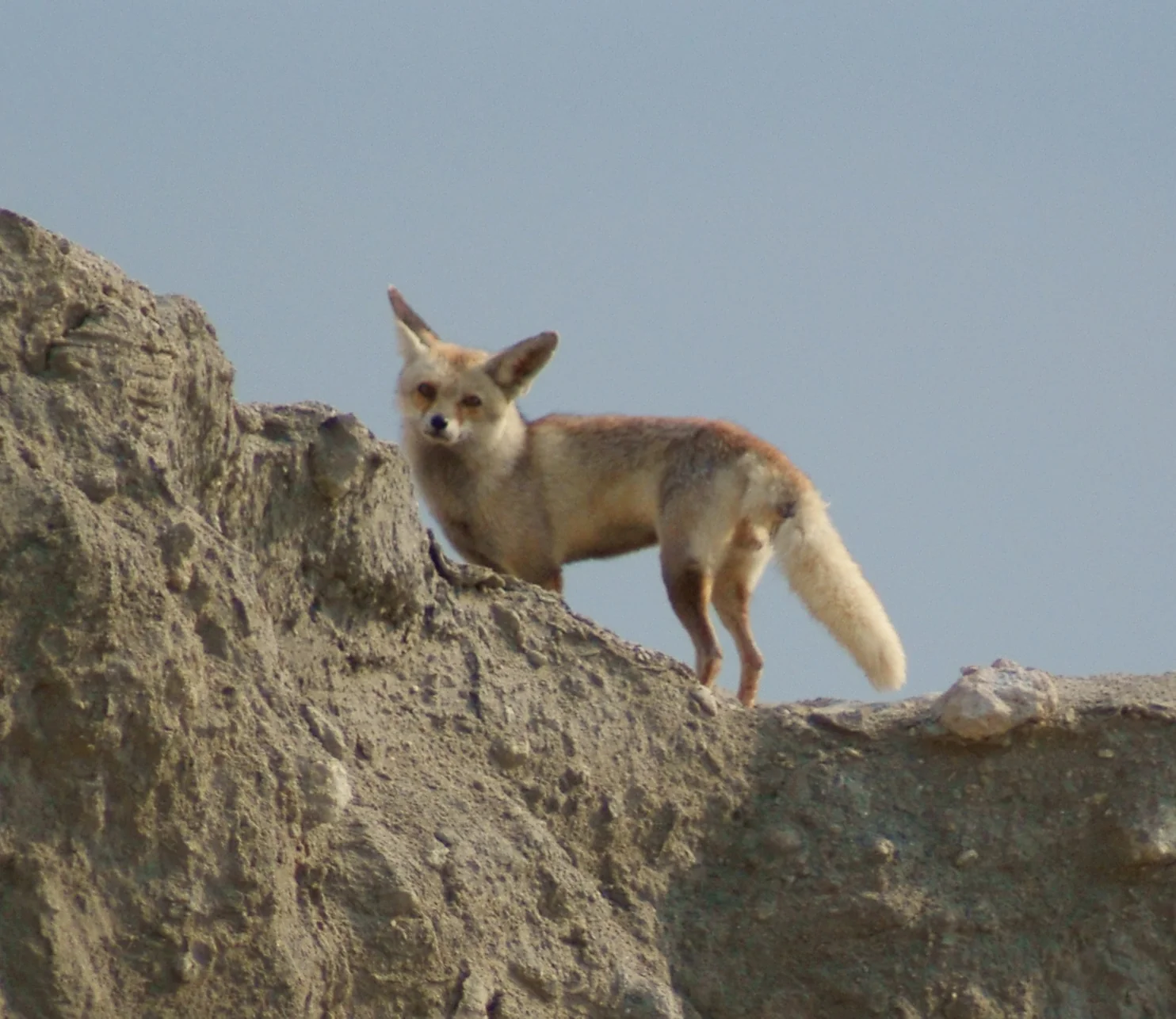
The burrows of the Arabian red fox have between two and four entrances. Faiz's apartment works the same way: large windows facing east, cross ventilation, a ledge in the bedroom that opens onto an alley and from which you can get down to the street if needed. The Nissan Urvan, always parked below, always ready. The idea of having a single way out produces something that isn't exactly fear but that comes close enough. Biologists call this anti-predator behavior — the need for multiple escape routes. In a wild fox, it's the difference between eating and being eaten. In Faiz, it's the difference between being able to leave and feeling trapped.
That same need applies to what he carries. If he has to go, he goes. With whatever he has. If you'd rather have a flat format with handles, Faiz is also available [as a tote bag](https://www.yagopartal.com/animal-kinhood/faiz/). A backpack is that — something you wear and that holds the minimum you need to function. Faiz doesn't plan an exit with three suitcases and a list. He walks out the door with what he has on his back and figures it out as he goes.


