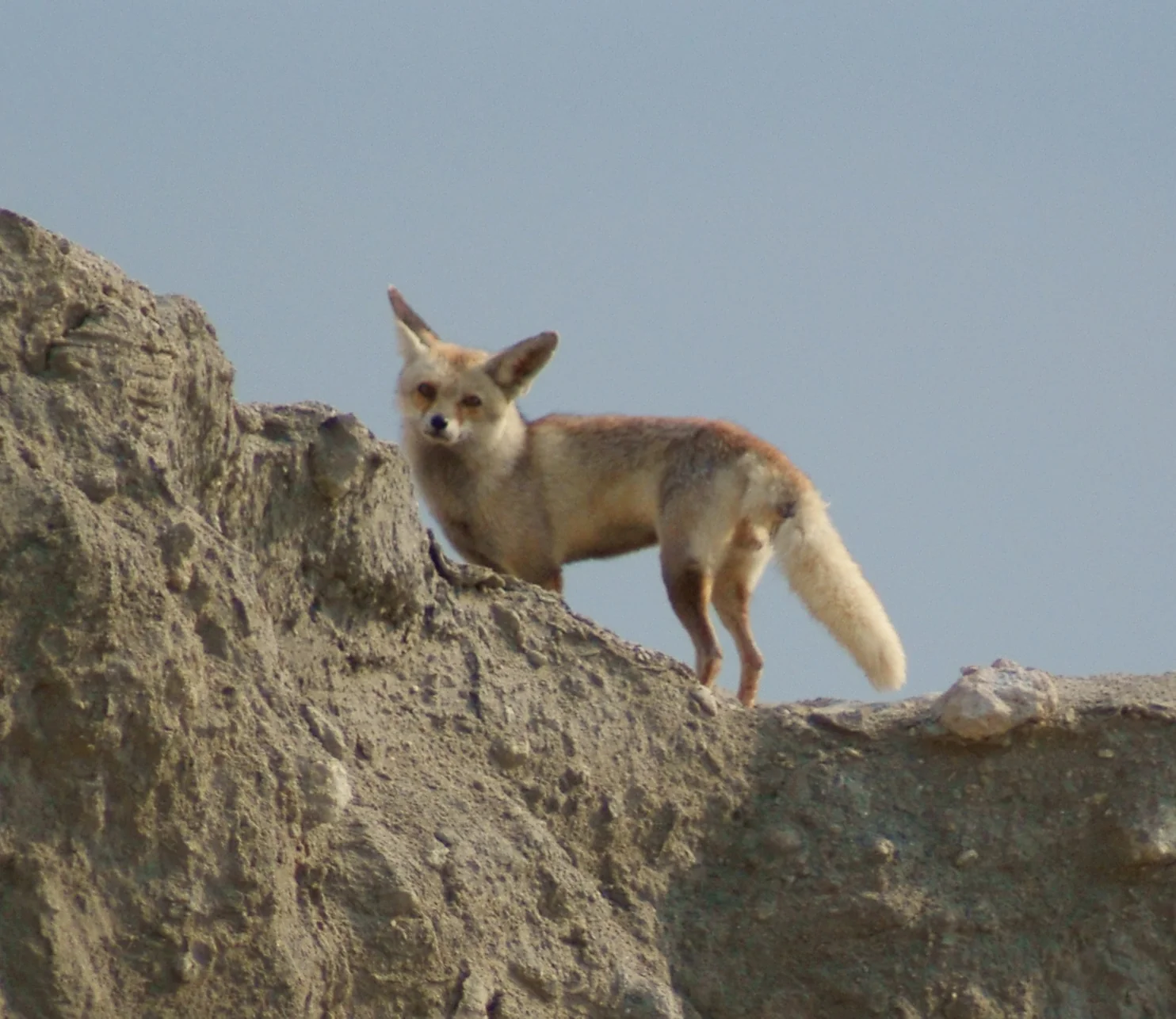
What the fox keeps
Faiz keeps everything. In the van: three toolboxes, bags of dried fruit, spare filters for AC models that stopped being made in 2014, a packet of biscuits, an envelope with forty rials under the seat. In the apartment: plastic boxes stacked in the guest room that never has guests. If you asked him to throw something away, he'd say yes. And then he'd pull it out of the bin when no one was looking.
Red foxes do the same thing. When there's a surplus, they bury food at different points across their territory to retrieve it later. It's not greed. It's that the desert gives no warning and what's there today might be gone tomorrow. The biology of the Vulpes vulpes arabica includes a compulsive hoarding instinct that makes complete sense when you live in a landscape where the seasons follow no gentle pattern. Faiz doesn't bury food in the sand, but his Nissan Urvan is the urban equivalent of a burrow with a pantry: if something breaks in Muscat at three in the afternoon on a Tuesday in August, he probably already has the spare part under a tarp next to the biscuits. He bought the van at nineteen with a year's savings. It's old, sounds old, and Faiz has replaced enough parts that it's hard to say what's original and what isn't.
That way of operating didn't come from nowhere. Faiz grew up in Barka, a coastal city eighty kilometers from Muscat. His father, Ibrahim, drove a delivery van that hauled vegetables and ice to villages in the interior. On weekends, Faiz went with him. The van had an AM radio that tuned two stations. Ibrahim taught him to listen to the engine: a loose belt doesn't sound like a worn bearing, and if you learn the difference before something breaks, you save yourself the breakdown. Faiz learned the difference before he turned nine.


