The pattern you can't see
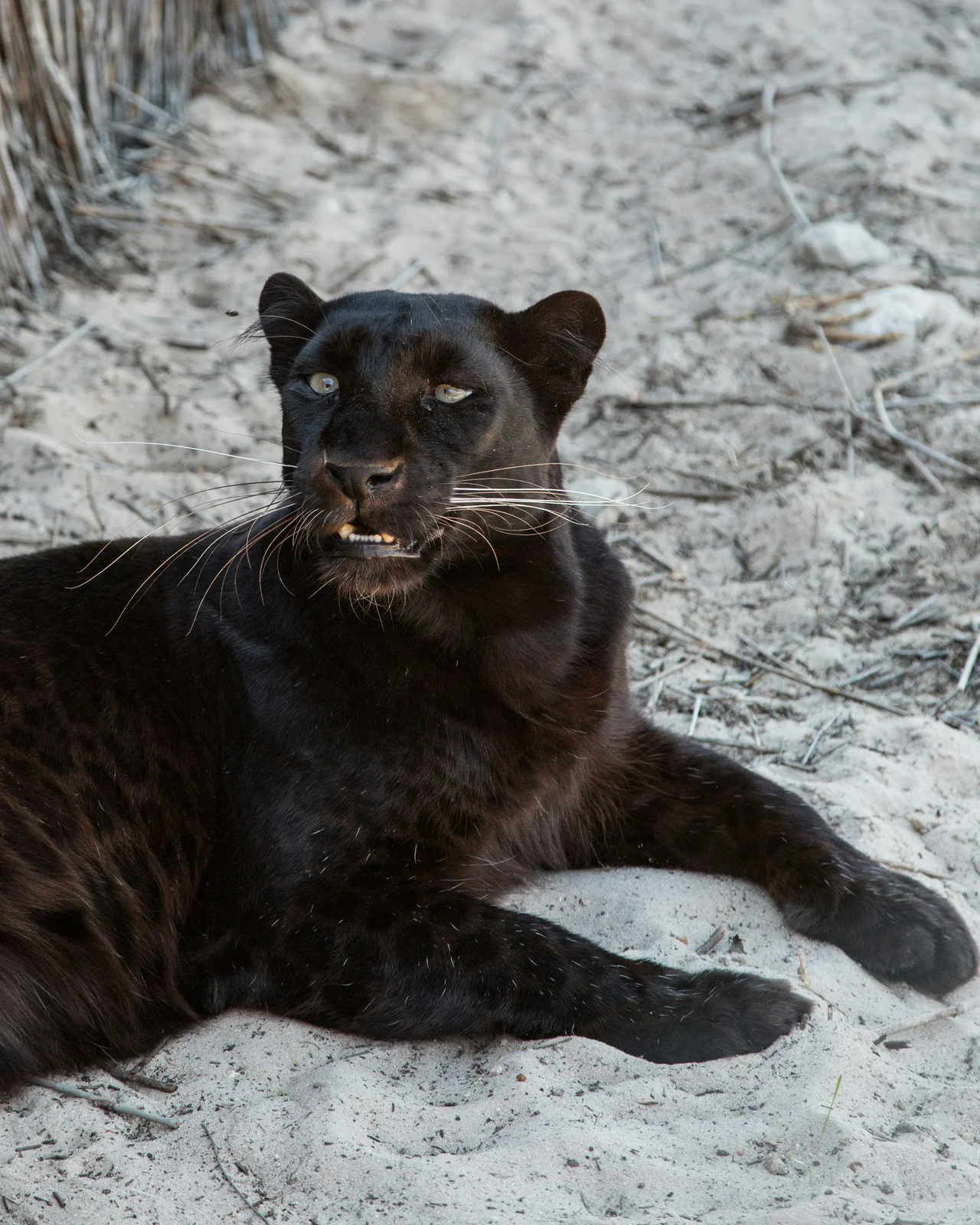
Melanistic leopards have rosettes. All of them. Every single one. Melanism — a recessive genetic variation of the ASIP gene that produces excess melanin — darkens the coat until it looks uniform, but the pattern remains underneath. Rosettes arranged in irregular rows, each one different, like a fingerprint that no other leopard shares. In direct light, under an infrared camera, in morning sun when the angle is just right, the rosettes appear. Black on black. A complete pattern hidden in plain sight.
In peninsular Malaysia, where the forest is so dense that raking light barely penetrates, almost half of all leopards are black. Darkness is an adaptive advantage. Biologists identify each individual by those hidden rosettes: they set camera traps with infrared flash on the trails of the Central Forest Spine and read the patterns like license plates. Fewer than a thousand leopards survive in the wild in peninsular Malaysia today. Every pattern counts.
César carries that same logic beneath the surface. What you see head-on — silence, control, fixed gaze — is the outer coat. Underneath is a system of decisions, of bonds he doesn't display, of selective generosity that only shows when someone gets close enough. He fixes the wedding rings of the elderly neighbors in the block for free. He waters the plants in the hallway when the retiree in 7C travels. He leaves food on the stairwell every night at ten. None of that is visible from a distance. Does it need to be?


