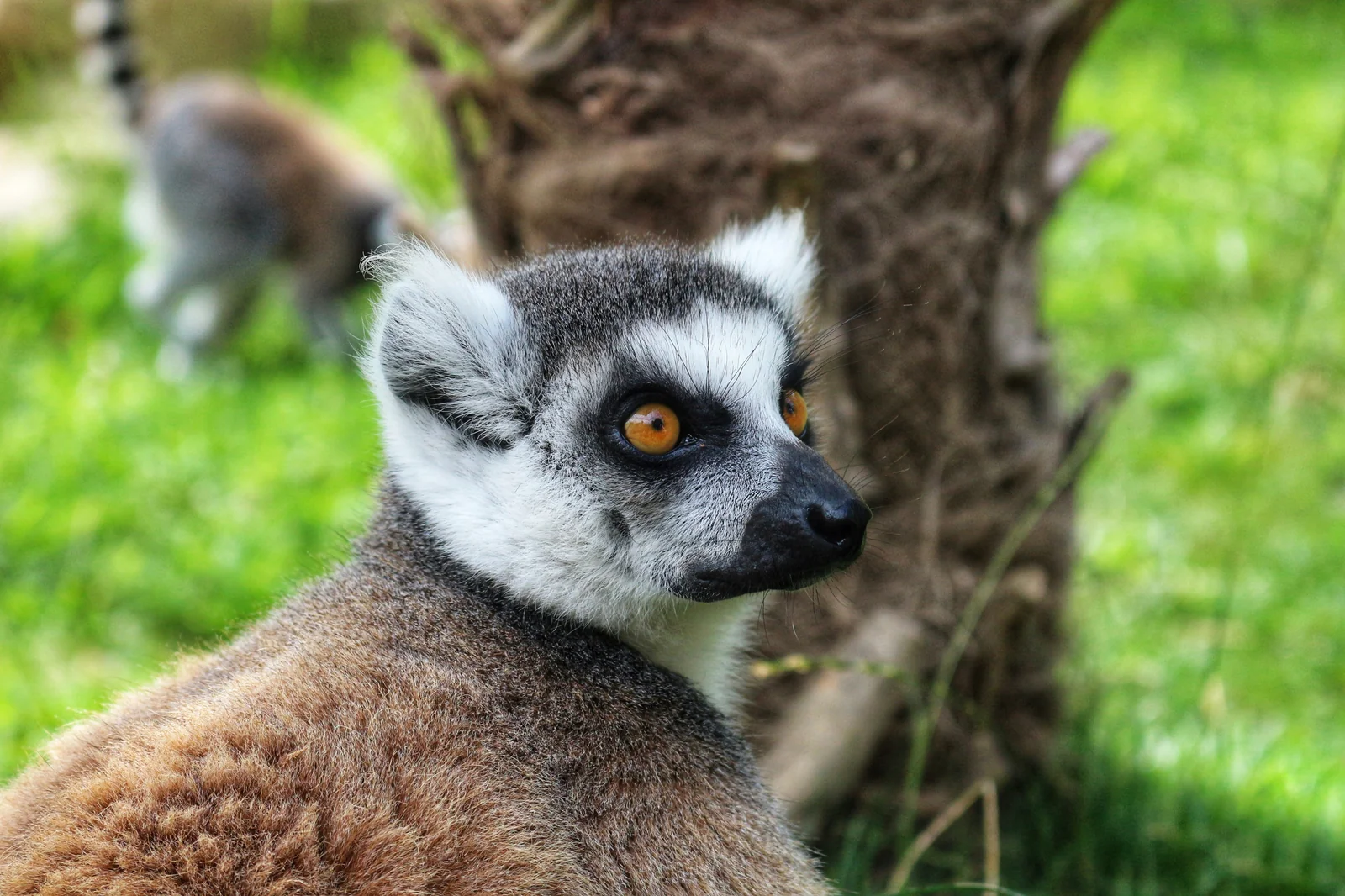
The kids who play near the rocks
Six kilometers south of Ambalavao, where granite hills rise between the terraced rice fields and the first trees of the dry forest, the Réserve Communautaire d'Anja receives groups of ring-tailed lemurs every day, jumping between the rocks with a confidence that tourists mistake for indifference. The children of the Betsileo families living on the edge of the reserve have known those lemurs their whole lives. They see them on the way home from school, step around them on the paths, point them out when a large group crosses the dirt track connecting the plots to the main road.
For those children, a ring-tailed lemur is a neighbor, nothing more. Someone with their own routines — going out in the sun in the morning, looking for fruit, occasionally fighting over a spot on the highest branch — who shares the same territory without anyone having signed a coexistence agreement. Wesley understands that proximity because he lived it as a child: the group was there, the other animals were there, the sun belonged to everyone, and space was shared by rules nobody explained but everyone followed.


